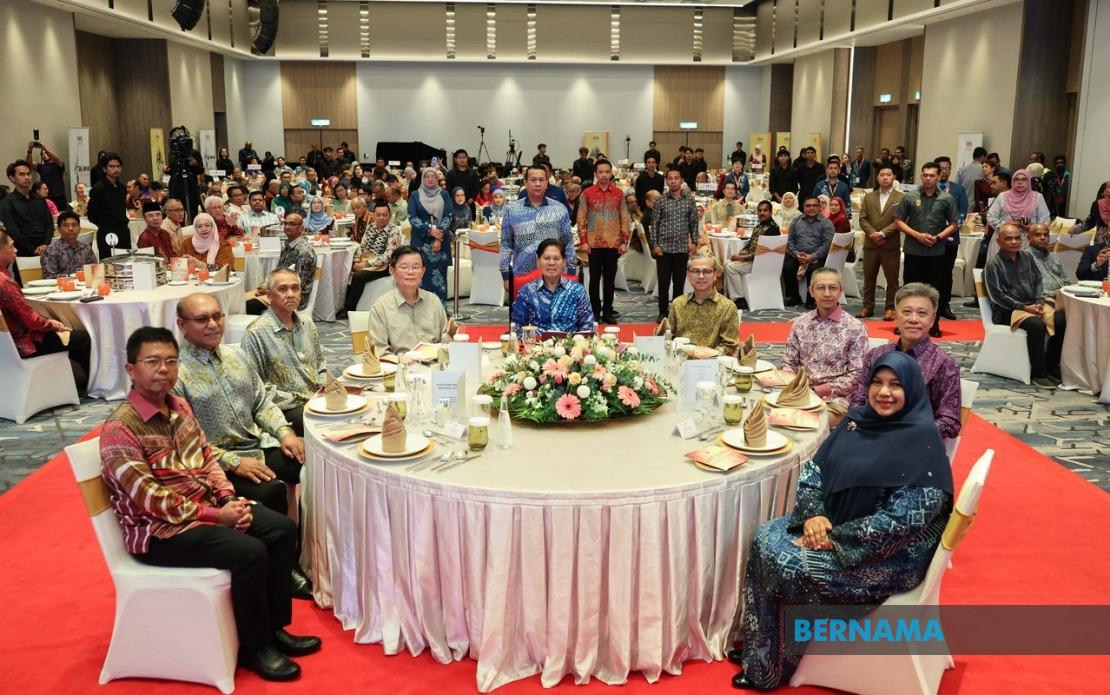
Penang has become the focal point for recognising the nation's media community as it hosts the 2026 edition of HAWANA, the National Journalists' Day celebrations. Penang Governor Tun Ramli Ngah Talib has expressed his appreciation for the Communications Ministry's approach of distributing these annual festivities across different states, a strategy he believes enriches public understanding of journalism's contribution to Malaysia's progress. The decision reflects a broader commitment to decentralise major national events and ensure communities throughout the country benefit from direct engagement with the media fraternity.
The inaugural HAWANA 2026 dinner, orchestrated jointly by the Penang state government and the Communications Ministry, drew nearly 350 attendees representing the full spectrum of Malaysia's media landscape. Present were editors-in-chief, executives from both domestic and international news organisations, retired journalists whose careers shaped the profession, and senior government officials. The gathering underscored the sector's institutional weight and the government's recognition of journalism's foundational role in democratic discourse and informed citizenship.
Tun Ramli characterised Penang's selection as host as a significant honour for a state that has established itself as a progressive, economically vibrant jurisdiction. His remarks positioning the state within a developmental narrative reflect how state governments leverage national events to reinforce their administrative brand and attract engagement from stakeholders across sectors. For Penang, hosting HAWANA 2026 represents an opportunity to showcase its institutional capacity and its commitment to supporting professional communities essential to economic and social advancement.
The broader significance of rotating HAWANA celebrations extends beyond ceremonial recognition. By distributing the event geographically, the Communications Ministry creates repeated opportunities for local media ecosystems to convene, reflect on professional standards, and strengthen institutional bonds. This approach particularly benefits regional journalists and communications professionals who might otherwise feel peripheralised by Kuala Lumpur-centric national events. For Southeast Asian delegates attending from ASEAN nations, exposure to Malaysia's media infrastructure and practices at various locations enhances regional networking and knowledge exchange.
Communications Minister Datuk Fahmi Fadzil's participation highlighted the government's active engagement with media sector concerns and policy coordination. The presence of Malaysia's National News Agency (Bernama) leadership, including chairman Datuk Seri Wong Chun Wai and chief executive officer Datin Paduka Nur-ul Afida Kamaludin, emphasised the state agency's central coordinating role in national journalism initiatives. Bernama's position as implementing agent for HAWANA 2026 reinforces its mandate as the institutional framework through which government engages with and supports the broader media community.
Intriguingly, the event's theme—'Media Integrity Strengthens Credibility'—addresses contemporary pressures facing journalism globally and within Malaysia specifically. As misinformation and polarised information environments challenge professional journalism's authority, elevating integrity as a thematic centrepiece signals government prioritisation of the foundational values underpinning credible reporting. This emphasis becomes particularly relevant in the Malaysian context, where concerns about media ownership concentration and editorial independence have shaped ongoing public discourse about journalism's autonomy and trustworthiness.
The assembly of approximately 1,000 media practitioners, predominantly journalists representing multiple ASEAN nations, constitutes a substantial professional gathering. Such large-scale convocations create peer learning environments where practitioners exchange experiences navigating regulatory frameworks, technological disruption, and audience fragmentation. For Malaysian journalists, the presence of regional counterparts offers perspective on comparative media systems and the diverse approaches neighbouring countries employ in balancing press freedom with government relations and commercial pressures.
Prime Minister Datuk Seri Anwar Ibrahim's scheduled officiation of the main event at PICCA Convention Centre @ Butterworth Arena elevated the celebrations to apex ceremonial status. Prime ministerial participation signals the government's institutional validation of journalism's societal role and its commitment to maintaining cordial, stable relationships with the media sector. Such top-tier political engagement, while routine in formal government communications, carries symbolic weight affirming journalism's status as a protected profession operating within sanctioned institutional frameworks.
Tun Ramli's explicit acknowledgement that HAWANA recognises veteran journalists and their accumulated contributions speaks to profession-specific intergenerational consciousness. Honouring career practitioners who shaped Malaysian journalism during different historical periods—from the immediate post-independence era through contemporary digital transformation—anchors the profession within continuity and institutional memory. This retrospective dimension helps younger journalists contextualise their work within a professional lineage and appreciate how journalism's institutional norms and ethical frameworks evolved across decades.
Beyond ceremonial function, HAWANA 2026's Penang hosting exemplifies how state governments integrate with national policy coordination and professional community engagement. The participation of Penang Chief Minister Chow Kon Yeow alongside federal communications officials and Timor-Leste's Secretary of State for Social Communication Expedito Loro Dias Ximenes demonstrates multi-level governance networking and ASEAN-scale institutional coordination around communications and information policy. Such cross-jurisdictional, regional participation strengthens professional networks and facilitates comparative learning about media regulation, journalism standards, and government-media relations across Southeast Asia.
Looking forward, the rotation of HAWANA among states establishes precedent for decentralised national events and regional media hub development. For Malaysian journalists operating outside Kuala Lumpur, the prospect of hosting or attending HAWANA celebrations in their localities enhances professional visibility and creates incentive structures encouraging quality journalism throughout the federation. This approach implicitly challenges Kuala Lumpur-centric assumptions about where significant professional and political gatherings should occur, distributing institutional prestige and professional development opportunities more equitably across Malaysia's geographic expanse.
%22%2F%3E%3C%2Fpattern%3E%3C%2Fdefs%3E%3Crect%20width%3D%22100%25%22%20height%3D%22100%25%22%20fill%3D%22url(%23ph2scadg)%22%2F%3E%3Crect%20width%3D%22100%25%22%20height%3D%22100%25%22%20fill%3D%22url(%23ph2scadp)%22%2F%3E%3Ctext%20x%3D%2250%25%22%20y%3D%2250%25%22%20text-anchor%3D%22middle%22%20dominant-baseline%3D%22central%22%20fill%3D%22rgba(255%2C255%2C255%2C0.95)%22%20font-family%3D%22Georgia%2C%20'Times%20New%20Roman'%2C%20serif%22%20font-weight%3D%22700%22%20font-size%3D%22320%22%20letter-spacing%3D%22-0.02em%22%3ERIUH%3C%2Ftext%3E%3C%2Fsvg%3E)
%22%2F%3E%3C%2Fpattern%3E%3C%2Fdefs%3E%3Crect%20width%3D%22100%25%22%20height%3D%22100%25%22%20fill%3D%22url(%23ph1v4cig)%22%2F%3E%3Crect%20width%3D%22100%25%22%20height%3D%22100%25%22%20fill%3D%22url(%23ph1v4cip)%22%2F%3E%3Ctext%20x%3D%2250%25%22%20y%3D%2250%25%22%20text-anchor%3D%22middle%22%20dominant-baseline%3D%22central%22%20fill%3D%22rgba(255%2C255%2C255%2C0.95)%22%20font-family%3D%22Georgia%2C%20'Times%20New%20Roman'%2C%20serif%22%20font-weight%3D%22700%22%20font-size%3D%22320%22%20letter-spacing%3D%22-0.02em%22%3ENew%3C%2Ftext%3E%3C%2Fsvg%3E)