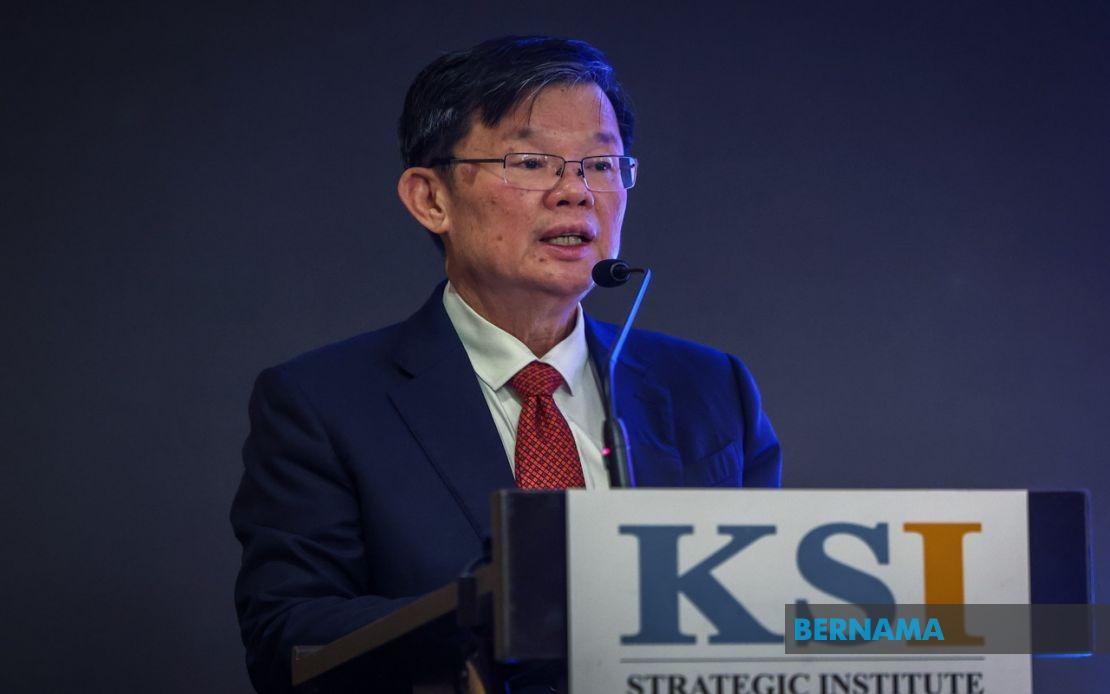
Penang Pakatan Harapan intends to increase the number of women candidates it fields in the next state election, though the coalition acknowledges ongoing difficulties in identifying and recruiting female politicians ready to contest seats. Chow Kon Yeow, the Penang Chief Minister and PH chairman, outlined this commitment while addressing delegates at the World Women Economic and Business Summit 2026 in George Town on June 15, framing the push for greater female representation as both a party priority and a broader national imperative.
The 30 per cent women's participation target, which has become the benchmark for Malaysian political representation across government and decision-making bodies, remains elusive nearly two decades after its introduction in 2009. Current statistics underscore the persistence of gender imbalance: women comprise only 13.5 per cent of Members of Parliament and 12 per cent of state assemblypersons nationwide. This gap between aspiration and reality suggests that setting targets alone is insufficient without accompanying mechanisms and cultural shifts to encourage female political participation. Penang's situation reflects these broader national challenges, though the state coalition has positioned itself as proactive in pursuing the objective.
Chow acknowledged that while women have made substantial strides in professional sectors such as education, business, engineering and the public service, their advancement into electoral politics follows a markedly different trajectory. The barriers facing prospective female political candidates extend beyond simple supply-and-demand dynamics. Political participation carries distinct pressures and reputational risks that deterrent many qualified women from stepping forward, even when actively encouraged to do so. The intensity of scrutiny, the demands on family time, and the combative nature of electoral competition all contribute to hesitation among potential candidates who might otherwise possess the skills and experience necessary for legislative office.
One critical insight Chow raised involves the candidate selection process itself. During recruitment cycles, relatively few women present themselves as willing contenders, creating a bottleneck that limits the coalition's ability to field candidates regardless of its stated intentions. This suggests the problem is not merely that party selectors discriminate against women, but rather that the pipeline of interested female aspirants remains underdeveloped. Addressing this requires upstream interventions that begin long before candidate selection commences, including mentoring, resource provision, and normalisation of women's political ambitions within communities and family structures.
Chow proposed that political parties move beyond rhetorical commitment to institutionalising the 30 per cent target within their formal candidate selection processes. By embedding the objective into party machinery and governance structures, such targets acquire binding force rather than remaining aspirational. This institutionalisation approach has proven effective in some jurisdictions globally, where party bylaws mandate certain gender thresholds and create accountability mechanisms when targets are not met. Without such structural embedding, targets risk becoming performative statements without substantive implementation.
Another dimension Chow highlighted involves the composition of decision-making committees within political organisations. If women are excluded from or underrepresented on the bodies that determine candidate selection, campaign strategy and resource allocation, their influence over party direction remains marginal. Ensuring equal representation on these committees would amplify female voices in strategic decisions and model the inclusion the parties claim to champion at the electoral level. This internal party culture shift can catalyse broader acceptance of women candidates among the wider membership and electorate.
Access to resources and mentoring emerged as a third pillar in Chow's framework for advancing female political participation. Emerging women leaders frequently lack the established networks, fundraising channels, and organisational support that male incumbents and their allies take for granted. Without deliberate efforts to equalise access to campaign financing, media training, constituent outreach infrastructure and political mentorship, women candidates enter elections at a material disadvantage. Penang PH's willingness to address these resource gaps could meaningfully improve the competitiveness and success rates of its female candidates.
The timing of these comments, delivered at an economic and business summit focused on women's advancement, underscores a broader recognition that women's political underrepresentation carries economic and social costs for Malaysia. Countries with greater gender diversity in political leadership have demonstrated improved policy outcomes on education, healthcare, poverty reduction and economic inclusion. The concentration of political power among men can result in policy blind spots regarding issues affecting women and families. Penang, as a state with relatively progressive governance, has opportunity to pioneer more effective approaches to increasing female political representation.
For Malaysian readers across the Southeast Asian region observing this dynamic, Penang's experience illustrates both the commitments major political coalitions are making and the stubborn structural barriers that persist despite genuine intentions. The gap between rhetoric and results suggests that simply waiting for more women to volunteer is insufficient; rather, political organisations must actively redesign their recruitment, support and selection systems to make political participation more accessible and appealing to qualified female candidates. The 30 per cent target itself, while important, may prove inadequate if the underlying culture of political institutions does not fundamentally shift to demonstrate genuine welcomingness toward female participation at all levels.

