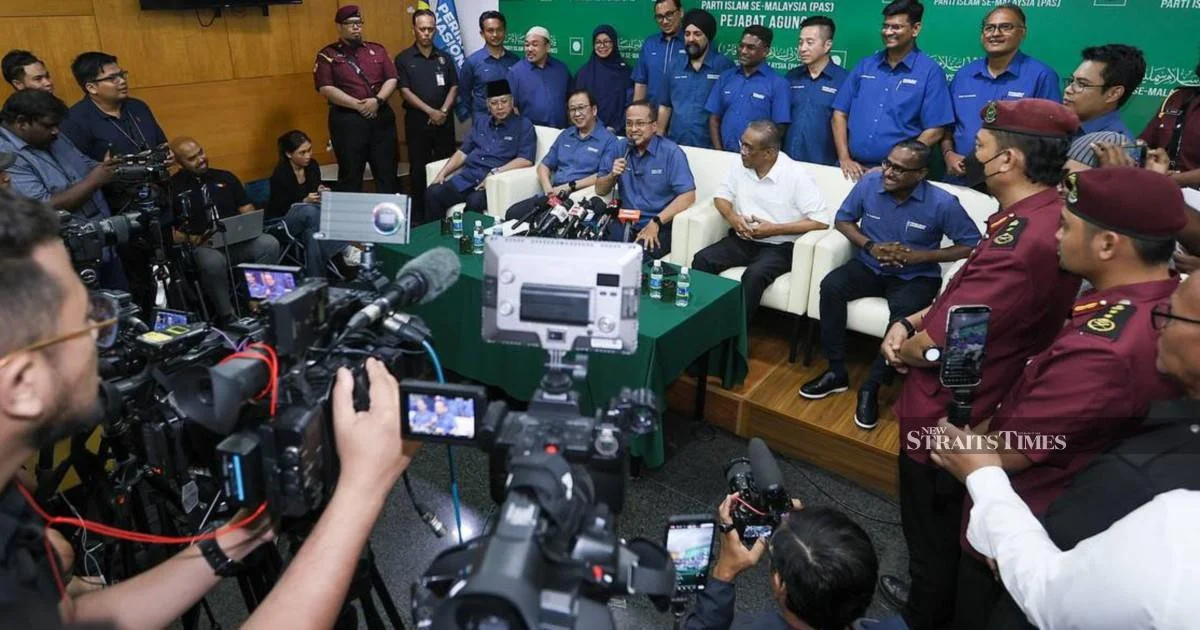
Perikatan Nasional will hold a decisive emergency assembly in Kuala Lumpur to conclude the contentious process of dividing Johor state election seats among its member parties, marking a pivotal moment in the coalition's pre-election preparations.
The allocation of parliamentary and state constituencies represents one of the most delicate negotiations within any multi-party electoral coalition, requiring careful balance between competing interests, electoral viability, and coalition cohesion. For PN, a political alliance that has undergone significant transformation and internal restructuring in recent years, reaching consensus on seat distribution carries particular weight as it signals unity heading into a major state contest.
Johor holds substantial strategic importance within Malaysia's political architecture. As the southernmost peninsula state and home to significant urban centres including Johor Bahru, electoral outcomes there often signal broader national political trends. The state has historically served as a testing ground for political alliances and voter sentiment, making the contest a barometer of PN's strength and appeal beyond its traditional support bases.
The timing of this special meeting underscores the urgency surrounding these negotiations. Coalition partners must reconcile differing priorities regarding which constituencies offer the strongest electoral prospects, which are considered safer or riskier propositions, and how resources should be distributed across the state's diverse electoral landscape. Each component party will have advocated for seats aligned with their organisational strength, geographical presence, and demographic support patterns.
For Malaysian readers and observers of regional politics, the PN coalition's approach to seat allocation reveals much about internal power dynamics. Larger parties typically command more seats, yet smaller partners require sufficient representation to justify their continued participation and mobilise their grassroots machinery. The balance struck in today's decision will influence not only Johor's electoral competition but also PN's operational stability for subsequent electoral cycles.
The coalition comprises PAS, Bersatu, and other member parties, each bringing distinct organisational capabilities and voter constituencies to the alliance. PAS maintains particularly strong support among rural constituencies and certain urban Malay-Muslim demographics, while Bersatu carries the machinery inherited from its formation and evolution. These structural differences necessarily shape seat allocation mathematics and strategy.
Johor's electoral geography presents distinct challenges and opportunities. The state encompasses urban centres where political competition remains intense and highly contested, industrial regions where economic messaging resonates differently, and rural constituencies where traditional party machinery and incumbent advantage carry particular weight. An effective seat allocation must account for these variations rather than applying uniform distribution principles.
The broader Southeast Asian context amplifies Johor's significance for PN. Regional political observers closely monitor Malaysian state elections as indicators of stability, coalition management capacity, and voter preferences. A coordinated and unified PN showing in Johor could strengthen the coalition's national standing, while contentious seat negotiations that leak into public discourse risk projecting an image of internal fracture that opposition parties would eagerly exploit.
Recent political developments across Malaysia have emphasised the importance of coalition management at the state level. Electoral contests have demonstrated that marginal seats often determine overall outcomes, meaning seat allocation decisions made today could directly influence whether PN improves or diminishes its representation in the Johor state assembly. The stakes justify the special meeting's urgency and the presumably intense discussions that preceded today's session.
Beyond electoral arithmetic, seat allocation carries implications for post-election governance arrangements. Should PN perform successfully in Johor, the distribution of constituencies among coalition members will determine ministerial positions, committee assignments, and legislative influence. Partners receiving fewer contested seats may demand enhanced representation in executive roles or other power-sharing mechanisms, creating potential governance complications that extend well beyond the election itself.
For PN's rival coalitions, today's announcement will provide crucial intelligence about opponent positioning and strategy. The specific seats contested, the parties advancing candidates, and the strength of challengers will all become apparent through the seat allocation decision. This transparency, while necessary for electoral administration, simultaneously allows political opponents to refine their own campaign targeting and resource deployment strategies.
The success or failure of today's meeting will reverberate through PN's organisational structure and public perception. A smooth, unified announcement strengthens messaging about coalition cohesion and coordinated purpose. Conversely, any public disputes, leaked disagreements, or last-minute complications would undermine PN's positioning and provide ammunition for critics arguing the coalition lacks the discipline necessary for effective governance.
As PN concludes months of internal negotiation through this formal meeting, the Johor election itself approaches with increasing momentum. The seat allocation decision, while technical in nature, carries profound implications for electoral outcomes, coalition durability, and Malaysia's broader political trajectory heading into the remainder of this term.

