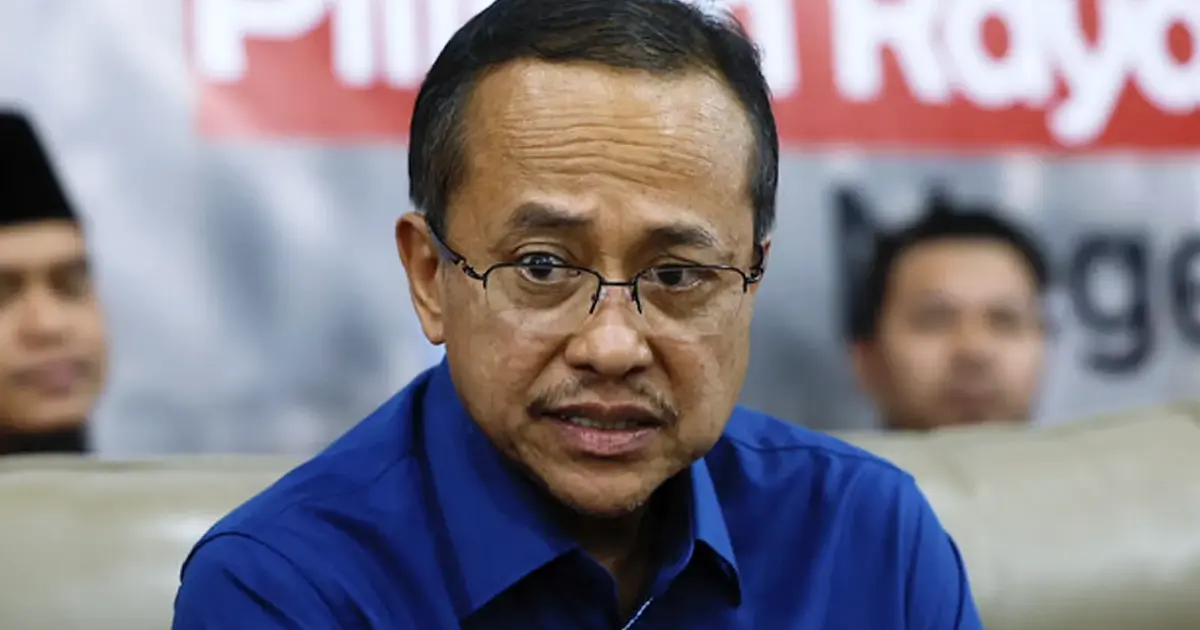
Samsuri Mokhtar, chairman of the Perikatan Nasional coalition, has dismissed concerns about potential voter confusion arising from both PAS and Bersatu deploying the same party logo during elections. The coalition leadership's intervention comes as the two member parties prepare for simultaneous campaigns under a unified branding framework, a structural arrangement that could theoretically create complications in constituencies where both organisations field candidates or share promotional materials.
The decision to allow multiple parties within a coalition to use identical or closely associated logos represents a deliberate strategic choice by Perikatan Nasional's central command. Rather than enforcing distinct visual identities for each component party, the coalition has opted for a unified presentation to voters, betting that clear communication about seat allocations will prevent electoral misunderstandings. Samsuri's public assurance reflects an attempt to address internal party concerns and external scepticism about whether such an arrangement can function smoothly across Malaysia's diverse electoral landscape.
What distinguishes this coalition structure from typical political arrangements is the emphasis on coordinated campaigning rather than independent party brands. PAS, the Parti Islam Se-Malaysia, and Bersatu, the Malaysian United Indigenous Party, occupy different ideological and constituency bases within Perikatan Nasional's structure. PAS traditionally commands substantial support in rural areas and among religiously-minded voters, while Bersatu appeals to a different demographic segment with its centrist positioning. By allowing both parties to utilise the coalition's logo, leadership appears confident that voters can differentiate between the two organisations based on local political context and campaigning machinery rather than visual branding alone.
The assurance that no confusion will result hinges critically on meticulous seat division agreements between PAS and Bersatu. If electoral boundaries have been clearly demarcated such that each party contests non-overlapping constituencies, then the shared logo becomes less problematic. Voters in areas designated for PAS candidates would see those individuals backed by PAS machinery and messaging, while Bersatu-dominated regions would present their candidates prominently. However, the implementation of such arrangements across Malaysia's hundreds of constituencies presents significant logistical and political challenges, particularly in urban areas where voter demographics are mixed and party support bases overlap.
The Malaysian political context adds layers of complexity to this branding strategy. Unlike systems where coalition parties maintain entirely separate identities, the Perikatan Nasional approach requires sophisticated voter education about which party is contesting each seat. This places substantial responsibility on ground-level party machinery, campaign coordinators, and community engagement activities to communicate effectively across multiple languages and cultural contexts. In densely populated areas, ensuring that Perikatan Nasional voters understand whether they are voting for a PAS or Bersatu representative becomes significantly more difficult than in homogeneous regions where one party has traditional dominance.
For Southeast Asian observers, this arrangement reflects broader trends in the region's coalition politics, where parties increasingly prioritise unified electoral fronts over distinct party identities. Countries throughout the region have experimented with similar structures, though successful implementation requires exceptionally disciplined party hierarchies and clear agreements on resource allocation and campaign strategies. Samsuri's confidence that this system will work without confusion suggests that Perikatan Nasional leadership believes its internal governance mechanisms are sufficiently robust to enforce seat agreements and prevent competing campaigns from undermining each other.
The announcement also carries implications for voter behaviour analysis and electoral forecasting. Observers tracking Perikatan Nasional's performance cannot simply aggregate votes cast for the coalition as a unified entity; they must instead analyse support patterns separately for PAS and Bersatu to understand which component party is gaining or losing ground with specific voter segments. This complexity adds a degree of interpretive difficulty to Malaysian electoral analysis, particularly for international observers unfamiliar with the coalition's internal structures and seat allocations.
Fromerikatan Nasional's perspective, the unified logo strategy potentially strengthens coalition cohesion by emphasising shared identity and common purpose. When multiple parties deploy the same branding, it reinforces messaging about coalition unity and collective governance objectives. This symbolic unity can be particularly valuable during elections when voter scepticism about coalition stability is high. If PAS and Bersatu are consistently presented as part of a single, coordinated political force, this may counteract narratives suggesting the coalition is fragile or prone to internal conflict.
However, the strategy also contains risks if seat agreements break down or if local campaign managers fail to execute the coordinated approach properly. Should voters in a particular constituency receive conflicting messages about which Perikatan Nasional component party is contesting their seat, or if campaign materials are distributed confusingly, the shared logo could indeed generate precisely the confusion that Samsuri is dismissing. The margin between successful implementation and electoral mishap hinges on execution quality across a vast and complex political machinery.
Looking forward, the success of this arrangement will provide important lessons for Malaysian coalition politics. If voters navigate the system smoothly and both PAS and Bersatu see their intended candidates elected, the model may become more widely adopted by other coalitions seeking to balance unified branding with party autonomy. Conversely, if confusion or miscommunication arises, future coalitions may revert to more traditional approaches featuring distinct visual identities for member parties. Samsuri's public confidence reflects optimism about Perikatan Nasional's organisational capacity, but ultimately, voter behaviour will determine whether the coalition's branding strategy proves viable.

