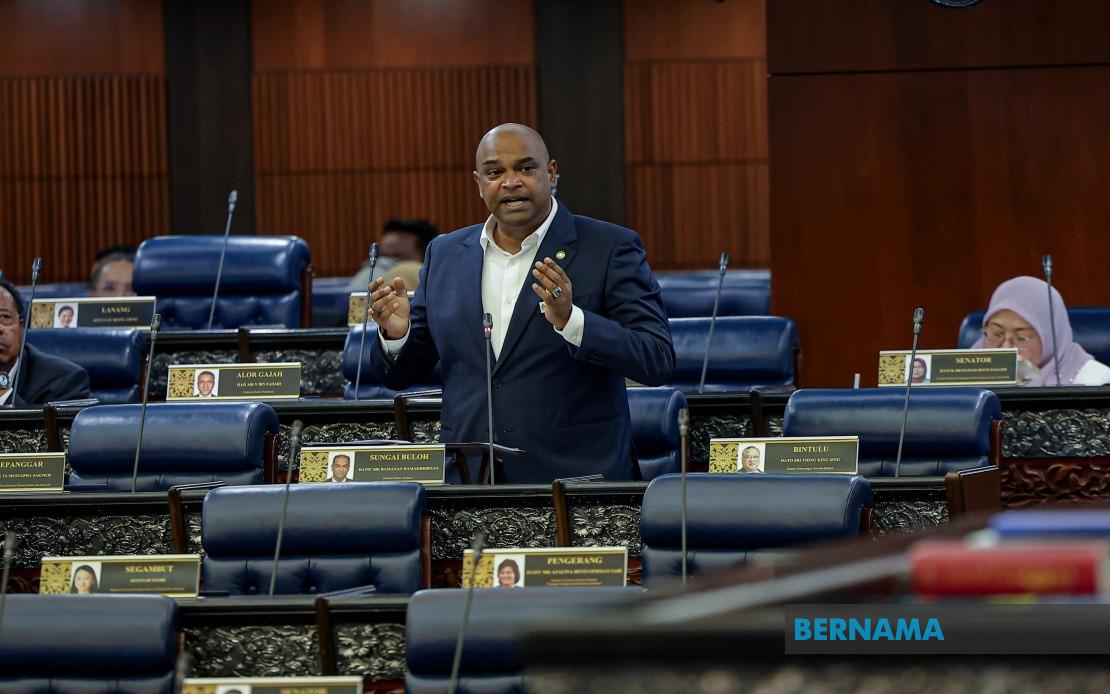
Malaysia's Social Security Organisation (PERKESO) has demonstrated robust operational performance, achieving an average compliance rate exceeding 96 per cent in the processing and payment of claims for contributors during the preceding fiscal year. Human Resources Minister Datuk Seri R. Ramanan announced the milestone during parliamentary proceedings, signalling strengthened institutional capacity to serve the nation's workforce. The achievement reflects concerted efforts to modernise service delivery mechanisms whilst maintaining rigorous quality assurance across multiple benefit schemes.
Central to this performance improvement has been the rollout of enhanced Customer Charter standards introduced last year, representing a significant tightening of operational discipline across PERKESO's portfolio of protection schemes. These refreshed benchmarks now govern processing timelines for all benefits administered under the LINDUNG Pekerja, LINDUNG Kendiri and LINDUNG Kasih programmes, provided that applicants have furnished complete documentation. The standardised approach eliminates administrative ambiguity and establishes clear service expectations for both contributors and beneficiaries seeking financial assistance during periods of need.
Processing timeframes have been calibrated according to benefit complexity and urgency. For straightforward claims such as Funeral Benefit and Temporary Disablement Benefit, PERKESO commits to a two-day turnaround from receipt of complete applications. More intricate matters including Permanent Disablement Benefit, Invalidity Pension, Survivor's Pension and Dependant's Benefit assessments require marginally extended periods of three days, reflecting the additional investigative work necessary to validate such claims accurately. This tiered approach balances the imperative for swift income replacement assistance with thorough verification procedures.
The LINDUNG Kerjaya scheme, representing PERKESO's newest initiative, has achieved particularly impressive compliance metrics. Under the 2025 Customer Charter specifications, all benefits under this scheme are targeted for processing within two days of receiving complete applications. Notably, the overall compliance performance for this programme has reached an exceptional 99.68 per cent, establishing a benchmark for organisational excellence that extends across the broader institution. Such achievement demonstrates that aggressive timelines need not compromise accuracy or integrity when supported by appropriate infrastructure and training.
Technological modernisation constitutes a cornerstone of PERKESO's operational transformation. The organisation has substantially expanded its digital ecosystem, anchored by the LINDUNG Faedah PERKESO portal, which streamlines the claims submission process and reduces administrative friction for contributors. Simultaneously, PERKESO has rolled out the 1Best system for internal benefits processing, representing a comprehensive overhaul of legacy infrastructure that had previously constrained processing velocity. Complete implementation of this modernised platform occurred during the current year, positioning the organisation to sustain and potentially exceed current compliance trajectories.
Complementing technological infrastructure, PERKESO has launched the PRIHATIN application to democratise access to service information. This mobile-first solution facilitates easier navigation of available programmes and claim procedures, particularly benefiting contributors with limited digital literacy or those requiring straightforward guidance. By reducing information asymmetries and enabling self-service access to procedural details, the application reduces unnecessary administrative contact and empowers contributors to prepare applications more thoroughly, indirectly improving first-submission approval rates.
Recognising that digital systems alone cannot address all contributor needs, PERKESO has established the Prihatin Squad (SPP), a dedicated advisory cadre providing personalised guidance to contributors, beneficiaries and insured persons. This human-centric complement to automated systems proves particularly valuable for complex cases or vulnerable populations requiring direct assistance navigating bureaucratic procedures. The initiative reflects understanding that equitable service delivery demands both technological efficiency and human accessibility.
For accident-related claims demanding rapid response, PERKESO has strengthened its coordination architecture through the INSPIRE System, which establishes direct electronic linkage between hospitals and PERKESO infrastructure. This bidirectional information flow enables concurrent documentation gathering and preliminary assessment, substantially compressing processing timelines. Emergency cases have been engineered to completion within 24 hours through simplified procedures, addressing the acute income replacement requirements of workers incapacitated through workplace injury. This acceleration proves particularly critical for lower-income workers lacking financial buffers to sustain extended waiting periods.
Combating fraudulent claims whilst maintaining processing efficiency requires sophisticated detection architecture. PERKESO employs a multi-layered assessment framework combining artificial intelligence screening with sustained manual verification. The initial AI phase identifies claims exhibiting statistical anomalies or pattern inconsistencies warranting deeper investigation, whilst human assessors subsequently execute double-checking procedures ensuring accuracy prior to payment authorisation. This hybrid approach harnesses technological pattern recognition capabilities whilst retaining human judgment for contextual assessment and discretionary decisions, mitigating risks of both fraud and false-positive rejections of legitimate claims.
The compliance achievements hold particular significance for Malaysian workers and dependents relying on PERKESO's protective mechanisms. Rapid claims processing directly translates into timely income replacement during periods of disablement, unemployment or death, enabling families to sustain living standards and meet financial obligations. Enhanced service delivery demonstrates governmental commitment to social security obligations, building institutional trust essential for voluntary sector participation and compliance. As Malaysia navigates evolving employment patterns and emerging occupational risks, PERKESO's demonstrated capacity to scale and adapt service delivery provides confidence that protective frameworks remain fit for contemporary workforce dynamics and will adapt successfully to future challenges.

