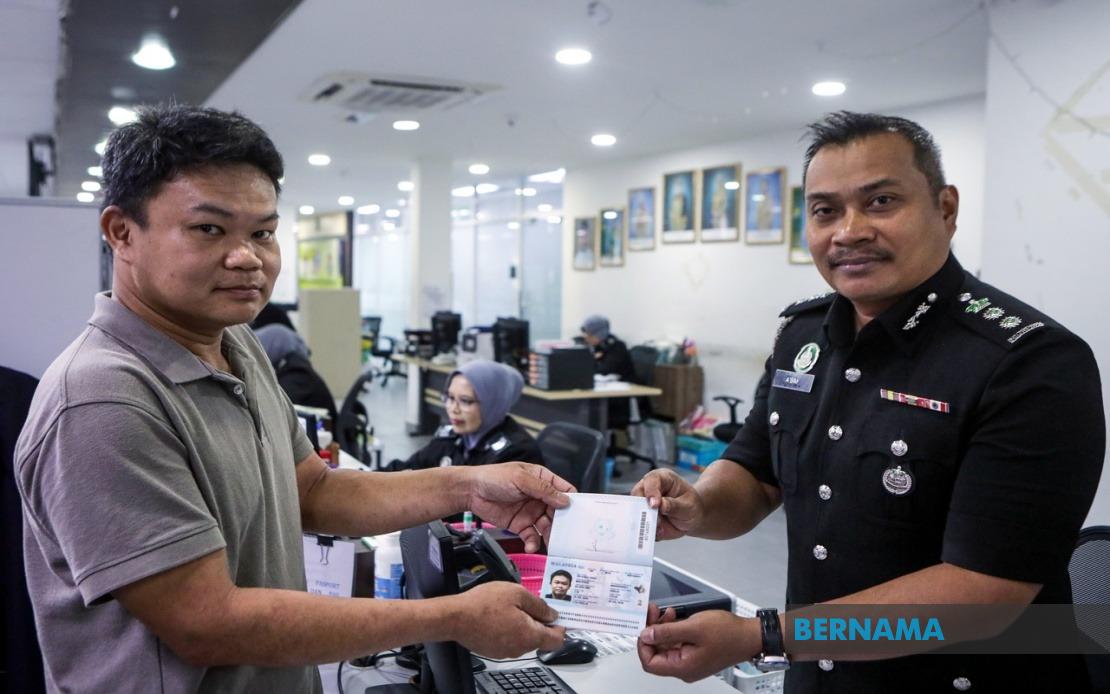
The Perlis Immigration Department has commenced issuing Malaysia's newly redesigned international passport, marking the first state-level implementation of the enhanced travel document since Prime Minister Datuk Seri Anwar Ibrahim's national rollout in late June. The updated Malaysian International Passport incorporates 94 security features designed to combat fraud and streamline border processes, representing a significant modernisation of the nation's travel documentation system.
Operations at the Kangar Urban Transformation Centre Immigration Office represent the current focal point for passport production in the northern state. Perlis Immigration director Mohammad A'sim Md Ali disclosed that the facility commenced issuing the new passports on July 20, with encouraging public reception on its debut day. The initial printing infrastructure was installed at this location following months of preparation, enabling Perlis residents to access the upgraded document without requiring travel to other states.
The rollout roadmap includes expansion beyond the present single printing location. Authorities anticipate completing infrastructure upgrades at the Perlis Ministry of Home Affairs Complex, where a second passport printing machine will be installed. Mohammad A'sim indicated that this secondary facility should become operational by October 2024, pending completion of building renovations and service counter enhancements. This dual-facility approach will substantially increase processing capacity and reduce waiting times for residents seeking passport renewal or initial applications.
Since January, the Perlis Immigration Department has processed a substantial volume of travel documents across multiple categories. The department issued 31,722 travel documents between January 1 and July 17, encompassing 6,918 passports alongside 72 Restricted Travel Documents and 24,732 Border Passes. These figures demonstrate consistent demand for travel documentation services in the state, suggesting that the enhanced passport offering will address a significant public need.
The new Malaysian International Passport provides applicants with flexibility regarding document validity. Those aged 18 and above may select either five-year or ten-year validity periods, accommodating different travel frequencies and personal preferences. This choice represents a departure from previous standardised validity arrangements, allowing Malaysians to align their passport terms with anticipated travel requirements and personal circumstances.
Prime Minister Datuk Seri Anwar Ibrahim officially launched the new passport on June 30, with national applications opening from July 1. The introduction reflects the government's commitment to enhancing border security infrastructure whilst modernising citizen services. The 94 integrated security features encompass both visible and embedded protective elements, substantially complicating counterfeiting attempts and strengthening Malaysia's compliance with international aviation and travel security standards.
For Malaysian residents in Perlis, the new passport system offers several practical advantages. The enhanced security features reduce vulnerability to identity theft and fraudulent document use, protecting passport holders throughout international travel. The flexibility in selecting validity periods enables cost-conscious applicants to choose shorter-term documents if preferred, whilst frequent travellers can secure ten-year validity to minimise administrative renewal burden.
The staggered implementation across states reflects practical capacity constraints inherent in establishing new printing infrastructure. Perlis's early adoption positions the state as an operational testing ground for the system, allowing authorities to identify workflow optimisations before nationwide scaling accelerates. The July 20 commencement provides approximately three months of operational data collection before the October facility expansion, enabling refinement of procedures and staff protocols.
Integrating the new passport system into existing Immigration Department operations required substantial preparation. Beyond equipment installation, staff training ensured personnel understood the enhanced security features and application procedures. The transition from previous passport batches to the new system proceeded smoothly, reflecting careful planning and coordination between federal and state-level immigration authorities.
The enhanced passport aligns Malaysia with international best practices in travel document security. Nations throughout the Asia-Pacific region have implemented comparable multi-feature security protocols, and Malaysia's approach demonstrates commitment to maintaining competitive standards. For frequent regional travellers, the improved security features facilitate smoother processing at regional border crossings where automated document scanning systems have become prevalent.
Beyond administrative convenience, the upgraded passport system carries strategic implications for Malaysia's tourism and business sectors. Enhanced document security confidence encourages international partners to streamline visa reciprocity arrangements, potentially facilitating easier travel for Malaysian citizens. The modernised system also reflects positively on government efficiency and technological capability, subtle factors influencing investor confidence and international business relationships.
Looking forward, the October expansion of printing capacity in Perlis will establish the state as a full-service passport production hub, reducing reliance on centralised facilities. This devolution of services aligns with broader administrative decentralisation goals whilst ensuring equitable service access across Malaysia's diverse geography. Residents no longer require travel to Kuala Lumpur or neighbouring states to obtain enhanced passports, reducing inconvenience and associated costs.
The successful commencement of operations in Perlis establishes a template for subsequent rollouts in other states. Immigration authorities will monitor implementation metrics including processing times, error rates, and public satisfaction to refine procedures before expanding nationally. This measured approach to technological transition minimises disruption whilst maximising the probability of system-wide success when nationwide full implementation occurs.

