Pakatan Harapan is adopting a defensive posture ahead of the Johor state election on July 11, particularly concerned about what happens to voter support in the 23 seats where Perikatan Nasional has chosen not to field candidates. The coalition recognizes that uncontested constituencies do not guarantee safety; instead, they introduce a new variable into campaign calculations that party strategists find troubling.
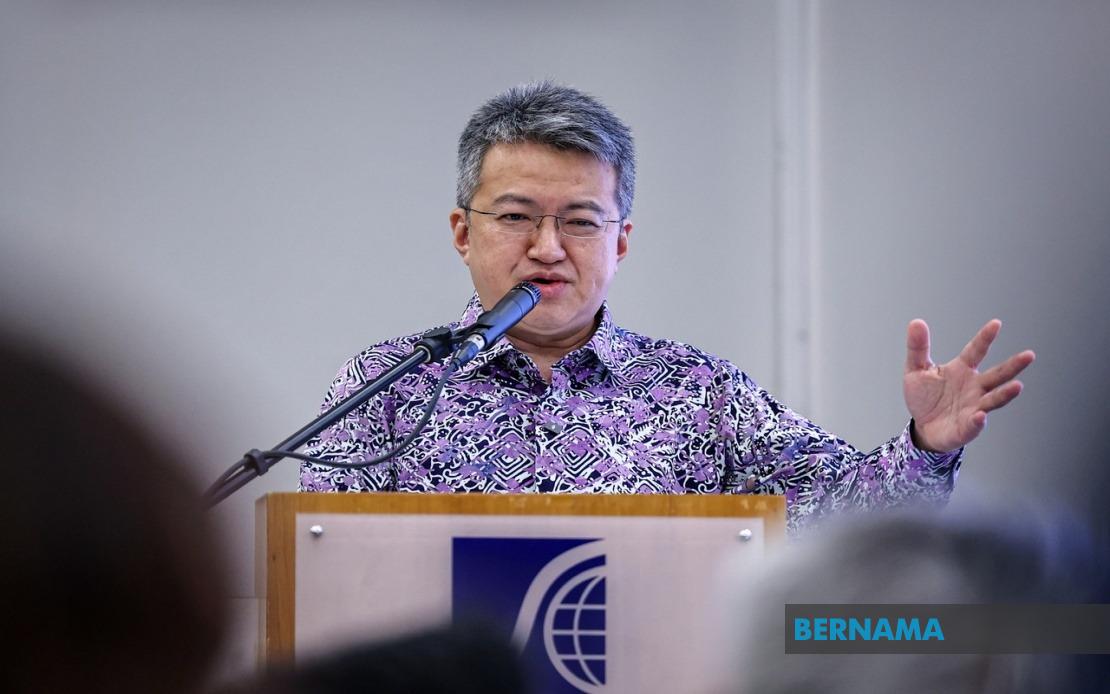
Liew Chin Tong, DAP's Strategic Director and Deputy Finance Minister, articulated the core anxiety dominating PH's pre-election deliberations. The question of whether PN supporters will consolidate their backing behind alternative candidates—potentially strengthening either Barisan Nasional or smaller parties—presents a genuine threat to PH's candidates, especially those from DAP, in seats where margins are expected to be narrow. This represents a departure from conventional electoral arithmetic, where the absence of a competing faction typically benefits the largest remaining contender.
The unpredictability stems from the fractured nature of Malaysian politics following the formation of PN as a distinct electoral force. Unlike earlier elections where opposition votes concentrated within a single bloc, contemporary contests feature multiple coalitions and independent candidates vying for attention. When PN supporters enter constituencies without their preferred option, their voting choices become genuinely uncertain—they may abstain, switch to BN as the establishment alternative, support PH in anti-establishment protest, or back smaller parties aligned with their ideological preferences. Liew's acknowledgment that "every election presents risks and possibilities that we may not anticipate" reflects the genuine difficulty in modelling such scenarios.
The implications ripple through PH's campaign strategy. Rather than assuming automatic advantage in PN-free constituencies, the coalition must invest significant resources in these areas to persuade opposition-leaning voters to consolidate behind their candidates. This spreads finite campaign resources thinner, forcing difficult prioritization decisions about where to concentrate party machinery and high-profile candidate appearances. For DAP specifically, which fields candidates in multiple Johor seats, the challenge is particularly acute because the party must simultaneously defend urban constituencies against BN while wooing PN-aligned voters in seats where the Islamic party traditionally had presence.
Liew's emphasis on remaining "vigilant" and continuing to "campaign diligently" underscores that PH recognizes no constituency can be taken for granted in the current political environment. The coalition's strategy centres on presenting a positive narrative around competence and fresh ideas rather than relying on opposition consolidation or anti-establishment sentiment alone. This represents a maturation of PH's approach since the 2022 general election, recognizing that voter behaviour has become more volatile and less predictable along traditional coalition lines.
The broader PH strategy involves fielding candidates described as young and credible, tailored for individual constituencies rather than deploying established veterans across multiple seats. This generational shift reflects both ideological preference within the coalition and practical calculation that new faces may prove more appealing to swing voters, including those freed from PN affiliation. The emphasis on youth and fresh talent also positions PH as a forward-looking alternative, potentially differentiating it from both the establishment credentials of BN and the Islamic positioning of PN.
Liew's personal decision not to defend the Perling state seat illustrates this transition philosophy. His choice aligns with DAP's stated principle against individuals simultaneously holding parliamentary and state assembly positions, a position that differentiates the party from rivals willing to accumulate multiple elected offices. By stepping aside, Liew creates space for former Senai assemblyman Alan Tee Boon Tsong, potentially bringing experience and established local networks to a seat with over 109,000 registered voters. This maneuver demonstrates PH's willingness to sacrifice incumbency advantage for what it calculates as longer-term institutional health and public perception of non-greed among elected representatives.
The Perling constituency itself exemplifies the contested nature of modern Johor politics. The three-cornered contest between Tee, BN's P. Pannir Selvam, and Bersama Malaysia's Boo Wei Han reflects the fragmentation affecting the state. With PN absent from this particular race, the competition narrows but does not simplify; Bersama Malaysia represents the minor-party wildcard element that can disrupt conventional two-way contests. The seat's substantial voter base means its outcome carries symbolic weight beyond its individual significance.
Regionally, Johor's election carries implications extending beyond the state itself. As Malaysia's southernmost peninsula state and the gateway to Singapore, Johor's electoral direction influences perceptions of political momentum ahead of anticipated national elections. A strong PH performance would suggest the coalition retains coalition-building capacity and voter confidence; conversely, BN gains would reinforce the narrative of establishment recovery. PN's decision to contest only 33 of 56 seats indicates strategic rebalancing within the opposition, possibly signalling internal negotiations with BN or positioning for national-level coalitions beyond this state poll.
For Malaysian voters and regional observers, the Johor election functions as a testing ground for contemporary coalition politics in Southeast Asia's most developed economy. The stakes involve not merely state-level governance but the viability of different political arrangements and whether traditional adversaries might find common cause. PH's caution reflects matured understanding that electoral advantage cannot be assumed and that the political ground has shifted fundamentally since 2018, requiring constant recalibration and sustained engagement with an increasingly unpredictable electorate.

