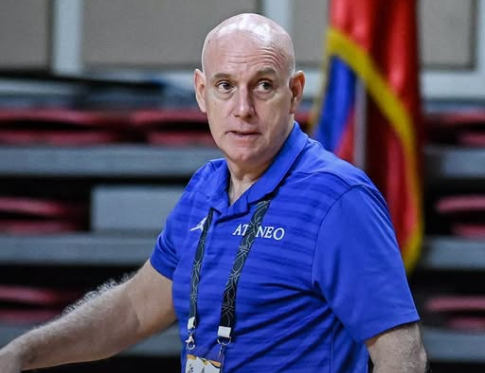
Philippine authorities have recommended charges against Thomas Anthony 'Tab' Baldwin, the former head coach of Ateneo de Manila University's men's basketball team, and ten other team staff members under the nation's Anti-Hazing Act. The recommendation stems from a training activity conducted on a beach in Dipaculao, Aurora on June 8, during which two players, Rene Baterbonia and Divine Adili, drowned. The Philippine National Police–Criminal Investigation and Detection Group made the recommendation after concluding that what was presented as a team-building exercise crossed legal and safety boundaries into systematic hazing.
Those recommended for charges alongside Baldwin include strength and conditioning coaches Grant Dearns and Ceasar Vicent Javellana Elumba, assistant coaches Dean Caesar B. Castaño, Sandro Nicholas Romero Soriano, and Reynaldo Jacinto. The list also encompasses student managers Paolo Manuel Maceda Adevoso and Andrew Lorenzo 'Drew' Bondoc Salud, as well as physical therapist John Eric Quiambao Rueca and utility personnel Aris Ramos Pronce and Joel 'Boy' Palmiano Rapa. All eleven individuals were physically present at the Aurora beach during the fatal activity, raising critical questions about the culture of oversight within the university's athletic programme.
Authorities argue that the structure of the June 8 activity violated Republic Act No. 11053, which prohibits hazardous practices under the guise of team-building or initiation. Officials emphasised that all eleven team members remained at the beach throughout the event without intervening or questioning the activity's safety. The Department of Justice will now evaluate the case for formal prosecution, with investigators noting the coordinated nature of what occurred—no single person raised concerns despite the apparent danger.
The day began at 4 o'clock in the morning when twenty players were ordered to run four kilometres. This was followed by intense physical games with punishments assigned to those who performed poorly. Crucially, authorities identified a critical timing issue: the seawater training segment commenced between 2 and 2.30 in the afternoon, precisely when the active high tide peaked at 2.27 in the afternoon. This timing coincided with conditions characterised by strong rip currents, elevated wave activity, and uneven seabed depths—factors that dramatically increased drowning risk for fatigued athletes already weakened by hours of demanding physical exertion.
The prosecution's framing of the incident highlights how modern anti-hazing legislation extends beyond traditional initiations to encompass any structured activity that subjects individuals to physical or psychological hardship. Under this interpretation, the combination of predawn running, competitive penalty exercises, and deliberately timed ocean immersion during hazardous tidal conditions meets the statutory definition of hazing, regardless of the stated purpose of team bonding. Legal authorities contend that such activities cannot be justified as legitimate athletic training when they are deliberately designed to test endurance through suffering rather than athletic skill development.
A particularly significant finding emerged regarding the composition of the activity. Twenty players participated, but only seventeen would ultimately be included in the roster submitted to the University Athletics Association of the Philippines. Investigators argue that the Aurora training session functioned as an implicit selection mechanism—a high-stakes crucible designed to determine which athletes possessed the willingness to endure extreme conditions without question. From this perspective, the activity represented a gatekeeping mechanism rather than inclusive team training, with participation and survival themselves becoming prerequisites for continued membership.
Baldwin had previously released a nine-minute video apology posted to Ateneo's official social media channels following Baterbonia and Adili's deaths. However, the recommendation of charges suggests that institutional expressions of remorse do not satisfy legal requirements when systematic institutional failures contributed to preventable fatalities. The involvement of so many coaching and support staff members indicates that the dangerous protocols reflected institutional culture rather than isolated individual misconduct.
Police investigators uncovered additional details about the conditions faced by the players. When Baterbonia and Adili's bodies were recovered, no weights were found attached to them, eliminating one potential explanation for their inability to stay afloat. This finding underscores the severity of the rip current conditions and the inadequacy of the swimmers' physical reserves after the extended, intense training that preceded water entry. The absence of additional weights demonstrates that nature alone provided sufficient hazard—the ocean conditions themselves proved lethal to exhausted athletes already compromised by dehydration and muscle fatigue.
The case carries broader implications for Southeast Asia's athletic institutions. Universities across the region frequently employ intensive training methods justified by competitive pressure and athletic tradition. The Philippine authorities' approach signals that even prestigious, high-profile athletic programmes cannot operate under different safety standards than apply to the general population. Schools must now recognise that combining scheduled adversity, physical depletion, and hazardous environmental conditions creates liability exposure regardless of coaching pedigree or institutional reputation.
The recommendations place responsibility firmly on leadership structures rather than individual actors, suggesting that accountability extends to every person who participated in planning and implementing the activity. No one claimed ignorance, no one asserted lack of authority to intervene, and no one stepped in to halt the proceedings—facts that prosecutors will likely emphasise during judicial proceedings. For Malaysian athletic institutions and similar organisations across the region, the case underscores that institutional safety protocols must supersede performance culture and that duty of care obligations cannot be delegated away through hierarchical structures.

