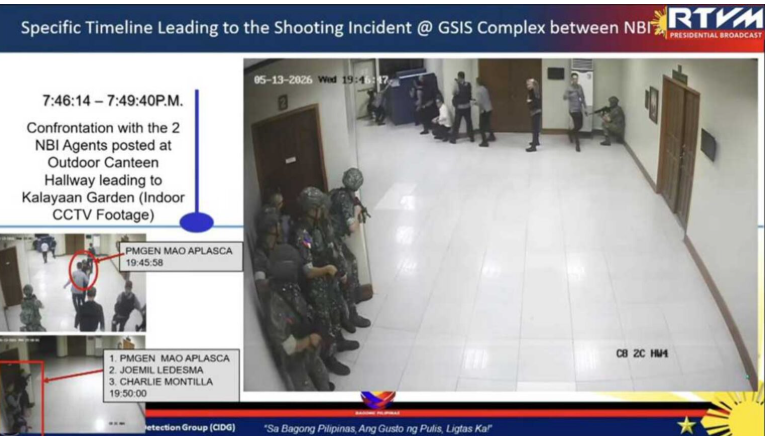
The Philippine Department of Justice has launched a formal investigation into potential criminal charges against government officials in connection with two linked incidents: a shooting attack on the Senate premises on May 13 and the escape of Senator Ronald dela Rosa from protective custody early the next morning. Justice Secretary Fredderick Vida announced that prosecutors are actively examining evidence and testimony to establish whether and how these events are connected, marking a significant development in a case that has raised serious questions about security protocols at the highest levels of the Philippine government.
According to Vida's statements, the DOJ panel has gathered accounts from multiple sources including members of the National Bureau of Investigation, journalists who were present during the incident, and security camera recordings. The evidence collected so far points to shots being fired from the fifth floor of the Senate building itself, with the apparent target being a clearly identifiable NBI vehicle stationed at the Government Service Insurance System premises. This detail suggests the shooting was not indiscriminate but rather appeared deliberately aimed at a specific vehicle, adding a layer of sophistication to what might otherwise seem like a random act of violence.
The confluence of these two incidents within roughly twelve hours has naturally sparked intense speculation in Philippine media and political circles about potential coordination or conspiracy. The timing alone—a shooting incident followed almost immediately by the escape of a high-profile senator from protective custody—raises the possibility that the events were connected, or at least that one may have been designed to facilitate or mask the other. Dela Rosa, who served as Philippine National Police chief and is now a senator, holds significant political weight and would logically have been under some form of official protection given his security background and current position.
While Vida confirmed that the investigation is examining "many personalities involved" who are public officials, he was careful not to identify specific individuals at this stage. This measured approach reflects standard prosecutorial practice in sensitive cases involving government figures, where premature accusations could compromise investigations or violate due process rights. However, the mention that persons of official standing are under scrutiny suggests the DOJ believes this is not merely a security breach but potentially a matter involving deliberate government action or complicity.
The involvement of the NBI—the Philippines' premier investigative agency—underscores the gravity with which authorities are treating the case. The fact that an NBI vehicle was apparently targeted, combined with the escape of a protected individual from government custody, indicates this extends beyond simple criminal conduct into the realm of potential institutional breakdown or corruption within state security apparatus. For Malaysian observers, the situation highlights how vulnerable even well-established institutions can become when internal coordination breaks down or when officials allegedly abuse their positions.
Vida's public statements emphasize the DOJ's commitment to impartiality and due process. His assertion that "no individual is above the law" serves notice that rank or position will not shield suspects from investigation, a significant message in a country where political connections have historically influenced enforcement. Simultaneously, his caveat that "no person should be judged before the evidence has been fully examined" suggests the department is aware of the case's sensitivity and wishes to avoid the appearance of prejudging officials merely because they hold public office.
For the broader Southeast Asian region, this investigation carries implications about governmental accountability and the rule of law. The Philippines' willingness to formally investigate senior officials in connection with serious allegations—including a shooting at the nation's seat of legislature—demonstrates that legal mechanisms exist to address breaches of public trust, even when those allegedly responsible occupy positions of considerable authority. This contrasts sharply with some neighboring jurisdictions where such investigations might be politically constrained or subject to pressure.
The security implications are equally significant. The shooting at the Senate, one of the Philippines' most heavily protected institutions, followed by the successful escape of a protected individual, raises urgent questions about how security is maintained at critical government facilities and who controls access to sensitive areas. Such lapses could indicate simple negligence, but the DOJ's investigation suggests officials believe the incidents may reflect something more deliberate or systematic.
The investigation also touches on broader questions about media freedom and public access to information. The DOJ's collection of accounts from "media practitioners" indicates journalists played a role in documenting the incident, highlighting how press presence at government venues can serve a transparency function when official investigations appear necessary.
As the investigation continues, the DOJ faces the challenge of conducting a thorough examination while navigating the political sensitivity of investigating fellow officials. The department's stated commitment to professionalism and objectivity will be tested as more evidence emerges and potential suspects are identified. For observers across the region, the outcome will provide insight into whether institutional checks and balances can function effectively even when those under investigation hold significant governmental authority.

