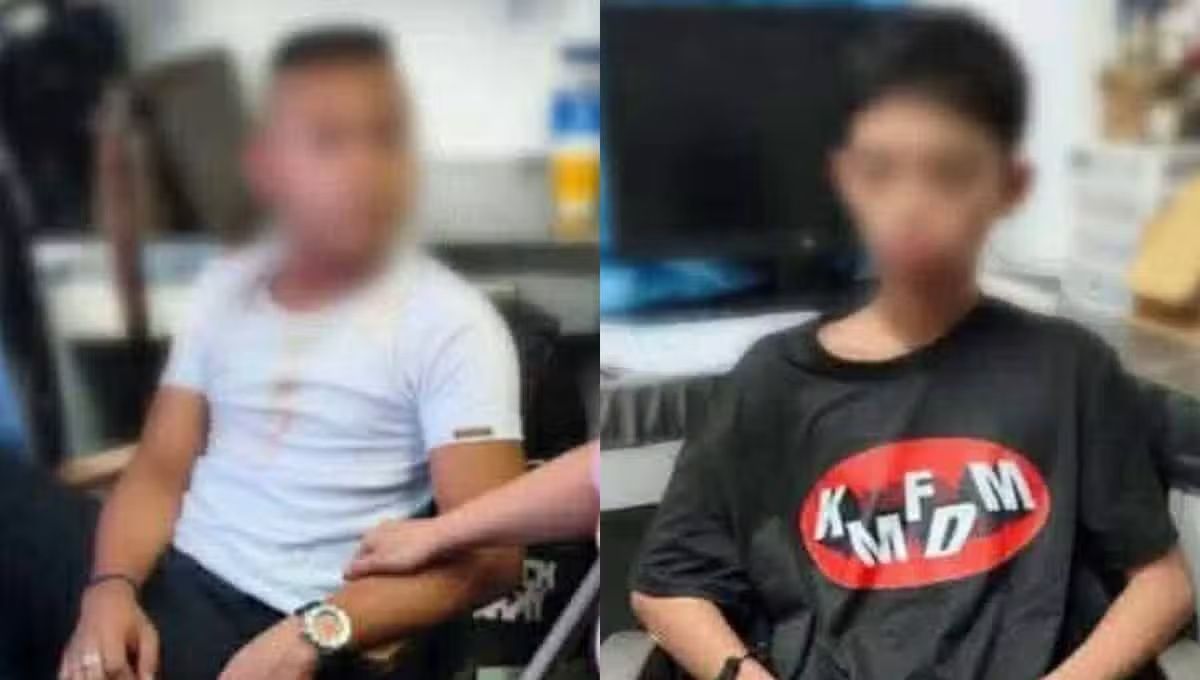
The Philippines recorded one of its deadliest school shootings in recent memory on June 22 when two Grade 9 students opened fire at San Jose National High School in Tacloban City, Leyte. The 14 and 15-year-old suspects, reportedly victims of prolonged bullying, discharged firearms into their school community, killing three classmates and injuring 20 others. The incident, striking in a nation where mass shootings remain uncommon, has immediately galvanised public discourse around a fundamental legal question: at what age should society hold children answerable for serious criminal acts?
The divergent treatment of the two perpetrators under current Philippine law has become the focal point of this heated discussion. The 15-year-old faces formal murder and attempted murder charges, subjecting him to the adult criminal justice system. His younger accomplice, however, falls below the threshold of criminal responsibility. Under the Juvenile Justice and Welfare Act of 2006, the 14-year-old cannot be prosecuted in conventional courts. Instead, authorities have directed him toward rehabilitation programmes, specifically facilities designated as Houses of Hope, which cater to children embroiled in legal matters.
The bereaved families have expressed profound frustration with this legal distinction. Erbea Fabian, whose 15-year-old son Chris Lorenz died in the attack, emphasised to Philippine Daily Inquirer reporters that both perpetrators deserve full accountability under law. She noted pointedly that her son's killer was the younger of the two suspects and bore primary responsibility for multiple fatalities. Similarly, Jenny Baldoria, mother of 16-year-old Joyancee who harboured aspirations of pursuing computer science, questioned how forgiveness could be extended to someone directly responsible for her child's death. These emotional testimonies have highlighted the gap between public expectation of justice and the protections afforded to young offenders.
The Tacloban incident coincides with a broader pattern of escalating violence among students nationwide. Authorities intercepted a potential mass shooting threat at another Leyte educational institution merely days after the Tacloban tragedy. Simultaneously, three separate stabbing incidents erupted on school campuses across different regions of the archipelago within a single week. This clustering of violent episodes has created momentum for legislative action, with President Ferdinand Marcos Jr publicly signalling openness to revising the minimum age threshold. Senator Robin Padilla proposed legislation in July 2025 to reduce the threshold to 10 years, urging the president to convene a special congressional session during the legislative recess.
Law enforcement agencies have articulated their own arguments for reform. The Philippine National Police spokesperson Allen Rae Co proposed establishing the minimum age at 12, citing documented cases of criminal involvement by children as young as nine. Interior Secretary Jonvic Remulla amplified this reasoning by referencing how criminal syndicates deliberately recruit minors for drug-related operations, exploiting legal immunity to shield the organisations from prosecution. These arguments reflect operational realities observed by frontline officials who contend that the current legal framework enables sophisticated criminal enterprises to circumvent accountability through the strategic deployment of underage participants.
Investigations into the Tacloban shooting have uncovered additional dimensions that complicate the narrative. The 14-year-old suspect had circulated violent video content online before the attack and demonstrated significant exposure to aggressive digital media. Authorities discovered that the perpetrator regularly engaged with GoreBox, a first-person shooter video game marketed by German developer F2Games featuring graphic violence and extensive weaponry. Responding to public concern, the government temporarily restricted access to the platform while examining potential causal connections to the shooting. This discovery has initiated parallel discussions about regulatory mechanisms governing minors' exposure to violent entertainment.
Regionally, the Philippines maintains a comparatively elevated threshold for juvenile criminal responsibility. Indonesia sets the minimum at 12 years, while Singapore establishes it at 10. Across most of Asia, nations have converged on 14 as the standard baseline. Yet international human rights organisations have cautioned against precipitous lowering of these thresholds. The United Nations Committee on the Rights of the Child has explicitly discouraged member states from reducing minimums already positioned above 14 and has characterised any threshold beneath 12 as incompatible with international child protection standards. In Singapore's system, youth offenders aged 10 to 16 face prosecution but typically appear before specialist Youth Courts rather than conventional tribunals.
Defenders of the existing juvenile justice framework contend that reform advocates misdiagnose the underlying problem. Tricia Clare Oco, executive director of the Juvenile Justice and Welfare Council, asserts that mechanically lowering the age threshold addresses surface-level symptomatology rather than addressing fundamental drivers of youth violence. She noted in state-run PTV commentary on June 24 that numerous American jurisdictions with stringent youth criminal laws continue experiencing recurring school shootings, suggesting that legislative modifications alone prove insufficient. Oco identified deeper societal pathologies as more consequential: fractured family structures, systematic bullying within schools, adverse peer influences, and media normalisation of violence.
The current regulatory architecture, according to juvenile justice advocates, already provides mechanisms for substantial intervention. Courts retain authority to mandate immediate involuntary commitment to rehabilitation facilities within 72 hours under existing provisions. These placements entail mandatory, structured rehabilitation programming, and legislation simultaneously imposes civil liability on parents or guardians. Oco's perspective emphasises that the question transcends whether young offenders face formal prosecution; rather, it centres on whether the justice system can effectively interrupt trajectories toward violence through rehabilitative rather than purely punitive mechanisms.
The Philippine Commission on Human Rights has announced parallel investigations alongside Senate inquiries, signalling institutional commitment to comprehensive examination. The commission's public statement called for institutional responses grounded in urgency, empathy, and adherence to human rights principles. Officials emphasised that only rights-centred, child-informed methodologies can adequately honour the murdered victims, provide necessary support to affected communities, and establish preventive frameworks against future tragedies. This inclusive approach suggests that resolution may transcend simple legislative modifications, instead demanding multi-sectoral examination of violence causation, rehabilitation capacity, and community intervention systems.
The tragic events in Tacloban have thrust Philippine policymakers toward fundamental reconciliation between competing imperatives: ensuring that young perpetrators of grave offences face meaningful consequences whilst simultaneously respecting international child protection norms and evidence suggesting that purely punitive approaches prove insufficient. The debate reflects broader regional tensions as nations navigate rapid social change, digital transformation, and evolving understandings of adolescent development and criminal culpability. How lawmakers resolve these competing demands will likely establish precedent for juvenile justice frameworks throughout Southeast Asia.

