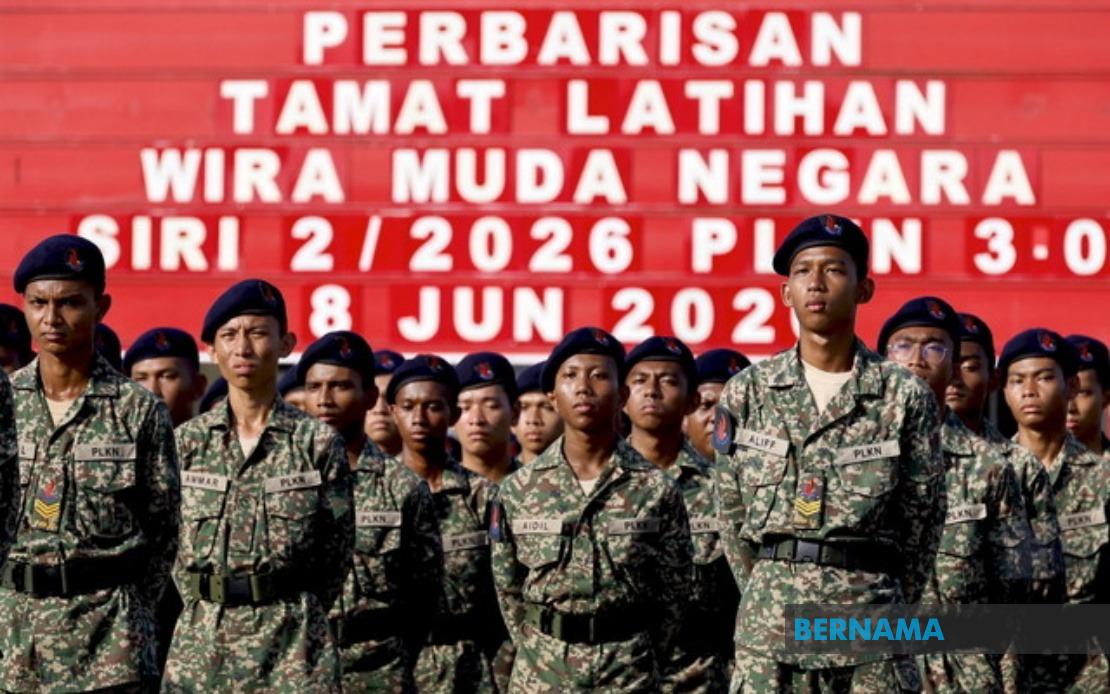
The revamped National Service Training Programme, known as PLKN 3.0, has successfully achieved every key performance indicator established for the initiative, according to findings presented to parliament by Deputy Defence Minister Adly Zahari. Impact assessments conducted in collaboration with Universiti Malaysia Sabah and the National Defence University of Malaysia demonstrate measurable enhancement across all six targeted dimensions of human capital development among the young people who have completed the training regimen since its expansion.
The programme establishes specific competency targets across patriotism, national unity, discipline and personal transformation, psychological strength and operational readiness, military competence, and community service orientation. Participating trainees are expected to achieve a minimum threshold of 80 per cent in each of these measured areas. These benchmarks reflect the government's strategy to channel national service into concrete personal development outcomes rather than treating the initiative merely as a ceremonial or compliance exercise.
Military knowledge demonstrated the programme's most dramatic transformation. Baseline assessments before training showed only 56 per cent of participants possessed adequate military competency. Following completion of the structured curriculum, this figure jumped to 84 per cent—a 28-percentage-point surge that substantially exceeds the 80 per cent target. This improvement signals that the training modules effectively transmit practical military understanding to a diverse cohort of young Malaysians with varying prior exposure to defence-related concepts.
Other measured indicators revealed similarly impressive trajectories. Patriotism levels climbed from 82 per cent pre-training to 88.98 per cent afterwards, while unity metrics registered a nine-percentage-point gain. Discipline and capacity for self-directed change showed particularly strong results, advancing from 77.36 per cent to 92.6 per cent. Mental resilience assessments, capturing psychological preparedness for demanding situations, improved from 71 per cent to 83 per cent. Volunteerism indicators rose modestly from 75 per cent to 83 per cent, indicating that the programme fosters a modest but meaningful increase in community service orientation.
Participation numbers have grown considerably. Through 2023, approximately 1,202 trainees enrolled in the programme's initial phase. The second cohort this year brought 2,202 additional participants, bringing the total to 3,404 young Malaysians exposed to the PLKN 3.0 curriculum. The ministry projects reaching 4,200 participants by December through its three operational training facilities, indicating accelerating uptake as the programme becomes established.
Capacity expansion plans underscore government commitment to broadening access. Nine additional training camps are currently in development stages, anticipated to enable the programme to accommodate 9,200 trainees annually once fully operational. This scaling trajectory suggests PLKN 3.0 is transitioning from a pilot initiative into a mainstream component of youth development policy, potentially affecting significant segments of Malaysia's young population over coming years.
Access considerations address equity concerns frequently raised about national programmes. The initiative deliberately incorporates young people from disadvantaged economic backgrounds and rural communities. Integration of Technical and Vocational Education and Training elements into the curriculum creates pathways for youth pursuing alternative educational trajectories, signalling that PLKN 3.0 welcomes participants regardless of their academic versus vocational orientation.
The government has secured recruitment incentives from five public sector appointing authorities, which have agreed to grant additional merit considerations to eligible PLKN 3.0 alumni during hiring and promotion processes. While officials emphasise the programme is not fundamentally an employment scheme, this arrangement provides tangible career advantage—a strategic design choice that links training participation to concrete post-service opportunities. For participants, particularly those from lower-income households, this benefit may justify the investment of several weeks in the training regimen.
Dropout analysis reveals practical implementation challenges. Among selected candidates, some individuals fail to report for training citing health complications or educational commitments. The ministry acknowledges these factors as legitimate reasons for non-participation, suggesting a relatively permissive approach to managing circumstances that prevent attendance. Understanding these barriers will inform future recruitment messaging and scheduling decisions.
The positive impact data carries significant implications for Malaysian youth development strategy. If the reported improvements in discipline, resilience, and patriotism prove durable beyond the immediate post-training period, PLKN 3.0 could meaningfully influence the character formation of Malaysia's emerging generation. The military knowledge gains are particularly noteworthy given widespread civilian unfamiliarity with defence institutions, potentially building greater understanding between armed services and the general population.
Regional context adds weight to these findings. Several Southeast Asian nations maintain compulsory military service, while others like Malaysia have experimented with voluntary alternatives. PLKN 3.0's success in delivering measurable developmental outcomes without mandatory conscription could position the programme as a model for other regional governments seeking to balance youth development objectives against individual freedom considerations.
The evidence base supporting programme efficacy relies on scientifically-structured before-and-after assessments rather than anecdotal reporting, lending credibility to the findings. Collaboration with established universities strengthens methodological rigour and reduces potential for politically-motivated distortion of results. This approach contrasts with historical Malaysian government programme evaluations sometimes criticised for lacking independent verification.
Moving forward, monitoring whether the documented training improvements persist as participants return to civilian life will prove crucial. Sustained gains in discipline and patriotism would vindicate the substantial public investment in facility construction and instructor training. Conversely, rapid degradation of these improvements would suggest the programme's benefits are transient, raising questions about whether the time and resources invested generate lasting value for participants and the nation.

