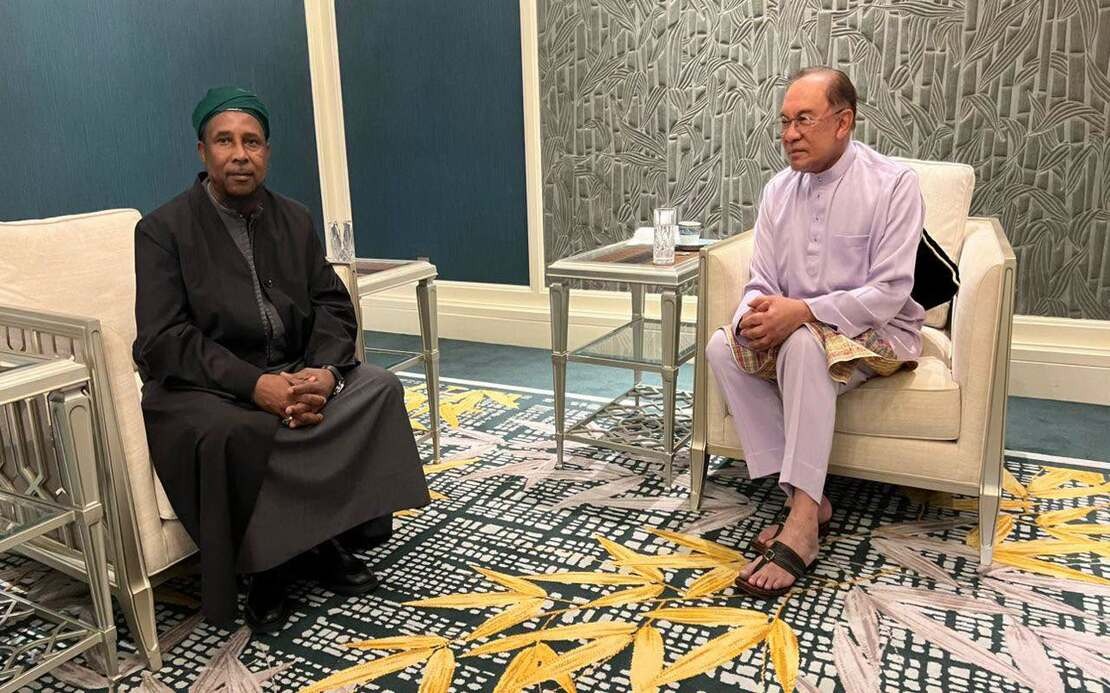
Prime Minister Datuk Seri Anwar Ibrahim hosted a farewell meeting on June 26 with Gambian Islamic scholar Sheikh Muhammad Haydara Al-Jilani, marking the conclusion of an extended educational tour that has taken the religious leader across Malaysia over the past month. The encounter, which Anwar documented on his official Facebook page, coincided with the Day of Ashura and Friday prayers, creating a spiritually significant moment for the exchange.
Sheikh Muhammad Haydara Al-Jilani's time in Malaysia has centred on a comprehensive dakwah initiative that blended knowledge dissemination with spiritual gatherings, or dhikr programmes, held at multiple venues throughout the country. This type of visit represents an important dimension of Malaysia's role as a hub for Islamic scholarship and interfaith dialogue in Southeast Asia, where such exchanges strengthen cultural and religious ties across the broader Muslim world.
The Prime Minister took the occasion to request special prayers from the visiting scholar, recognising both the spiritual significance of the Day of Ashura and the broader aspirations for the nation. In his public statement, Anwar explicitly asked that the Sheikh invoke blessings for Malaysian citizens' welfare, the country's internal peace, and continued divine protection and mercy over the nation. This reflects the customary intertwining of governance and spiritual consultation in Malaysian political culture, where leaders actively seek religious counsel and prayers from visiting Islamic figures.
The timing of the farewell meeting carries particular resonance. The Day of Ashura, the tenth day of Muharram in the Islamic calendar, holds deep spiritual meaning for Muslims globally and is observed with intensified prayer and reflection. For Anwar, a leader who has consistently emphasised Islam's role in Malaysia's national identity and governance framework, the coincidence of the scholar's departure with this sacred day added a layer of symbolic weight to the encounter.
Sheikh Muhammad Haydara's month-long sojourn demonstrates Malaysia's continued appeal as a destination for Islamic educational tourism and religious exchange programmes. The selection of multiple venues across the country for his knowledge-sharing sessions suggests deliberate efforts to broaden access to his teachings beyond Kuala Lumpur, ensuring that communities in different regions could benefit from his scholarly perspective. Such initiatives support Malaysia's positioning as a moderate Islamic voice in the region and reinforce its credentials as a centre for religious learning.
The nature of programmes conducted by visiting scholars like Sheikh Muhammad Haydara typically encompasses advanced theological discussions, Quranic exegesis, Islamic jurisprudence, and spiritually enriching collective worship. Dhikr gatherings, in particular, represent a form of Islamic practice centred on the remembrance of God through repetitive invocations and prayers, designed to deepen spiritual connection and communal solidarity among participants. These are distinctly different from conventional lectures, emphasising the experiential and devotional dimensions of Islamic practice.
For Malaysia's Islamic ecosystem, such visits serve multiple functions beyond the immediate spiritual benefit to participants. They generate goodwill with Islamic scholars and institutions across Africa and the broader Muslim world, elevate Malaysia's profile as a centre of Islamic learning, and provide domestic audiences with exposure to diverse Islamic traditions and interpretive approaches. The involvement of the Prime Minister in formally receiving and farewelling such visitors also signals governmental endorsement of these educational and spiritual initiatives.
Sheikh Muhammad Haydara's Gambian background adds particular interest to this exchange. The Gambia, though small in geographic and demographic terms, has a rich Islamic heritage and tradition of Islamic scholarship. Its scholars have historically contributed to West African Islamic thought and practice, and their engagement with Southeast Asian Islamic communities helps sustain transnational networks of learning and spiritual connection that predate modern nation-states.
The public nature of Anwar's farewell, documented through social media, reflects contemporary Malaysian political practice where leaders use digital platforms to demonstrate their engagement with religious matters and scholarly pursuits. This transparency also serves to legitimise such activities within the broader public discourse and signals to both domestic and international audiences the importance Malaysia places on religious scholarship and interfaith engagement.
As Sheikh Muhammad Haydara concluded his visit, the programmes he facilitated across Malaysia's diverse geographic and demographic landscape will likely continue to influence participants' understanding of Islamic practice and theology. The ripple effects of such educational initiatives extend beyond immediate attendees, shaping broader conversations about Islam's contemporary relevance and its potential to address modern social challenges. For a nation navigating complex questions about religious identity, national unity, and social cohesion, such scholarly exchanges represent valuable investments in deepening intellectual and spiritual discourse within the Muslim community.

