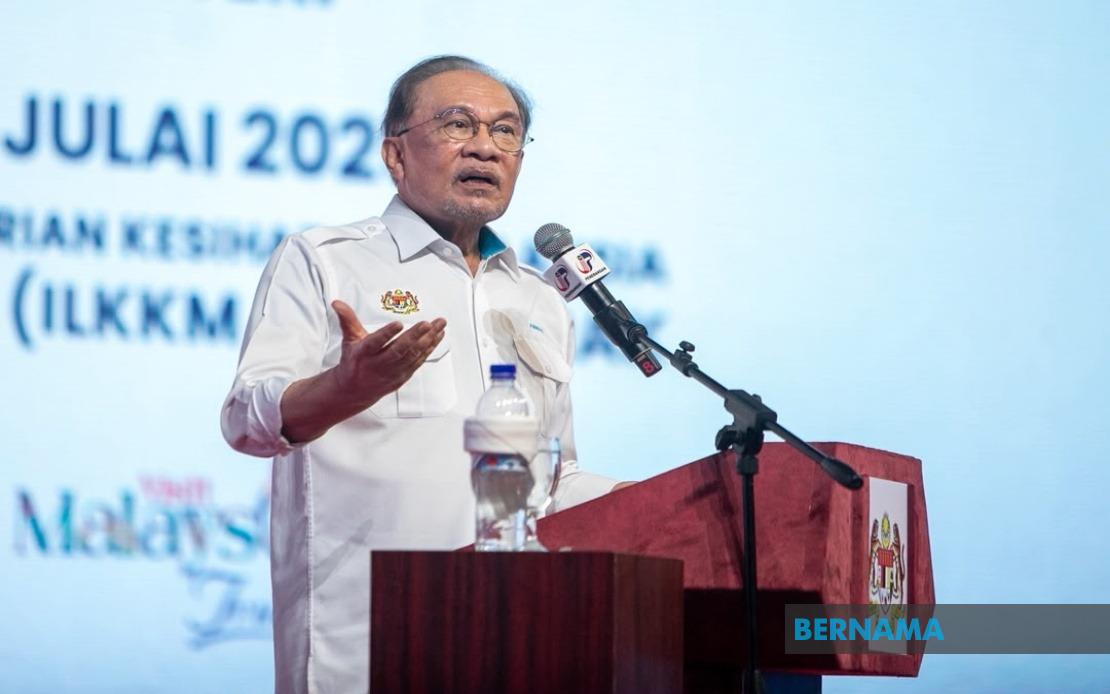
Prime Minister Datuk Seri Anwar Ibrahim has appealed to present-day Malaysians to develop a meaningful understanding of their nation's path to independence, emphasising that the freedoms and stability they experience today are built upon the painful struggles of previous generations. Speaking during the launch of the 2026 National Month and Fly the Jalur Gemilang Campaign in Ipoh on July 19, Anwar framed the commemoration not merely as an annual ritual of patriotic celebration, but as an essential opportunity for younger citizens to reconnect with the historical realities that shaped their country.
The Prime Minister's remarks reflect a growing concern among Malaysia's leadership that the passage of time risks eroding collective memory of the nation's anti-colonial resistance and the independence movement that culminated in Merdeka. With nearly seven decades having passed since 1957, the direct experiences and testimonies of those who lived through British rule and fought for self-determination are increasingly rare. Anwar's emphasis on revisiting historical narratives appears designed to bridge this generational gap and instil in younger Malaysians a tangible appreciation for the political sovereignty they have inherited.
Anwar articulated a three-part framework for meaningful engagement with independence themes. First, he stressed the necessity of historical literacy—encouraging Malaysians to examine and learn from the documented struggles of independence figures and movements. Second, he linked the physical act of flying the Jalur Gemilang flag to this deeper understanding, positioning the national symbol not as mere decoration but as a tangible representation of hard-won unity. Third, he framed this renewed awareness as a foundation upon which Malaysians can build toward future prosperity and national advancement. This progression from reflection to action reflects an understanding that heritage consciousness should translate into contemporary commitment to national development.
The Prime Minister's language was notably visceral, repeatedly invoking the imagery of blood, sweat and tears to convey the intensity of the independence struggle. Such rhetoric serves multiple purposes within Malaysia's political discourse. It acknowledges the genuine human cost of decolonisation while simultaneously appealing to emotional and patriotic sentiments. For younger Malaysians who have grown up in a stable, independent nation, such vivid descriptions attempt to render abstract historical concepts into comprehensible human experiences. This narrative approach is particularly relevant in an era where digital media and globalisation can sometimes overshadow local historical consciousness.
The Ipoh event brought together senior government figures including Communications Minister Datuk Seri Fahmi Fadzil, National Unity Minister Datuk Aaron Ago Dagang, and Perak Menteri Besar Datuk Seri Saarani Mohamad. The presence of the National Unity Minister alongside standard representatives signals that the 2026 National Month campaign carries particular significance for government initiatives aimed at strengthening social cohesion. Given Malaysia's multi-ethnic composition and occasional tensions between different communities, framing independence as a shared achievement of diverse groups becomes politically strategic. The independence struggle itself involved Malays, Chinese, Indians and other communities, though this multicultural dimension is sometimes underempresented in mainstream narratives.
The timing of the 2026 campaign launch carries symbolic weight as the nation approaches its seventieth independence anniversary in 2027. This forward-looking approach allows the government to build momentum for what is likely to be a major commemorative year. By launching promotional activities two years in advance, the administration appears committed to ensuring widespread participation and engagement across Malaysian society. Such extended preparation also provides opportunity for educational institutions, cultural organisations, and community groups to develop programming aligned with official themes.
Anwar's appeal to "children" to remember the sacrifices reflects a deliberate rhetorical strategy of direct address to younger generations. Rather than speaking about youth in third-person terms, his formulation creates a sense of personal obligation and collective responsibility. This approach acknowledges that national identity and civic consciousness are not automatically transmitted but must be actively cultivated through intentional communication and engagement. For Malaysian youth navigating questions of identity in an increasingly multicultural and globalised world, such appeals attempt to anchor contemporary identity to historical foundations.
The broader context of this campaign reflects international patterns where nations commemorate independence anniversaries with increasing elaboration as time distance grows. Many Southeast Asian countries similarly invest in heritage education and patriotic campaigns, particularly as founding generations pass from living memory. Malaysia's approach through the Jalur Gemilang campaign parallels efforts in neighbouring countries to maintain national consciousness and social unity through historical remembrance. However, Malaysia's particular challenge involves maintaining these narratives across significant demographic and linguistic diversity.
The practical implications of this campaign extend beyond ceremonial flag-flying. Educational curricula, media coverage, public events and community activities will likely be shaped by this central theme over the coming months. Schools may incorporate independence history more prominently into lessons, while cultural organisations may develop performances and exhibitions exploring this period. Such institutional reinforcement of historical consciousness represents the mechanism through which generational transmission of national identity occurs in modern societies. For Malaysian readers, particularly parents and educators, the campaign signals an official emphasis on historically-grounded citizenship education that complements formal schooling.
Anwar's particular emphasis on the meaning of independence, rather than merely its celebration, distinguishes this framing from purely nationalistic commemoration. The focus on understanding implies critical engagement with why independence mattered and continues to matter for Malaysians. This intellectual dimension acknowledges that younger Malaysians, exposed to diverse global perspectives through digital connectivity, require substantive reasons for patriotic commitment rather than mere emotional appeals. By positioning historical understanding as foundational to contemporary and future national development, the Prime Minister attempts to make independence not a historical artefact but a living concept relevant to ongoing national challenges and aspirations.

