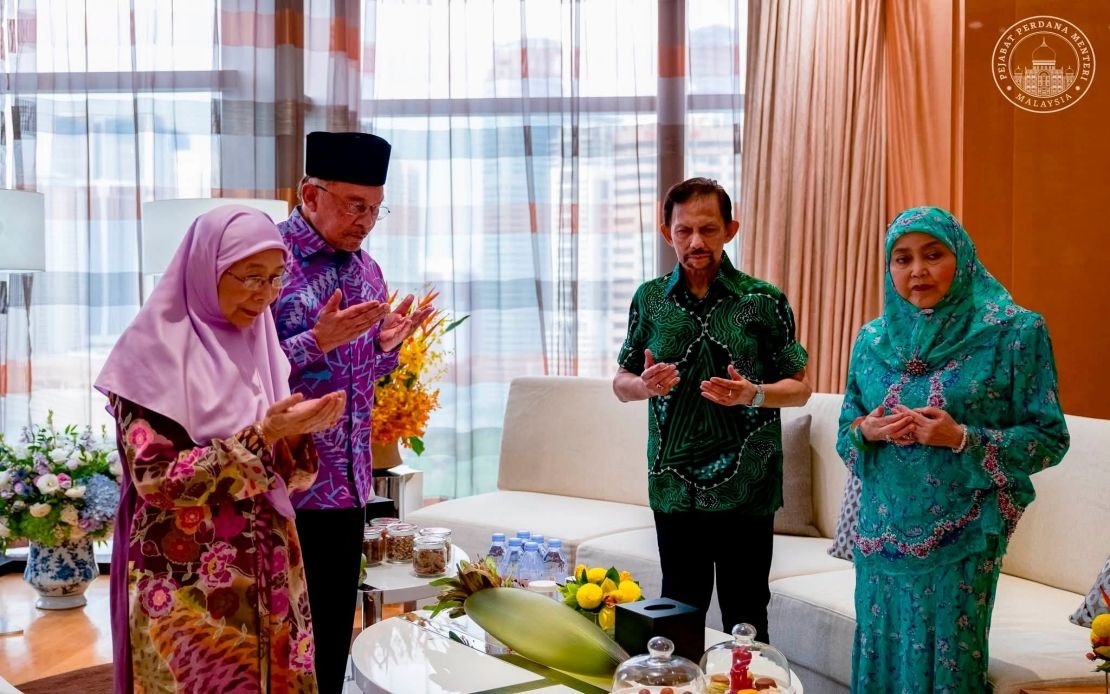
Prime Minister Datuk Seri Anwar Ibrahim has conveyed warm birthday wishes to Sultan Hassanal Bolkiah of Brunei as the Brunei monarch reaches his eighth decade. In a message shared publicly on social media, Anwar extended felicitations on behalf of both the Malaysian Government and its citizens, marking the significance of the occasion that fell on July 15.
The Prime Minister's tribute underscored Malaysia's commitment to the longstanding relationship between the two neighbouring Southeast Asian nations. Anwar articulated a prayer that His Majesty would continue to govern Brunei Darussalam with wisdom and prudence, reflecting the diplomatic courtesy customary between regional leaders. The message also carried an explicit wish that the bilateral ties and cooperative frameworks existing between Malaysia and Brunei would deepen further, creating mutual benefits for both populations.
Sultan Hassanal Bolkiah's life has been marked by an extraordinary longevity in leadership. Born on July 15, 1946, in Bandar Brunei, which is now known as Bandar Seri Begawan, the Sultan ascended to the throne in 1967 when he was formally proclaimed the 29th Sultan of Brunei. This means His Majesty has held the position for approximately 57 years, guiding the petroleum-rich sultanate through decades of economic development and regional integration.
A significant milestone in Sultan Hassanal Bolkiah's tenure came in September 2022 following the death of Queen Elizabeth II. With her passing, the Sultan inherited the distinction of being the world's longest-reigning living monarch still actively on the throne. This unique position has elevated his profile on the international stage and underscored his considerable experience in navigating complex geopolitical landscapes across multiple eras of regional and global change.
For Malaysia, the relationship with Brunei holds considerable strategic importance. The two nations share maritime borders, religious commonalities, and cultural affinities rooted in their Malay-Muslim heritage. Their cooperation extends across multiple domains including trade, defence, and cultural exchanges. The ASEAN framework further binds the two countries within a broader regional architecture focused on peace, stability, and economic prosperity.
Anwar's public acknowledgement of Sultan Hassanal Bolkiah's milestone reflects the protocol-conscious nature of contemporary diplomatic relations in Southeast Asia. Such gestures, though ceremonial in nature, serve to reinforce the bonds of goodwill and mutual respect that underpin bilateral relations. In an era where regional stability remains paramount, symbolic affirmations of friendship between heads of state carry weight beyond their immediate context.
Brunei's position as an oil and liquefied natural gas exporter has given it considerable economic clout within ASEAN, despite its smaller population and geographic footprint. Under Sultan Hassanal Bolkiah's stewardship, the sultanate has carefully managed its petroleum wealth and pursued economic diversification strategies. These policies have made Brunei one of the more prosperous nations in Southeast Asia, and its stability has been viewed as a stabilizing force within the broader region.
The Sultan's governance has also been characterized by his efforts to preserve Brunei's Islamic identity while maintaining pragmatic engagement with the international community. This balancing act has required considerable diplomatic finesse, particularly in managing relationships with various powers and navigating the complexities of regional geopolitics. His longevity in office speaks to both his political acumen and his capacity to adapt to changing circumstances across nearly six decades.
For Malaysian observers, Sultan Hassanal Bolkiah's 80th birthday represents a moment of reflection on the durability of monarchy as an institution in Southeast Asia. Malaysia itself remains a constitutional monarchy, and the region's royal establishments have proven resilient through periods of significant social and economic transformation. The Sultan's milestone serves as a reminder of the continuity and stability that such institutions can provide in rapidly changing societies.
Looking forward, the relationship between Malaysia and Brunei is likely to continue its trajectory of deepening cooperation. Shared interests in regional security, maritime affairs, and economic development create natural grounds for collaboration. Anwar's birthday message, while seemingly routine, carries implications for the trajectory of these partnerships and signals Malaysia's commitment to maintaining warm, productive relations with its smaller neighbour during a critical period of regional recalibration.

