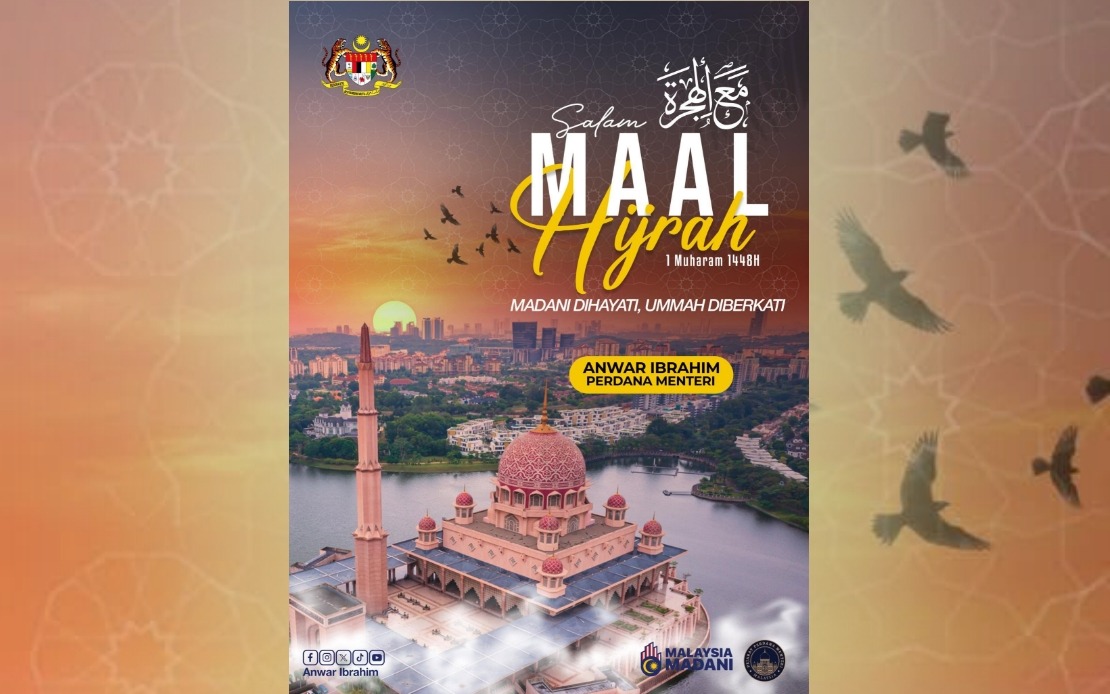
Prime Minister Datuk Seri Anwar Ibrahim has positioned the Islamic Hijrah commemoration as a pivotal moment for galvanising national consensus behind structural reforms, arguing that the Prophet Muhammad's migration to Madinah offers timeless lessons applicable to modern Malaysian governance. In marking Maal Hijrah 1448H, the Premier articulated a vision where spiritual principles translate into concrete institutional change through coordinated effort rather than isolated initiatives or political posturing. His intervention reflects an attempt to frame the government's reform agenda within an Islamic civilisational narrative that could resonate across Malaysia's Muslim-majority electorate while appealing to principles of inclusive development.
The historical arc of the Hijrah—the Prophet's migration from Mecca to Madinah in 622 CE—fundamentally reshaped Islamic practice by establishing the first Muslim city-state and introducing structured governance, legal frameworks, and social contracts. Anwar invoked this precedent to underscore that transformational change emerges from collective mobilisation rather than singular leadership or partisan advantage. He specifically highlighted the intergenerational and gender-inclusive dimensions of the original Hijrah, noting the pivotal contributions of young men like Saidina Ali ibn Abi Talib and women including Asma bint Abi Bakar. By recovering these historical figures from Islamic sources, the Prime Minister constructed an argument for broadbased participation in contemporary reform efforts, implicitly challenging any notion that change could be mandated from above without genuine societal buy-in.
Anwar's emphasis on consensus carries particular weight within Malaysia's political context, where competing interests among Malay-Muslim, non-Muslim, and various economic constituencies frequently create gridlock. The Hijrah framework allows him to invoke shared Islamic values while sidestep purely sectarian language, potentially building coalitions across the Pakatan Harapan coalition and even attracting support from opposition constituencies aligned with Islamic principles. His statement that reform "will not come merely through rhetoric, slogans and individual effort" reads as an implicit critique of opposition politics that rely on bombast rather than institutional capacity, whilst positioning the current administration as serious about substantive change. This rhetorical strategy attempts to elevate the debate beyond zero-sum electoral competition toward a shared civilisational project.
The theological substance Anwar injected through his reference to verse 100 of Surah An-Nisa reinforces the sacrifice-laden dimension of the Hijrah narrative. Islamic scholarship interprets this verse as guaranteeing divine reward for those who migrate in Allah's path, understood both literally as physical relocation and metaphorically as struggling against injustice. By invoking this scriptural anchor, Anwar reframes governmental reform as a sacred undertaking rather than technocratic administration, potentially elevating civil servants' commitment to policy implementation whilst calling citizens to patience during inevitable implementation challenges. The framing of Hijrah as "sacrifice, struggle, brotherhood, and unity-building" establishes moral vocabulary that transcends conventional political rhetoric and appeals to higher purpose.
The Department of Islamic Development Malaysia (Jakim) selected the theme "MADANI Dihayati, Ummah Diberkati" (MADANI Embraced, The Ummah Blessed) for the National Maal Hijrah Celebration, explicitly linking the government's MADANI framework—launched as Malaysia's development blueprint—with the Hijrah's foundational role in Islamic civilisation. This thematic integration suggests deliberate strategic messaging wherein contemporary governance reforms draw legitimacy from the Prophet's historical establishment of justice-based institutions in Madinah. The MADANI acronym itself (Memperkukuh perpaduan, Asas rakyat, Demokrati yang bernas, Integriti dan akauntabiliti, Negarawan sejati) emphasises unity, people-centredness, substantive democracy, integrity, and principled leadership—concepts ostensibly derived from Islamic ethics yet packaged for multiethnic appeal.
For Malaysian readers and regional observers, Anwar's intervention signals that the government intends to ground its policy agenda in Islamic moral philosophy rather than purely secular development economics or Western-derived governance models. This positioning carries diplomatic significance across Southeast Asia, where Islamic resurgence and debates over compatible development paths remain contested terrain. Malaysia's experience with pluralistic democracy and relatively successful economic integration of Muslim-majority populations into modern institutional frameworks offers a model potentially more appealing to Islamic constituencies throughout the region than either Western liberalism or authoritarian Islamic governance. By emphasising consensus-building and collective responsibility, Anwar subtly counters both Islamophobic narratives portraying Islamic governance as inherently autocratic and fundamentalist critiques suggesting Islamic democracy is impossible.
However, translating such inspiring rhetoric into institutional reality presents formidable obstacles. Consensus among Malaysia's fractious political landscape—encompassing Malay-Muslim conservatives, secular modernisers, non-Muslim minorities, and competing bureaucratic interests—remains perpetually elusive. The Prime Minister's invocation of unity may reflect genuine philosophical conviction, yet Malaysian history demonstrates that appeals to shared values frequently founder upon distribution conflicts over resources, power, and recognition. The rhetoric of collective reform can mask unequal burdens where particular constituencies bear disproportionate costs whilst others capture benefits. Anwar's emphasis on patience suggests awareness that reforms cannot be rushed, yet patience can become an excuse for indefinite delay or symbolic gestures replacing substantive change.
The demographic composition of Malaysia's civil service and political establishment, whilst increasingly reflecting broader population diversity, remains concentrated in certain families and networks resistant to decentralisation. Implementing genuine consensus-based reform would require unprecedented transparency regarding resource allocation, ministerial decision-making, and budgetary priorities. The Hijrah's historical model involved relatively small populations in specific geographical contexts; scaling such principles to govern 35 million people across competing economic regions and ethnic communities presents orders of magnitude greater complexity. Whether Anwar's government possesses the institutional capacity and political will to translate Hijrah-inspired principles into distributed decision-making and accountability mechanisms remains the ultimate test of his message's authenticity.
Moreover, Anwar's particular emphasis on youth participation and female contributions to the Hijrah merits scrutiny regarding implementation. Malaysian governance structures, despite rhetorical commitment to youth engagement and women's empowerment, remain substantially controlled by senior political figures and established bureaucratic hierarchies. Genuine translation of the Hijrah's inclusive model would require devolving decision-making authority to younger cadres and creating institutional mechanisms ensuring women's substantive influence rather than tokenistic representation. The gap between aspirational rhetoric invoking historical female figures like Asma bint Abi Bakar and contemporary Malaysian women's limited access to senior political and economic positions could prove embarrassingly visible if governance practices fail to align with stated principles.
Anwar's strategic framing of reform through Islamic civilisational narrative also requires navigating complex intersections with Malaysia's constitutional structure, which protects religious freedom and non-Muslim rights. Opposition parties and civil society organisations representing secular or non-Islamic constituencies may interpret Hijrah-centred reform rhetoric as threatening to pluralistic covenants. The Prime Minister's emphasis that consensus must span "diverse community networks" attempts to preempt such concerns, yet whether different communal groups perceive Islamic philosophical foundations as genuinely accommodating their interests remains uncertain. The delicate balance between grounding governance in Islamic principles whilst maintaining constitutional protections for religious minorities defines one of Malaysia's enduring political challenges, and Anwar's Hijrah framework, whatever its inspirational force, cannot automatically resolve these structural tensions.
Looking forward, the viability of Anwar's consensus-based reform agenda depends substantially on demonstrable progress in fighting corruption, improving service delivery, and generating inclusive economic growth. Rhetoric invoking the Prophet's migration and Islamic civilisational values carries persuasive force only when coupled with visible institutional improvements and equitable resource distribution. Malaysian citizens and regional observers will scrutinise whether the government's reform trajectory—from ministerial conduct to police accountability to judicial independence to fiscal transparency—actually reflects the higher standards implicit in Hijrah-inspired governance. Success would validate Anwar's ambitious attempt to ground contemporary Malaysian development in Islamic ethical traditions; failure would expose the gap between inspiring spiritual language and conventional political practice, potentially delegitimising both religious discourse and institutional reform efforts more broadly across Southeast Asia's Muslim-majority nations.

