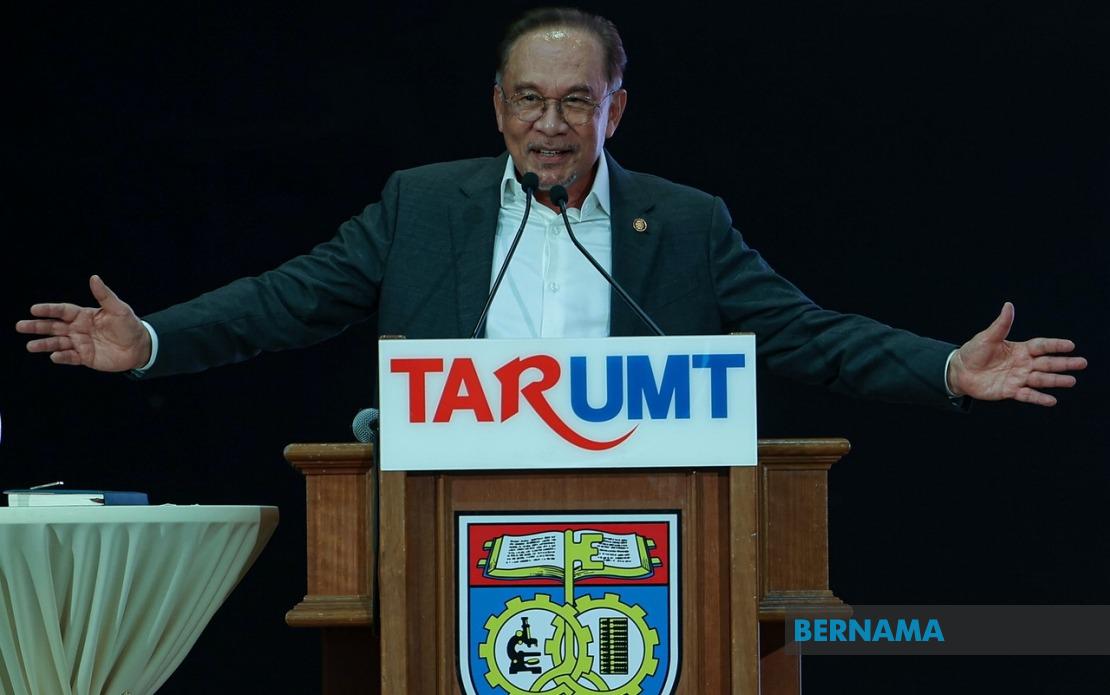
Prime Minister Datuk Seri Anwar Ibrahim has granted Tunku Abdul Rahman University of Management and Technology (TAR UMT) a further decade of tax exemption status, cementing the institution's financial framework and signalling Government backing for the private higher education sector. The Cabinet formally reviewed and approved the extension during its meeting on July 8, with Communications Minister Datuk Fahmi Fadzil announcing the decision through an official statement highlighting the administration's confidence in the university's ongoing role within Malaysia's tertiary education landscape.
The decision represents a continuation of the Prime Minister's earlier commitment, which he had announced during a visit to the TAR UMT campus on February 4 as part of his 'Meet Anwar' engagement programme. At that time, he pledged that all educational bodies and foundations, including TAR UMT, would benefit from a decade-long exemption from income tax obligations. The formal Cabinet approval now translates that promise into official policy, providing institutional certainty for TAR UMT's financial planning and operations through 2034.
Fahmi emphasised that the exemption came with meaningful conditions attached, ensuring accountability and transparency throughout the approval period. The university must maintain compliance with stringent oversight mechanisms, particularly the requirement to submit audited financial statements annually in accordance with the provisions set out in Subsection 44(6) of the Income Tax Act 1967. This framework establishes a balance between granting tax relief and ensuring public institutions meet rigorous financial governance standards.
TAR UMT's significance within Malaysia's private education ecosystem cannot be overstated. The institution has positioned itself as a provider of quality higher education at a price point substantially more accessible than many competitors in the private university market. By maintaining tax exemption status, the Government effectively subsidises the operational efficiency of a major player in private tertiary education, potentially allowing the university to maintain competitive tuition fees while investing in infrastructure, faculty recruitment, and academic programmes.
The extension also reflects broader policy priorities of the MADANI Government, which has made accessibility to quality education a cornerstone of its development agenda. By supporting educational institutions through tax concessions, the administration signals its intention to reduce barriers to tertiary qualification acquisition, particularly for middle and lower-middle income Malaysians who might otherwise find private university fees prohibitive. TAR UMT, with its focus on professional and technical disciplines, serves a demographic increasingly seeking alternatives to public university places.
From a fiscal perspective, the decision requires balancing competing priorities. While tax exemptions reduce immediate Government revenue, the broader economic logic suggests that an educated workforce generates longer-term tax contributions and reduced social expenditure demands. Universities classified as educational institutions and charities under Malaysian tax law have historically received exemption, reflecting the principle that knowledge creation and human capital development serve the national interest despite modest foregone tax income in the short term.
The compliance requirements embedded in the approval warrant particular scrutiny. Annual submission of audited financial statements represents standard practice, but the specific invocation of the Income Tax Act provisions indicates that TAR UMT remains subject to monitoring by tax authorities throughout the exemption period. This oversight mechanism protects against potential misuse of tax-exempt status and ensures the university's operations remain aligned with charitable and educational purposes rather than profit maximisation.
For TAR UMT specifically, the extension provides crucial operational stability. Multi-year certainty regarding tax obligations allows the university to engage in confident long-term planning, including capital expansion projects, academic programme development, and competitive salary packages for attracting quality faculty. Conversely, if the exemption had been denied or restricted, the institution would have faced substantially higher operational costs that could have necessitated significant fee increases or service reductions.
The decision also sits within Malaysia's broader competitive positioning in the Southeast Asian higher education marketplace. Institutions like TAR UMT, operating within a supportive regulatory environment with tax benefits, can offer better value propositions to both domestic and international students compared to private universities in countries without similar exemption frameworks. This advantage becomes particularly relevant as Malaysia seeks to strengthen its standing as a regional education hub.
The timing of the announcement, during a Government programme focused on direct engagement with citizens, underscores the administration's desire to demonstrate responsiveness to sectoral concerns. Educational institutions represent significant employers and service providers within their communities, and their financial stability carries ripple effects throughout local economies. By publicly committing to TAR UMT's exemption, the Government reinforces its support for private sector participation in delivering public goods.
Looking ahead, the 10-year exemption window provides TAR UMT with a planning horizon extending well into the next decade, allowing the institution to position itself strategically within Malaysia's evolving higher education landscape. Whether future administrations will extend the exemption again remains uncertain, but the current approval demonstrates consensus around the value of tax incentives for private educational providers operating at accessible price points.
The broader implications for Malaysia's education sector suggest that tax exemptions for universities, particularly those emphasising affordability and practical skills development, enjoy political support across the policy establishment. As competition for tertiary enrolment intensifies amid demographic shifts and evolving career requirements, institutions like TAR UMT that receive such benefits may gain advantages in offering competitive terms while maintaining financial sustainability.

