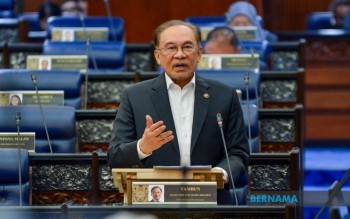
Prime Minister Datuk Seri Anwar Ibrahim has drawn a hard line on integrity standards governing Malaysia's retirement fund investments, declaring that the government will tolerate zero corruption or fraud in connection with the Retirement Fund (Incorporated) (KWAP)'s stake in aquaculture technology start-up eFishery. Speaking in the Dewan Negara on July 20, Anwar struck a firm stance even as initial findings suggested no impropriety had occurred, signalling that Malaysia's approach to safeguarding citizen retirement savings demands uncompromising scrutiny at every level of the investment process.
The Prime Minister, who doubles as Finance Minister, confirmed he has engaged directly with KWAP management to emphasise the necessity of complete cooperation with investigators. His involvement at the highest level underscores the political sensitivity surrounding pension fund deployment, particularly when directed towards emerging technology ventures that carry inherent risks and attract public curiosity about decision-making protocols. The emphasis on cooperation signals that Anwar views this investigation not as a box-ticking exercise but as an opportunity to demonstrate institutional accountability to Malaysian savers whose retirement security rests on prudent stewardship of their contributions.
While acknowledging that the preliminary assessment found no evidence of corrupt or fraudulent conduct, Anwar pointedly stressed that such initial findings do not obviate the need for the Malaysian Anti-Corruption Commission (MACC) to conduct a comprehensive examination. This measured approach reflects an understanding that thorough investigation serves multiple purposes: it protects the integrity of the fund's reputation, ensures public confidence in Malaysia's institutional safeguards, and establishes clear precedent for how future controversial investments will be evaluated. The distinction Anwar draws between an optimistic initial report and the necessity of independent scrutiny demonstrates sophisticated governance thinking that acknowledges the difference between absence of evidence and evidence of absence.
The MACC's mandate will extend beyond merely checking for direct malfeasance; instead, investigators will examine the entire investment architecture, including how proposals were evaluated, which criteria guided the decision-making process, and how the investment panel's deliberations translated into recommendations that ultimately secured board approval. This granular approach reflects recognition that corruption and fraud in institutional investment contexts often operate through subtle processes rather than obvious misconduct, involving questions about whether proper due diligence occurred, whether all relevant risks were disclosed, and whether competing alternatives received fair consideration. By framing the investigation this way, Anwar positions it as a legitimate governance review rather than an inquisition driven by suspicion.
The parliamentary exchange itself arose from Senator Mohd Hasbie Muda's broader inquiry about how Malaysia's major retirement vehicles—the Employees Provident Fund (KWSP) and KWAP—can deliver optimal returns to beneficiaries despite navigating treacherous global geopolitical conditions. This question touches on fundamental tensions in pension fund management: the need to pursue growth-oriented investments that exceed inflation and deliver meaningful retirement income versus the imperative to minimise risk exposure that could jeopardise retiree security. KWAP's foray into aquaculture technology ventures represents a contemporary iteration of this perennial challenge, as fund managers seek exposure to high-growth sectors while Malaysian savers harbour legitimate concerns about whether emerging technology companies represent appropriate deployment of retirement capital.
A supplementary question from Senator Wan Martina Wan Yusoff probed deeper, asking the government to articulate its transformation strategy for identifying suitable investment destinations and to clarify what guarantees exist that ordinary Malaysians' retirement savings remain protected across the fund's portfolio. This question reflects growing public awareness that Malaysia's enormous institutional investment capacity—KWAP and KWSP together manage hundreds of billions of ringgit—carries significant influence over national economic development and that investment decisions have distributional consequences affecting which sectors receive capital and how returns flow back to beneficiaries. The senator's emphasis on protection mechanisms suggests constituent concern about whether current oversight structures adequately shield pension savings from unsound ventures.
The eFishery investment itself carries particular resonance for Southeast Asian observers given the region's aquaculture significance and the technology sector's prominent role in contemporary economic transformation narratives. Malaysia has positioned itself as an aspirational tech hub, and institutional appetite for funding start-ups in this space reflects both genuine growth potential and broader policy commitments to digital economy development. However, the controversy surrounding this particular investment demonstrates that enthusiasm for innovation must remain tethered to rigorous evaluation of investment fundamentals and transparent governance processes that Malaysian savers can trust.
Anwar's statement carries implications extending beyond this single transaction, establishing expectations about how Malaysia will handle future institutional investments in controversial or novel sectors. By publicly committing to uncompromising standards and ordering investigation despite optimistic initial reports, he signals that no investment opportunity—however strategically important or technically promising—will receive a pass on governance and integrity scrutiny. This posture matters significantly for Malaysia's international credibility, particularly as foreign investors increasingly weight institutional quality and anti-corruption practices when deciding whether to locate regional operations or capital in Southeast Asia.
The timing and intensity of the Prime Minister's intervention also suggests awareness that public trust in retirement fund stewardship is not automatic; it must be actively maintained through demonstrated commitment to transparency and accountability. Malaysian citizens depend entirely on the integrity of fund managers to safeguard their contributions, and even the appearance of inadequate oversight or insufficient questioning of questionable investments can erode confidence in institutional arrangements. By personally engaging with KWAP management and publicly demanding MACC investigation, Anwar performs important symbolic work, assuring Malaysians that their retirement security remains a serious governmental concern and that institutional politics will not shield poor investment decisions from scrutiny.
Looking forward, this episode will likely influence how KWAP and other Malaysian sovereign wealth vehicles evaluate future technology sector proposals. The enhanced oversight standards implicit in Anwar's statement may slow investment decision-making timelines but should ultimately strengthen institutional governance by ensuring that innovation enthusiasm does not override prudential considerations. For Malaysian savers—the ultimate stakeholders in KWAP—the investigation outcome will either validate confidence in fund management processes or identify specific governance shortcomings requiring corrective action. Either way, the commitment to transparency and investigation represents a positive institutional development for a nation where pension security remains paramount.

