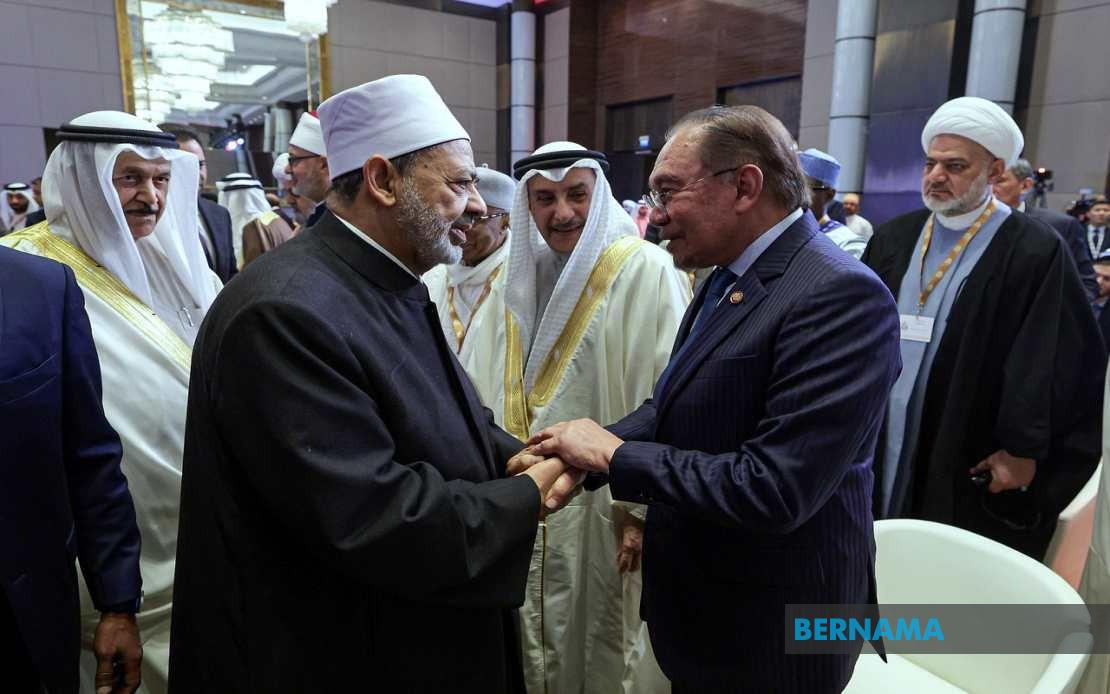
Prime Minister Datuk Seri Anwar Ibrahim has expressed strong admiration for Al-Azhar Al-Sharif's Grand Imam, Prof Dr Ahmad Muhammad Ahmad Al-Tayyeb, recognising him as one of the Islamic world's most influential voices promoting wasatiyyah—the principle of moderation—in addressing contemporary challenges facing Muslim communities and global society.
Writing in the commemorative volume "In the Presence of Al-Tayeb," Anwar characterised the renowned Islamic scholar as a transformative figure whose intellectual leadership extends beyond traditional institutional confines to shape how Muslims understand the intricate relationships between faith, governance, and communal responsibility in an increasingly complex world. The Prime Minister's endorsement carries particular significance given Malaysia's own constitutional commitment to moderate Islam and interfaith cooperation, positioning the nation as a potential ally in disseminating these principles across the Asia-Pacific region.
According to Anwar, Al-Tayyeb has consistently advocated for strengthening bonds within the global Muslim community while simultaneously fostering a culture of compassion, reciprocal respect, and peaceful coexistence between Muslims and followers of other religions. This dual commitment—internal cohesion coupled with external bridge-building—represents the intellectual framework that Malaysia has itself attempted to institutionalise through various religious and diplomatic initiatives over recent decades.
The book, published by the Muslim Council of Elders earlier this year to commemorate Al-Tayyeb's 80th birthday, serves as a testament to his enduring influence and brings together reflections from prominent religious authorities and international thought leaders. Such international recognition underscores how Islamic moderation, particularly when championed by figures of Al-Tayyeb's stature within the traditional Al-Azhar institution, transcends regional boundaries and contributes to broader conversations about religious leadership in the 21st century.
Anwar emphasised that Al-Tayyeb's significance lies not merely in his eloquent articulation of moderate Islamic values through public discourse, but in his embodiment of these principles through his scholarship, personal conduct, and intellectual rigour. This distinction between rhetorical commitment and lived example holds particular resonance for Malaysia, where the gap between stated religious principles and practical implementation remains a frequent subject of public scrutiny and debate.
Beyond his foundational role within Islamic scholarship and education, Al-Tayyeb has cultivated a reputation as a determined advocate for cross-religious dialogue and cooperation. His prominence in interfaith initiatives reflects a growing recognition among senior Islamic scholars that constructive engagement with other faith traditions strengthens rather than compromises Islamic identity and interests.
Most notably, Al-Tayyeb co-signed the Human Fraternity Document alongside Pope Francis during the pontiff's historic visit to Abu Dhabi in 2019. This landmark agreement articulated a shared vision wherein believers of different faiths regard one another not as adversaries but as siblings worthy of genuine affection, material assistance, and profound respect. For Malaysia—a nation with significant Christian, Buddhist, Hindu, and Sikh populations alongside its Muslim majority—such documented examples of high-level interfaith cooperation provide valuable precedents and international validation.
According to the Prime Minister, Al-Tayyeb's multifaceted contributions toward advancing moderation, mutual comprehension, and religious harmony function as a continuing source of inspiration for societies navigating the complexities of cultural and religious pluralism. The emphasis on inspiration rather than prescription suggests Anwar's recognition that religious principles gain authentic acceptance through exemplary leadership rather than coercive implementation.
The relevance of these observations extends directly to Southeast Asia's contemporary challenges. The region increasingly confronts tensions between nationalist sentiment, religious identity, and multicultural governance. Malaysia, as the region's most substantial Muslim-majority democracy, occupies a unique position in potentially translating Al-Tayyeb's intellectual framework into practical institutional models that could benefit neighbouring countries wrestling with similar demographic and religious dynamics.
Anwar's praise also reflects an intentional alignment with Egypt's religious establishment at a moment when diplomatic ties between Malaysia and Arab nations carry strategic importance. Al-Azhar's institutional stature—combining ancient Islamic scholarly tradition with contemporary global influence—makes its leadership's advocacy for moderation particularly valuable in international efforts to counter religious extremism and sectarian conflict.
The timing of Anwar's public endorsement, emerging through a book celebrating Al-Tayyeb's octogenarian milestone, suggests Malaysia's commitment to positioning itself within a global network of moderate Islamic voices. This strategic positioning has implications for Malaysia's religious diplomacy, its standing within the Organisation of Islamic Cooperation, and its capacity to influence regional conversations about the relationship between Islamic identity and inclusive governance.
Fundamentally, Anwar's commendation of Al-Tayyeb reflects a broader conviction that Islamic moderation—properly understood and persistently advocated by respected scholars—offers a compelling alternative both to aggressive secularism and to religiously-motivated extremism. In this framework, figures like Al-Tayyeb serve not as compromisers of faith but as sophisticated interpreters of Islamic tradition for contemporary contexts, a nuance that remains crucial for Malaysia's ongoing efforts to present itself as a model of religious harmony within the Muslim world.

