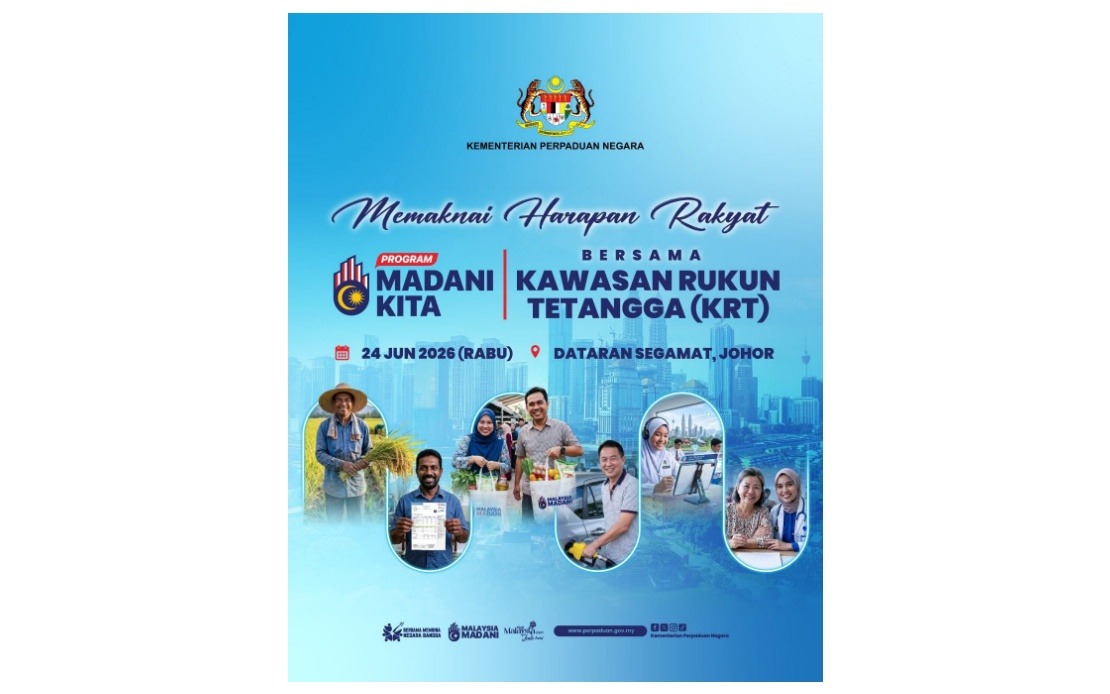
Prime Minister Datuk Seri Anwar Ibrahim returned to Johor on June 24 for a focused community engagement visit to Segamat, a town situated roughly 200 kilometres from the state capital. The trip formed part of his intensified presence in the state during the pre-election period, representing his second appearance within a seventy-two-hour window as the coalition gears up for the upcoming state poll.
The Segamat programme sequence was deliberately scheduled following Anwar's announcement of the full Pakatan Harapan slate for the 16th Johor state election, which he had unveiled at Bukit Gambir in the Tangkak area just days earlier. That earlier occasion saw the premier publicly commit the coalition's 56 candidates: twenty representing PKR, nineteen from Amanah, and seventeen fielded by DAP. The carefully timed returns to Johor underscored the government's determination to maintain momentum and visibility in a state where opposition strength remains considerable.
The centrepiece of the Segamat itinerary was the official inauguration of the MADANI KITA programme at Dataran Segamat at 5 pm, conducted in partnership with the local Rukun Tetangga (KRT) neighbourhood association. This grassroots initiative reflects the government's broader strategy of deepening connections at the community level, moving beyond traditional campaign mechanics to embed governance messaging within existing social structures. MADANI KITA functions as a deliberate mechanism for reinforcing inter-communal bonds and consolidating support for the administration's policy directions among ordinary residents.
The programme's stated objectives illuminate Pakatan Harapan's approach to community consolidation in the run-up to polling. Organisers emphasised that MADANI KITA exists primarily to cultivate enhanced neighbourliness and fortify the sinews of community cohesion across ethnic and religious divides. By anchoring the initiative within neighbourhood associations, the government sought to demonstrate tangible commitment to local welfare and social harmony, positioning itself as an active partner in everyday community life rather than remaining confined to state and federal administrative centres.
Following the formal ceremony, Anwar was scheduled to participate in a markedly more relaxed community gathering titled "Jom! Makan Durian" at the Yayasan Bazaar site at 6.30 pm. This deliberately casual setting—centring on shared consumption of the popular tropical fruit—represented a calculated shift in tone and atmosphere. The informality allowed the premier to interact with constituents in a setting divorced from protocol and formality, potentially facilitating more spontaneous dialogue and humanising the political relationship beyond the confines of ceremonial officiation.
The election calendar remains tightly compressed around these community visits. The Election Commission has mandated June 27 as nomination day, with early voting permitted on July 7 and the general poll scheduled for July 11. This narrow window—less than three weeks from Anwar's Segamat visit—creates considerable urgency for all political contenders to maximise grassroots presence and solidify voter mobilisation networks before the electoral window closes. For Pakatan Harapan, repeated visits to key constituencies like Segamat serve dual purposes: reinforcing the legitimacy and visibility of selected candidates while simultaneously reinforcing the incumbent government's connection to ordinary Malaysians.
Segamat's significance extends beyond its geographical location within Johor. The district represents a demographically diverse constituency where urban and rural communities coexist, encompassing both longstanding residents and migrant populations seeking economic opportunity. This heterogeneity makes it a microcosm of broader electoral challenges facing Pakatan Harapan nationally—balancing the interests of established communities with those of newer arrivals, maintaining cohesion across religious and ethnic lines, and translating policy achievements into tangible improvements affecting daily life.
The sequencing of Anwar's visits also communicates strategic prioritisation within Johor's electoral geography. Two visits within seventy-two hours to the Segamat-Tangkak corridor suggests these areas feature prominently in the coalition's calculations regarding seat retention and potential gains. The state constitutes a significant electoral prize given its 56 seats and historically competitive character, where opposition strength remains entrenched in certain areas despite Pakatan Harapan's 2022 federal election performance.
For Malaysian readers observing these developments, Anwar's itinerary illustrates the intensive people-focused campaigning that characterises contemporary state elections. The emphasis on neighbourhood associations and community settings reflects recognition that electoral outcomes increasingly depend on grass-roots mobilisation and direct engagement rather than traditional media-centric campaigns. The MADANI KITA programme's emphasis on inter-communal harmony also signals the coalition's continued commitment to messaging around unity and social cohesion—themes that have featured prominently in Pakatan Harapan discourse since the 2022 general election.

