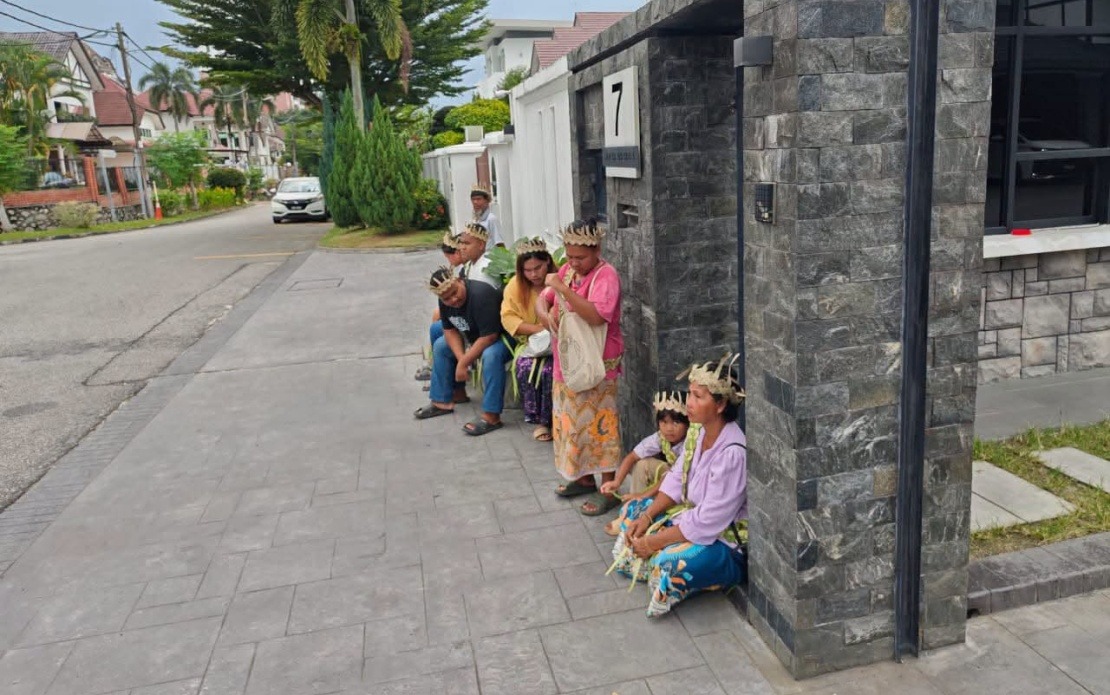
Prime Minister Datuk Seri Anwar Ibrahim has pledged to escalate the contentious land dispute involving the Orang Asli community at Kampung Sungai Cot in Maran, Pahang to the state government, signalling heightened federal attention to an issue that has sparked mounting tension in the indigenous settlement. The commitment follows a phone conversation between Anwar and representatives from the village who had visited his residence, during which they detailed grievances spanning both territorial rights and recent law enforcement actions.
The land dispute at Kampung Sungai Cot represents one of several longstanding conflicts between Orang Asli communities and external claimants or development interests across Malaysia. Such disagreements frequently become entangled with broader questions of customary land rights, government land alienation, and the enforcement of federal and state laws that may not adequately recognise indigenous tenure systems. The Pahang case appears to have intensified recently, intersecting with police detention of three residents from the village, an action that evidently prompted the community to seek direct intervention from Malaysia's highest political office.
During his engagement with the community delegation, Anwar was briefed on the specific land-related grievances affecting residents of Kampung Sungai Cot. The Prime Minister's willingness to listen directly to affected parties reflects a shift towards greater receptiveness to indigenous concerns at the federal level, though the substantive mechanisms for resolving such disputes remain institutionally complex. The involvement of Pahang's state administration is necessary because land is primarily a state matter under Malaysia's federal constitution, limiting the federal government's direct authority over alienation and recognition of rights within state boundaries.
Crucially, Anwar noted in his public statement that three Orang Asli residents who had been detained by police have since been released, suggesting that at least one dimension of the immediate crisis has been partially defused. The detention itself raises questions about the circumstances that prompted police action, whether the charges or concerns have been resolved, and what safeguards exist to prevent similar incidents. For indigenous communities in Malaysia, police involvement in land disputes often reflects the militarisation of civil disagreements, transforming what should be administrative or judicial processes into law enforcement matters that can escalate tensions and restrict community mobility or advocacy.
The Prime Minister's explicit caution against manipulation of the issue signals awareness that land disputes involving indigenous communities can become politicised, with various actors attempting to weaponise grievances for partisan advantage. Anwar's call for restraint and adherence to lawful solutions suggests an intention to depoliticise the matter and redirect it toward institutional channels, though such calls are effective only if the underlying institutional mechanisms are genuinely capable of delivering fair and timely outcomes. For Malaysian indigenous communities, trust in such systems remains fragile given historical experiences of unfavourable rulings and slow implementation of court decisions recognising Orang Asli rights.
The Kampung Sungai Cot situation also carries implications for broader indigenous land advocacy across Southeast Asia, where Malaysia's Orang Asli continue to face dispossession despite legal protections like the Aboriginal Peoples Act 1954. The federal government's willingness to formally engage with the community through the Prime Minister's office may signal incremental institutional openness, yet materialising this into concrete policy shifts requires commitment from state governments, particularly Pahang, which must ultimately oversee any resolution affecting territorial recognition or compensation.
For the Orang Asli community of Kampung Sungai Cot, securing a resolution that is both fair and lawful will require navigation of multiple bureaucratic and legal layers. Federal intervention can provide political pressure and visibility, but solutions typically demand state cooperation, engagement with the judiciary if litigation is pursued, and potentially legislative clarification if existing laws are found inadequate. The community's decision to escalate to the Prime Minister reflects both desperation and strategic recognition that higher-level political engagement can sometimes unlock resources or willingness that state-level actors may not independently provide.
Anwar's framing of the path forward as requiring adherence to law and rejection of manipulation suggests the government intends to avoid viewing this through an adversarial lens. However, the Orang Asli have legitimate reasons to remain cautious about relying solely on administrative goodwill, given that many land disputes have dragged on for decades with minimal progress. The release of the three detained residents is a positive initial development, yet whether it represents genuine de-escalation or merely a tactical pause remains unclear without further information about the charges or complaints that prompted detention.
The involvement of the federal Prime Minister also reflects the growing visibility of Orang Asli issues within Malaysia's national political discourse, partly driven by increased documentation and advocacy by civil society organisations and international attention to indigenous land rights. This context may have influenced the government's responsiveness, as indigenous issues have become increasingly difficult for any administration to ignore without reputational cost. Nevertheless, translating political commitment into durable institutional change requires more than prime ministerial phone calls; it demands legislative and administrative follow-through that extends beyond the immediate crisis.

