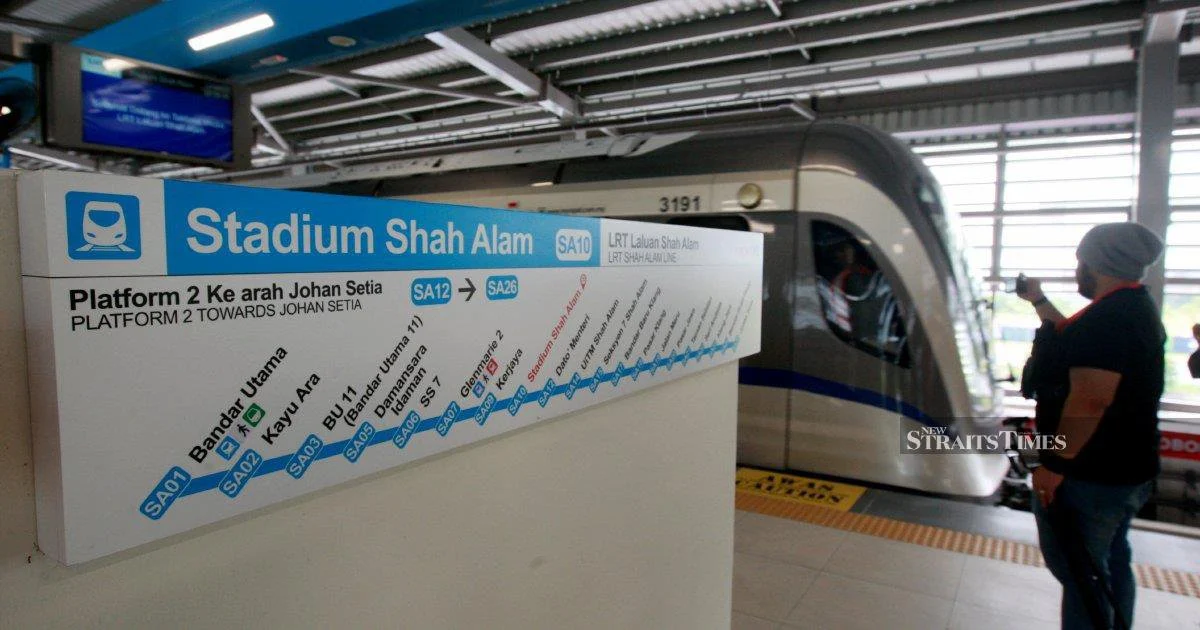
Prime Minister Datuk Seri Anwar Ibrahim will preside over the official launch of the Light Rail Transit Line 3 (LRT3) Shah Alam extension on Sunday, with commercial operations commencing the following Monday. The ceremonial opening represents a significant milestone in Malaysia's ongoing expansion of rapid transit infrastructure, particularly for the Klang Valley region which continues to grapple with traffic congestion and transportation demand.
The Shah Alam line extension marks a substantial addition to the existing LRT3 network, which has already established itself as a critical artery within the greater Kuala Lumpur metropolitan area. This new segment will substantially improve connectivity for commuters in Shah Alam and surrounding districts, offering an alternative to road-based transportation and reducing reliance on private vehicles during peak hours. The timing of the launch aligns with government commitments to enhance public transportation accessibility across major urban centres.
The LRT3 system, which originally commenced operations in 2016, has undergone strategic expansion efforts to increase coverage and serve previously underconnected communities. The Shah Alam extension represents the culmination of planning, construction, and infrastructure development that spans several years. This project exemplifies the broader pattern of public transportation investment that has characterised the current administration's approach to urban planning and mobility solutions.
For Shah Alam residents and workers, the new extension offers tangible benefits including reduced travel times, improved air quality through decreased vehicular emissions, and greater economic accessibility to employment and commercial hubs across the metropolitan region. The extension also supports the broader vision of creating integrated public transport networks that reduce urban congestion and support sustainable city development patterns. Property developers and businesses along the corridor have anticipated this connectivity improvement, with considerable investment activity preceding the line's opening.
The Monday operational commencement will usher in a new phase of metropolitan mobility, with thousands of commuters expected to utilise the service daily. Transport authorities will likely conduct careful monitoring of passenger volumes, service reliability, and operational efficiency during the initial weeks of operation. The data gathered during this period will inform future expansion plans and service optimisation strategies for the wider LRT network.
From a policy perspective, the LRT3 Shah Alam extension demonstrates the government's continued commitment to addressing transportation challenges in metropolitan Malaysia. Public transportation infrastructure development remains central to addressing urban congestion, reducing carbon emissions, and enhancing quality of life for millions of commuters. The project also generates employment opportunities during both the construction and operational phases, contributing to economic activity within the region.
The extension's completion also reflects the coordination required across multiple government agencies, private contractors, and transit authorities. Successful completion within established timelines and budgets—or delays and cost overruns—carries implications for public confidence in similar infrastructure projects. Malaysians observing this project will likely calibrate their expectations regarding future rapid transit expansion, toll road development, and major transportation initiatives announced by authorities.
Geographically, the Shah Alam extension positions the LRT3 as a more comprehensive solution for the western corridor of the Klang Valley. Shah Alam's status as both a major industrial and residential centre makes improved public transportation particularly valuable. Workers commuting between Shah Alam and central Kuala Lumpur, as well as those travelling within the district itself, will benefit from the enhanced connectivity that rail transit provides compared to road-based alternatives.
The operational launch follows the established pattern of ceremonial government inaugurations of major infrastructure projects. Prime ministerial attendance at such events underscores the political importance assigned to transportation development. For the administration, successful delivery of promised infrastructure projects represents tangible demonstration of governance capability and responsiveness to public needs—factors that resonate with voters evaluating government performance.
Looking ahead, the Shah Alam extension likely represents an intermediate step rather than the terminal phase of LRT3 development. Future expansion possibilities, integration with other transit modes, and complementary infrastructure projects will shape the trajectory of public transportation throughout the Klang Valley. The extension's performance and public reception will provide valuable lessons informing the design and implementation of subsequent phases.
Previous experience with rapid transit expansions in Malaysia indicates that initial operational months typically involve service adjustments, capacity optimisations, and integration refinements. Passenger feedback gathered during this period will guide operational decisions regarding frequency, scheduling, and maintenance protocols. The success of the Shah Alam line will contribute to broader discussions regarding public transportation investment priorities and the pace of expansion across Malaysia's major metropolitan regions.