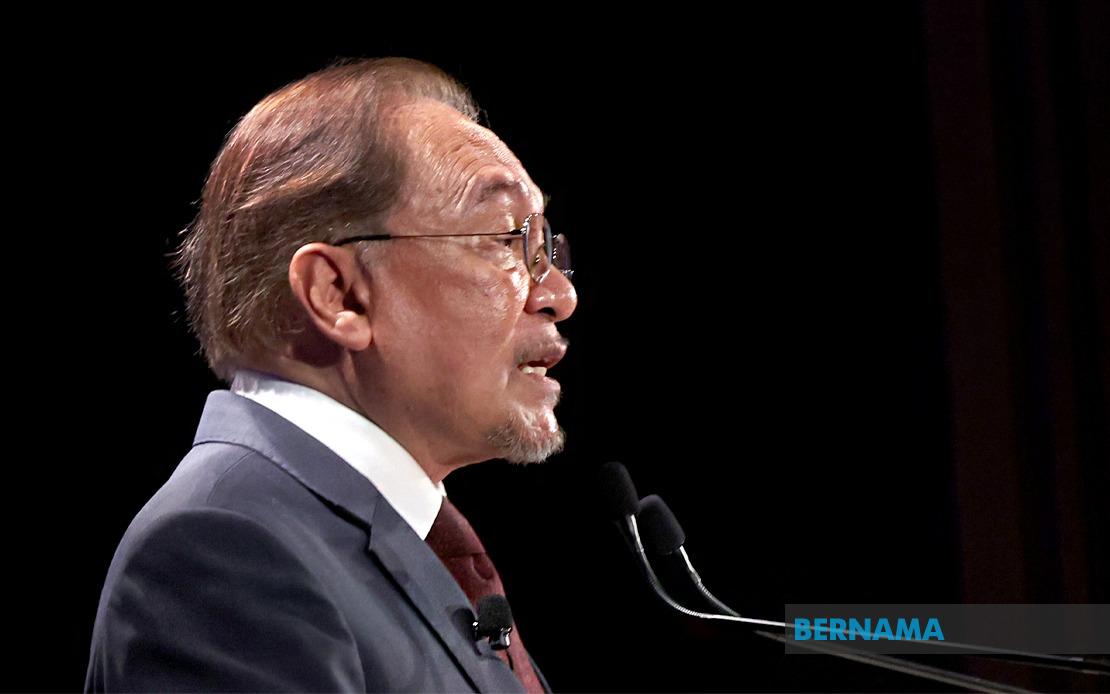
Prime Minister Datuk Seri Anwar Ibrahim's official visit to Turkmenistan reaches its conclusion with an ambitious schedule of diplomatic engagements and bilateral discussions designed to elevate Malaysia's relationship with this strategically located Central Asian nation. The capital, Ashgabat, has earned global recognition as the White Marble City, distinguished by its remarkable concentration of white marble-clad buildings—a record-holding 500 structures according to Guinness World Records—complemented by monumental architecture and gold-leaf detailing that characterises the nation's urban landscape.
The day begins with formal protocol at the Presidential Palace, where President Serdar Berdimuhamedov will host a welcoming ceremony before the two leaders engage in a one-on-one discussion. This private meeting sets the tone for a more expansive bilateral session to follow, during which both governments will explore mechanisms to broaden their engagement across multiple economic sectors. The structured format reflects the diplomatic significance both nations attach to strengthening their institutional ties and identifying shared opportunities.
The bilateral meeting will establish the framework for substantive discussions spanning trade, investment, hydrocarbons, agricultural exports, energy cooperation, tourism development, educational exchanges, and technological advancement. Malaysia's representation includes Minister of Investment, Trade and Industry Datuk Seri Johari Abdul Ghani and Minister of Economy Akmal Nasrullah Mohd Nasir, indicating the economic weight the delegation places on these discussions. These complementary ministerial portfolios suggest Malaysia is positioning itself strategically to capitalise on Turkmenistan's resource wealth and regional positioning.
Regional and international matters of mutual concern will feature prominently in the leadership exchange. Turkmenistan's geographic positioning—bordered by Kazakhstan and Uzbekistan to the north, Afghanistan to the southeast, Iran to the south and southwest, and facing the Caspian Sea to the west—places it at the intersection of Central Asian geopolitics. Malaysia's interest in developments within ASEAN and Central Asia reflects the government's broader strategic vision of engaging beyond Southeast Asia's traditional sphere, recognising how stability in this region affects global trade corridors and energy markets that directly impact Malaysian economic interests.
A comprehensive series of bilateral agreements will formalise the visit's outcomes. The two leaders will jointly sign a formal statement outlining shared commitments, while government agencies will execute several substantive documents. Notably, an Air Services Agreement between Malaysia and Turkmenistan will facilitate enhanced connectivity, crucial for tourism and business travel between the nations. Additionally, Malaysia's foreign affairs institute will establish a memorandum of understanding with its Turkmenistan counterpart, creating institutional channels for sustained diplomatic dialogue beyond this visit.
Multi-sector cooperation agreements demonstrate the breadth of engagement both nations envision. Transport ministry officials will sign an MoU with Turkmenistan's State Service, addressing infrastructure and logistics cooperation. Simultaneously, Malaysia's Academy of Sciences will formalise collaboration with the Academy of Sciences of Turkmenistan, facilitating research exchange and scientific capacity-building. Several oil and gas sector documents will be exchanged, reflecting the particular importance of energy partnerships to Malaysia's economic strategy and Turkmenistan's position as a hydrocarbon-rich nation.
Petroliam Nasional Bhd, Malaysia's national oil company, maintains substantial interests in Turkmenistan, with cumulative investments totalling RM52.73 billion since 1996. This deep-rooted commercial presence underscores why high-level political engagement matters: it provides governmental support for commercial operations and signals stable, long-term bilateral commitment. The oil and gas agreements on today's agenda likely address contract renewals, operational frameworks, and new exploration or development opportunities that benefit both nations' energy security objectives.
Malaysia's trading relationship with Turkmenistan has shown positive momentum, positioning the Central Asian nation as Malaysia's fourth-largest trading partner among regional countries. In 2025, bilateral trade reached RM75.80 million, with Malaysian exports accounting for RM75.50 million and registering a notable nine per cent year-on-year increase. While these figures remain modest in Malaysia's overall trade landscape, the growth trajectory and potential for expansion—particularly in light of energy cooperation and investment flows—suggest significant untapped commercial opportunities awaiting development.
The diplomatic schedule includes hospitality and cultural elements reinforcing personal relationships between leaders. A presidential luncheon at the Palace provides an informal setting for extended conversation, while Anwar's attendance at Friday prayers at the Turkmenbashi Ruhy Mosque demonstrates respect for Turkmen Islamic traditions and cultural sensitivity. Such gestures carry symbolic weight in relationship-building, particularly in a nation where religious and cultural identity intersect with national identity.
The Malaysia-Turkmenistan Forum, which Anwar and Berdimuhamedov will jointly inaugurate at the Chamber of Commerce and Industry of Turkmenistan, establishes a formal mechanism for ongoing business-to-business engagement. This institutionalised platform creates networks beyond government, enabling Malaysian and Turkmen private sector actors to identify commercial synergies independently. Such forums historically catalyse investment, joint ventures, and supply chain partnerships that outlast individual political administrations.
The concluding press conference with Malaysian media allows Anwar to communicate the visit's significance to domestic audiences, framing Malaysia's Central Asian engagement within broader foreign policy objectives. For Malaysian observers, this visit illustrates the government's commitment to diversifying diplomatic relationships and securing energy partnerships critical to long-term economic planning. The choice to elevate engagement with a less-frequently visited Central Asian nation signals willingness to invest diplomatic capital in emerging relationships rather than consolidating established ones.
Turkmenistan's geographic position along the Caspian Sea—the world's largest inland water body—situates it at the intersection of Asian energy flows and transcontinental trade routes. For Malaysia, deeper engagement with Turkmenistan represents both immediate commercial opportunity through Petronas operations and strategic positioning within broader Central Asian economic development. The visit's comprehensive agenda suggests Malaysia views this relationship as foundational for expanding influence across Central Asia, a region increasingly significant to global economic and geopolitical dynamics that affect Southeast Asian interests.