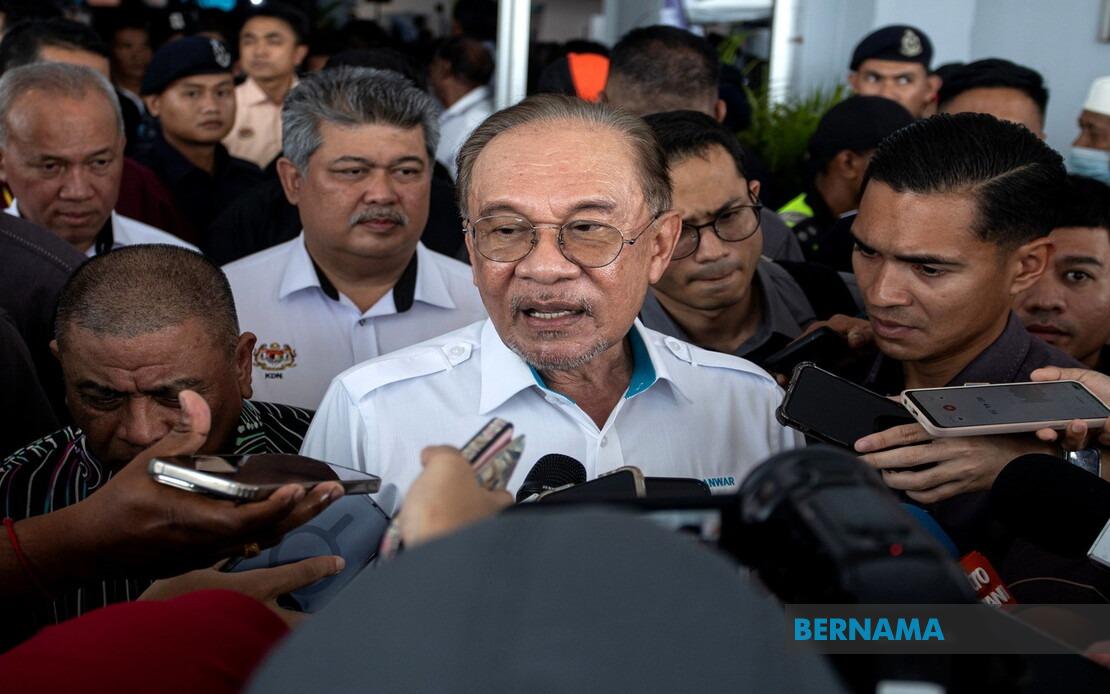
Prime Minister Datuk Seri Anwar Ibrahim has issued a direct warning to government officials and candidates contesting in state elections: those who attack the Federal Government while campaigning must be prepared to resign from their positions. Speaking in Ipoh following a community engagement programme, the premier emphasised that individuals serving in ministerial roles, deputy ministerial posts, and agency leadership positions are bound by strict codes of conduct that supersede campaign considerations.
The directive addresses a recurring tension within Malaysia's current political architecture, where multiple parties that cooperate at federal level often compete fiercely against one another in state-level contests. While the Prime Minister acknowledged this arrangement as a legitimate feature of democratic systems, he stressed that such competition cannot justify attacks on the federal government itself or its policies. The distinction he drew—between healthy state-level competition and destructive assaults on federal authority—reflects the delicate balance required to maintain the Unity Government's cohesion.
Anwar's emphasis on preserving a "damaging political landscape" signals his concern that excessive partisan warfare during campaign season could unravel the careful consensus that holds the ruling coalition together. The Unity Government, formed after the 2022 general election, comprises parties with historically divergent interests and ideologies. When these parties campaign against one another in state elections, tensions naturally rise, but the Prime Minister has now made clear that certain red lines cannot be crossed. Officials who choose to breach these boundaries face an ultimatum: surrender their government credentials or cease the offensive conduct.
The Prime Minister noted that he had already discussed this matter with his two deputies, Datuk Seri Dr Ahmad Zahid Hamidi and Datuk Seri Fadillah Yusof, suggesting that the guidance represents a coordinated leadership position rather than an ad hoc comment. This indicates that the federal government's top tier has collectively recognised the need for stronger discipline measures to prevent campaign rhetoric from destabilising the coalition itself. By involving his deputies in these conversations, Anwar has signalled that enforcement of these standards will be taken seriously at the highest levels.
For Malaysian readers accustomed to fractious coalition politics, this intervention highlights the precarious nature of the current governing arrangement. Unlike single-party governments that face unified opposition, the Unity Government must manage internal competition while presenting a united face to the electorate. The Prime Minister's warning acknowledges this structural vulnerability and attempts to create guardrails that protect federal coherence even as state-level campaigns intensify. However, such warnings also reveal the extent to which coalition discipline may be strained as election campaigns approach.
The broader context involves Pakatan Harapan's performance as chairman of the coalition, a role Anwar himself holds. This positioning gives him authority to speak on behalf of the entire ruling framework, yet it also exposes tensions between his party's state-level ambitions and his federal responsibility to maintain coalition stability. The message appears designed to reassure both federal partners and the public that the government will not fragment into open warfare despite competitive state elections.
Anwar's remark that government officials remain "free to campaign on state issues" carves out important space for legitimate political engagement. Rather than imposing a blanket gag order, he has attempted to distinguish between acceptable and unacceptable campaign conduct. Officials may advocate for their parties' state-level platforms, promote their legislative programmes at the state level, and compete for votes based on policy differences. What crosses the line is attacking the federal government's credibility, decisions, or partners—actions that potentially undermine the authority and legitimacy of the administration these same officials serve.
The Unity Government has emphasized its commitment to delivering effective public services despite internal political differences. The Prime Minister reiterated this point by stating that coalition parties have been urged to strengthen relations at both federal and state levels so that "work can continue to be carried out effectively." This framing repositions the restraint call as serving the people's interests rather than merely protecting partisan advantage. When officials attack federal partners, they risk creating uncertainty that hampers service delivery and erodes public confidence in government institutions.
For Southeast Asian observers, Malaysia's experience offers a cautionary tale about managing coalitions in fragmented political environments. The region has witnessed several coalition collapses in neighbouring countries, often triggered by exactly this dynamic—campaign season conflicts escalating into fundamental rifts. By establishing clear expectations about conduct during elections, Anwar appears determined to prevent such deterioration. The success of this approach will depend on whether officials across coalition parties accept the discipline required and whether those who violate it face genuine consequences.
The practical implications for Malaysian politics extend beyond the immediate state election cycle. If the Prime Minister enforces this standard—that is, if officials who attack the federal government actually step down—it would represent an unusually strict approach to coalition discipline. Conversely, if threats go unenforced, they will have signalled weakness rather than resolve, potentially emboldening further violations. The credibility of Anwar's warning rests entirely on demonstrated willingness to follow through on consequences.
From a governance perspective, the memorandum also underscores the tension between federal and state authority in Malaysia's federal system. Officials who hold federal positions inevitably carry influence at the state level through party networks and political capital. Restricting their ability to attack federal decisions during state campaigns serves to protect the coherence of national governance architecture. Yet this also raises questions about democratic expression and the extent to which government office should constrain political speech, even when that speech involves legitimate policy disagreements.
The Prime Minister's intervention reflects broader anxiety within the coalition about whether it can sustain competitive state-level engagement without fracturing. The warning serves multiple purposes simultaneously: it reassures coalition partners that Anwar will enforce standards, it signals to the public that the government takes institutional stability seriously, and it establishes expectations that may deter potential violations before they occur. Whether this approach proves sufficient to weather the pressures of state election campaigns remains to be tested.

