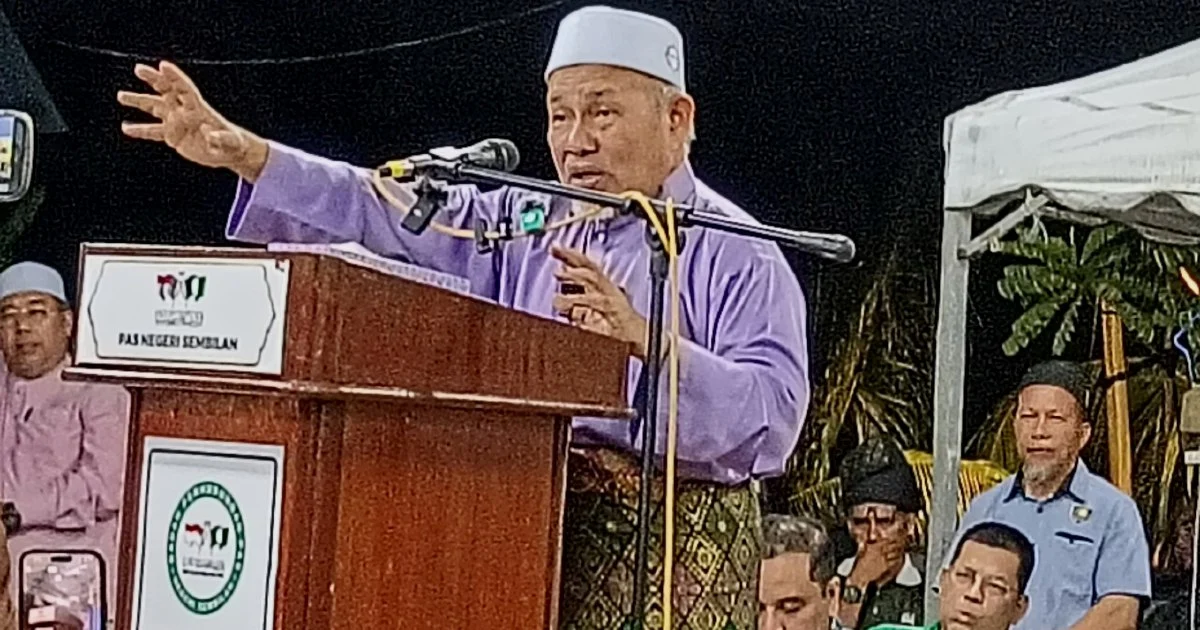
Tension within Perikatan Nasional intensified after PAS deputy president Datuk Seri Tuan Ibrahim Tuan Man clarified that the coalition is not the exclusive property of Bersatu, pushing back against claims of singular ownership by the Malay-Muslim party. His remarks underscore a fundamental disagreement over governance structure and decision-making authority within the opposition alliance that has grown increasingly visible in recent months.
Tuan Ibrahim's intervention came in response to earlier statements suggesting that Bersatu holds preponderant control over PN's direction and operations. The PAS leader emphasised that every component party within the coalition holds legitimate stakes in determining policy and strategic direction. This assertion reflects the broader principle that multiparty alliances function as partnerships among equals rather than hierarchical arrangements where one dominant partner exercises unilateral control.
The dispute touches on deeper questions about internal coalition dynamics and the balance of power between PN's constituent members. Bersatu, under former Prime Minister Mahathir Mohamad's leadership before his recent resignation and subsequent return to the political arena, has sought to position itself as a central force. However, PAS—with its substantial parliamentary representation and substantial grassroots organisation across the country—contests any arrangement that would subordinate its voice to another party's interests.
For Malaysian observers, these internal squabbles within opposition alliances carry implications for political stability and legislative effectiveness. Coalition governments in Westminster-style systems like Malaysia's depend on trust and clearly defined power-sharing mechanisms. When uncertainty emerges about ownership and control, it creates openings for defections, internal rebellions, and fractures that can destabilise legislative majorities and government functionality.
Tuan Ibrahim's position aligns with how PAS has traditionally negotiated within political partnerships. The party has consistently sought equal footing with larger or better-resourced allies, leveraging its religious credentials and organisational strengths to secure substantive influence over party selection, ministerial allocation, and policy priorities. PAS views itself not merely as a junior coalition partner but as a foundational bloc within PN whose interests warrant equal protection and voice.
The ownership dispute also reveals emerging questions about PN's institutional development. Unlike some long-established coalitions with formal power-sharing agreements, PN remains relatively young and potentially under-institutionalised. Without clear constitutional arrangements specifying how decisions are made, how resources are allocated, and how disputes are resolved, the coalition becomes vulnerable to unilateral claims of dominance by its largest or most assertive members.
Bersatu's position in this debate reflects its own political vulnerabilities. Once positioned as a bridge-building party bringing different factions together, Bersatu has faced consistent questions about its independent electoral viability and organisational depth compared to PAS and other coalition members. Claims of ownership can function as overcompensation for limited grassroots reach, attempting to assert control through rhetoric rather than organisational capacity.
From a Malaysian governance perspective, these coalition disputes matter significantly because opposition alliances directly influence how parliamentary oversight functions. A fractured or internally contentious opposition struggles to mount effective scrutiny of government policies and performance. Conversely, an opposition coalition that achieves internal coherence and clarity becomes formidable in holding government accountable. The ownership row within PN therefore carries consequences extending far beyond internal party dynamics into broader questions of democratic accountability.
Tuan Ibrahim's public pushback suggests that PAS intends to resist any arrangement that marginalises its interests or decision-making capacity within PN. The party's strengthened parliamentary position following recent political developments has emboldened it to contest claims of Bersatu dominance more openly. This assertiveness reflects a broader realignment within opposition politics where multiple parties compete for influence rather than deferring to a single undisputed leader or patron.
The coalition ownership dispute also resonates within Perikatan Nasional's broader strategy as it positions itself as an alternative government. A coalition fractured over basic questions of governance structure and decision-making authority faces credibility challenges when presenting itself to voters as a capable, united alternative. Public disputes over who controls what undermine confidence among citizens and potential supporters about the stability and coherence of the proposed alternative administration.
Moving forward, observers should monitor whether PN component parties develop more formal mechanisms for clarifying ownership, resolving disputes, and establishing clear decision-making procedures. Many successful opposition coalitions in other democracies operate under written agreements that spell out voting procedures, dispute resolution mechanisms, and resource-sharing arrangements. The absence of such clarity within PN leaves it vulnerable to recurring disputes that weaken its institutional credibility and political effectiveness.
The broader pattern evident in Malaysian politics suggests that coalition governance requires explicit mechanisms and shared understandings about power distribution. Tuan Ibrahim's insistence that PN belongs collectively to all member parties represents not merely a rhetorical position but a claim about fundamental structural arrangements. How PN resolves this ownership question will significantly influence its capacity to function effectively as a coherent political force capable of presenting a united front to voters and government alike.

