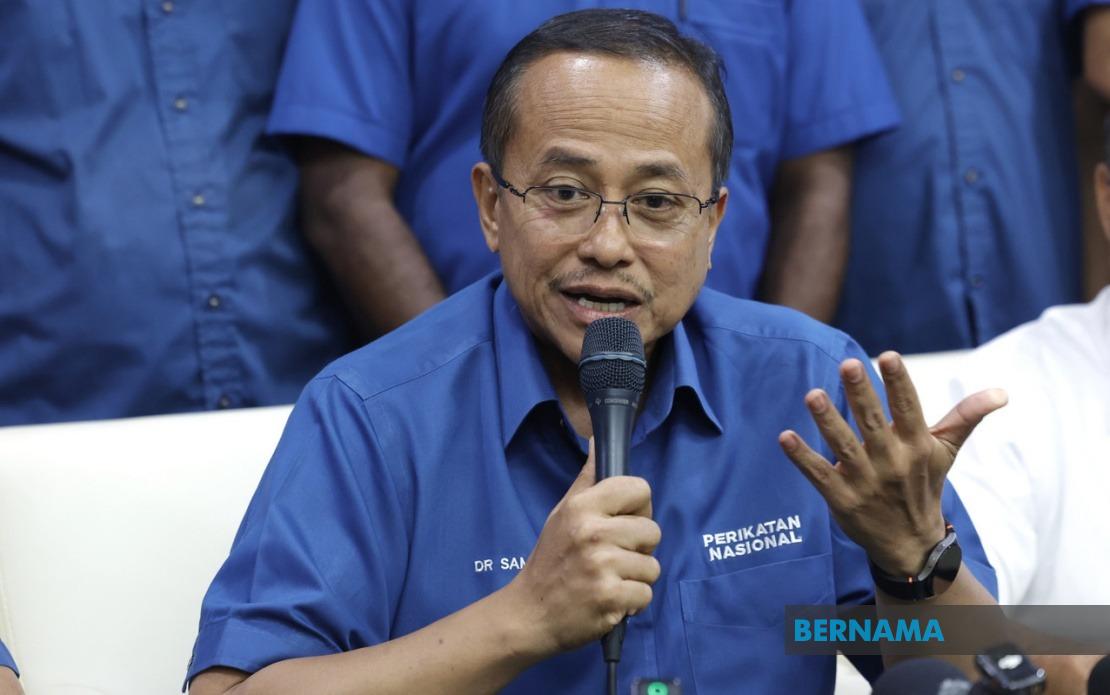
The Perikatan Nasional coalition has formally confirmed its electoral strategy for the upcoming Negeri Sembilan state election, moving ahead with a unified candidacy structure that consolidates its member parties under a single party brand. At a special gathering held in Seremban on July 16, the PN Supreme Council endorsed a comprehensive seat allocation framework involving four participating organisations: PAS, Gerakan, Wawasan, and MIPP. The decision represents a coordinated approach designed to streamline the coalition's campaign efforts and present voters with a cohesive political message across the 16 state constituencies.
PN chairman Datuk Seri Dr Ahmad Samsuri Mokhtar announced that every PN-endorsed candidate contesting in the election would stand under the coalition's official Perikatan Nasional logo rather than their respective party insignia. This unified branding strategy underscores the coalition's intention to project itself as a monolithic political force rather than a collection of separate entities. The move carries strategic significance in a competitive electoral environment where voter perception of party cohesion can influence ballot outcomes. By standardising the visual representation of all PN competitors, the coalition aims to strengthen brand recognition and messaging consistency throughout the campaign period.
Dr Ahmad Samsuri framed the coalition's participation in terms of broader policy objectives and governance priorities. He stated that PN candidates would contest on a platform centred on advancing public welfare, accelerating development initiatives within Negeri Sembilan, and safeguarding communal harmony within the state's multi-ethnic composition as well as the nation more broadly. This framing situates the election contest within Malaysia's familiar political discourse around development delivery and inter-community relations, themes that resonate across the peninsula's diverse electorate and feature prominently in state-level campaigns.
The PN chairman emphasised that all preliminary negotiations and discussions with other political entities were executed under his direct oversight and with his explicit authorisation as coalition head. He characterised these engagements as standard coalition management procedures rather than ad hoc arrangements, thereby establishing his authority over coalition decision-making and positioning the seat allocation outcomes as deliberate strategic choices rather than reactive compromises. This assertion of leadership carries internal significance within a coalition structure where multiple parties must reconcile competing territorial claims and ambitions for candidate nominations.
The Supreme Council's formal endorsement of the seat allocation represents the culmination of behind-the-scenes negotiations among coalition members. Such arrangements typically involve complex horse-trading over choice constituencies, with parties seeking to protect strongholds and expand influence in winnable areas. The fact that the council moved to formalise the structure suggests that negotiators successfully bridged the divergent interests of the four participating organisations, though the specific seat distribution breakdown was not disclosed in the announcement. The confidentiality surrounding the precise allocation details is standard practice, allowing parties to prepare candidate announcements and campaign strategies before public revelation.
However, the coalition's unity narrative faces an immediate complication from Bersatu, a major PN partner at the federal level. Bersatu president Tan Sri Muhyiddin Yassin publicly stated that his party was excluded from discussions regarding seat allocations and was not consulted on potential cooperation arrangements with Barisan Nasional in the Negeri Sembilan contest. This exclusion prompted Bersatu to announce its intention to contest independently under its own party banner, effectively opting out of the unified PN electoral arrangement. The development highlights fractures within the broader PN coalition structure and raises questions about the durability of partnerships formed in the lead-up to the federal government's formation.
Muhyiddin's assertion that preliminary discussions proceeded without Bersatu's knowledge or involvement directly contradicts Dr Ahmad Samsuri's account and creates ambiguity about coalition protocols and communication channels. In a functioning coalition, such disputes typically signal underlying tensions over representation, resource allocation, or policy disagreements that threaten institutional cohesion. The public airing of these disagreements through press statements rather than private resolution suggests the matter carries sufficient importance to both parties that they are willing to air concerns in the media sphere, signalling to their respective support bases that they have pursued their interests vigorously.
Bersatu's decision to field candidates independently rather than submit to a unified coalition arrangement fundamentally alters the electoral mathematics for Negeri Sembilan. Rather than a consolidated PN challenge against Pakatan Harapan and Barisan Nasional, voters will now encounter a fragmented opposition presenting multiple competing visions. This fragmentation could advantage the incumbent government if opposition votes split across multiple banners, though it could also energise Bersatu's core supporters who view the party as insufficiently represented in coalition structures. The contest will effectively pit four distinct political forces against one another rather than a clear three-way or two-way contest.
For Malaysian observers, the Negeri Sembilan episode illustrates persistent structural weaknesses within opposition coalition-building efforts. Despite formal unity at the national level, the constituent parts of PN struggle to subordinate individual party interests to collective organisational discipline. Similar tensions have characterised other opposition coalitions, including the original formation of Pakatan Rakyat and its subsequent iterations. These recurring difficulties suggest that opposition unity in Malaysia remains episodic and contingent rather than institutionally embedded, with coalitions fragmenting under pressure or when member parties perceive disadvantage in resource distribution.
The implications for Malaysian politics extend beyond a single state election. The Negeri Sembilan contest will serve as a barometer for opposition coalition viability ahead of subsequent electoral contests. If PN candidates operating under unified branding outperform Bersatu's independently-fielded contestants, the arrangement may be cited as validating coalition discipline and concentrated messaging. Conversely, if Bersatu's independent challenge yields better results than anticipated, it could encourage similar independent campaigns within other coalition structures. Either outcome will inform how opposition parties approach coalition negotiations for future elections, including any anticipated peninsular state elections and eventually the next federal general election.
The unfolding situation also carries implications for Barisan Nasional's strategic positioning. The emergence of both a consolidated PN contingent and an independent Bersatu challenge presents opportunities for BN to navigate between fragmented opposition forces. BN's own capacity to consolidate its declining support base may benefit from opposition division, even as the presence of multiple opposition contenders complicates vote prediction and seat allocation modelling. For Negeri Sembilan voters, the electoral landscape will present choices across a broader spectrum than might otherwise be available under a consolidated opposition framework.

