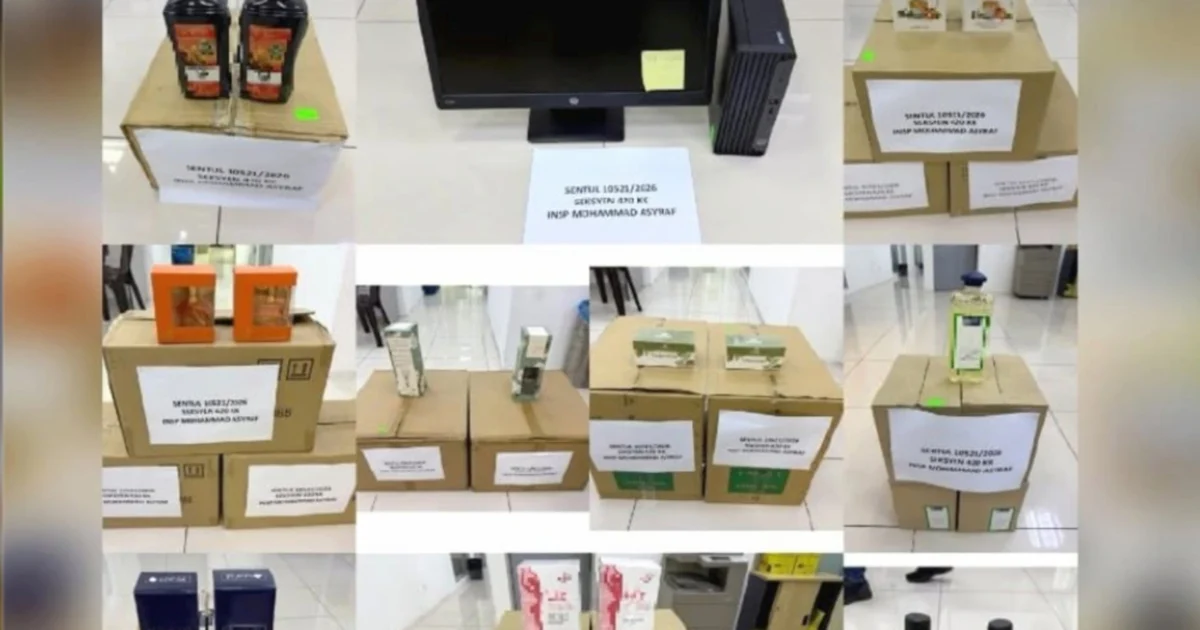
Kuala Lumpur police have successfully dismantled a fraudulent perfume investment operation, arresting six suspects during a targeted raid at a commercial premises in KL Eco City on Wednesday. The operation marks another significant enforcement action against organised investment scams that have proliferated across major Malaysian urban centres in recent years.
The syndicate operated from within KL Eco City, a prominent mixed-use development in the heart of Kuala Lumpur's business district. This location choice reflects an increasingly common tactic among scam operators, who exploit legitimate commercial addresses and professional-looking office settings to establish credibility with potential victims. By positioning themselves within prestigious commercial hubs, such fraudsters attempt to bypass consumer suspicion and create an appearance of legitimacy that distinguishes their operation from obviously dubious ventures.
Perfume investment scams have emerged as a particularly insidious variant of investment fraud in Southeast Asia. The scheme typically attracts investors by promising substantial returns through participation in perfume purchase-and-resale arrangements, or by offering profit-sharing agreements tied to alleged exclusive fragrance product lines. These operations frequently target middle-class consumers seeking alternative investment opportunities outside traditional banking and stock market channels, particularly during periods of economic uncertainty.
The operational structure of such syndicates usually involves multiple layers of deception. Initial contact often occurs through social media or online advertising, where operators present glossy marketing materials and testimonials from supposed previous investors who have achieved significant returns. Victims are then gradually encouraged to invest increasing sums under the guise of securing limited inventory or premium product batches. Once substantial amounts have been transferred, operators either disappear entirely or provide fraudulent documentation suggesting product purchases or shipments that never materialise.
The scale and coordination required to operate such a scheme from a fixed commercial location indicates a sophisticated network rather than amateur fraudsters. The involvement of six arrested individuals suggests a division of labour, with roles potentially encompassing customer recruitment, financial handling, logistics coordination, and senior management. This layered organisational structure is typical of investment fraud syndicates that have evolved to withstand basic law enforcement scrutiny.
Malaysian authorities have intensified efforts against investment fraud operations following increased public complaints and growing financial losses reported by consumers. The Commercial Crime Investigation Department and other specialist units have expanded their focus beyond traditional fraud categories to encompass emerging schemes targeting online and offline investment channels. Perfume investments represent a particular concern because they combine the appeal of tangible goods with investment returns, creating psychological barriers that make victims reluctant to report losses due to embarrassment.
The psychological dimensions of perfume investment scams extend beyond simple financial deception. Many victims convince themselves that their investments represent legitimate business ventures rather than scams, particularly when operators provide regular—albeit fabricated—performance updates and transaction documentation. This self-delusion often delays reporting, allowing fraudsters to operate undetected for extended periods and continue recruiting additional victims from wider networks.
From a regional perspective, Malaysia has become a particular hub for investment fraud operations serving not only domestic consumers but also targets throughout Southeast Asia. The country's advanced telecommunications infrastructure, sophisticated banking system, and position as an international business centre make it an attractive base for scammers operating across borders. International cooperation with law enforcement agencies in Singapore, Thailand, and Indonesia has become essential for disrupting these networks.
The arrest of six individuals in this operation opens pathways for law enforcement to pursue broader investigations into connected criminal networks. Police will likely examine financial records, communications data, and customer lists to identify other syndicate members, potential victims who may not yet have realised they were defrauded, and links to other active scam operations. Such investigations frequently reveal connections to money laundering networks and unlicensed financial operations.
Consumers in Malaysia and across Southeast Asia remain vulnerable to perfume and similar investment scams because the barrier to entry remains low for operators while psychological manipulation techniques continue to evolve. Regulatory bodies have urged greater public awareness regarding investment verification procedures and the dangers of promises offering returns substantially above market averages. Many victims could have avoided losses by consulting the Securities Commission or Bank Negara Malaysia regarding whether investment opportunities are licensed and properly regulated.
The takedown of this KL Eco City operation demonstrates that Malaysian law enforcement possesses capacity and determination to pursue organised fraud rings, yet the underlying problem persists: scammers continuously adapt their methods and platforms to evade detection. As authorities dismantle one syndicate, others emerge using refined tactics and fresh victim targeting strategies. Sustained public education, cross-agency coordination, and rapid prosecution remain critical to reducing the prevalence of such schemes.
Looking forward, Malaysian authorities will likely face mounting pressure to enhance preventive measures rather than relying solely on reactive raids and arrests. This could involve stricter regulations on commercial space usage in prominent office buildings, enhanced financial institution monitoring for suspicious transaction patterns associated with investment scams, and closer coordination with online platforms where these schemes typically originate. The KL Eco City bust serves as a stark reminder of how investment fraud operations continue operating within Malaysia's major business districts, targeting savvy urban consumers who believe themselves immune to such deception.

