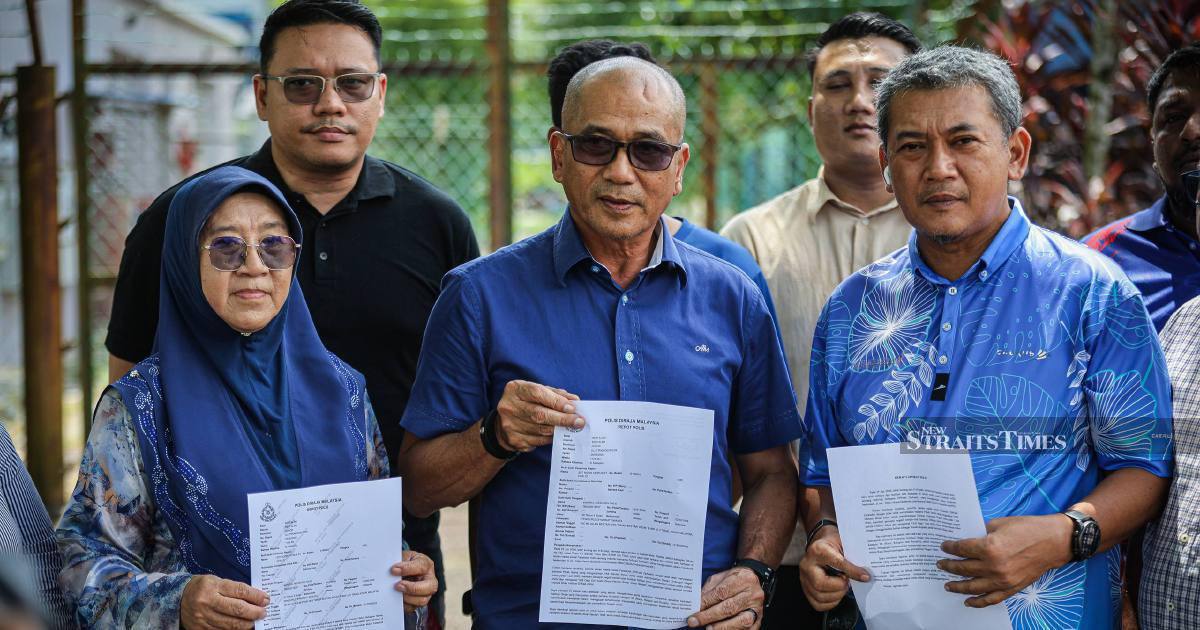
A growing political storm has erupted in Johor as several members of the state's Barisan Nasional coalition moved to lodge formal police reports against Datuk Dr Mohd Puad Zarkashi, the former Umno supreme council member, in response to his recent public allegations. The complaints centre on statements made by Puad regarding what he characterised as palace involvement in the mechanics of Johor's political landscape and internal Umno state operations. The filing of these reports in Johor Baru represents an escalation in what has become an increasingly contentious intra-party dispute with broader implications for the state's political establishment.
Puad's allegations have struck at the heart of sensitive constitutional and political conventions that govern the relationship between Johor's hereditary monarchy and the state's elected representatives. In the Malaysian federal system, the sultans of each state, including Johor's Sultan Ibrahim Ismail, hold ceremonial and constitutional roles that are defined by state constitutions and federal law. However, perceptions about the extent of palace influence in day-to-day politics remain a carefully guarded topic, and public allegations about such involvement can be seen as challenging established norms of discretion and respect that typically govern palace-government relations.
The Barisan Nasional members who initiated the police complaints appear to view Puad's statements as constituting a breach of political protocol and potentially damaging to the reputation of both the palace institution and the state's ruling coalition. By formalising their objections through official police channels, these BN figures have signalled their intent to move beyond private party grievances into the realm of formal legal mechanisms. This approach suggests that the matter is being treated with considerable seriousness by those who filed the reports, who may view the allegations as sufficiently grave to warrant investigation.
The fracture within Umno's Johor leadership exposes deeper divisions within Malaysia's largest Malay-Muslim political party. Umno has long served as a stabilising force in Malaysian politics, but recent years have witnessed mounting internal tensions between various factions competing for control of the party machinery and state governments. Puad's willingness to make public allegations against both party structures and palace relationships indicates a breakdown in the informal mechanisms through which such disputes are normally resolved behind closed doors. His status as a former supreme council member gives his allegations particular weight and credibility among party observers and political analysts.
The context of these allegations becomes clearer when examined against the backdrop of Johor's recent political history. The state has experienced significant shifts in its political dynamics over the past decade, including the introduction of direct elections for the Menteri Besar position and evolving relationships between traditional power brokers. These structural changes have created new spaces for political contestation and have altered the conventional balance of influence among various stakeholders including party leaders, elected representatives, and palace officials. Puad's allegations may reflect frustrations accumulated during these periods of transition.
For ordinary Malaysians and particularly those in Johor, the implications of such high-level political disputes extend beyond mere factional fighting. Public confidence in state institutions and governance structures depends partly on perceptions of institutional integrity and independence. When senior political figures make allegations suggesting that traditional boundaries between different spheres of influence have been blurred or transgressed, such claims can erode public trust in the impartiality of political processes and decision-making. This dynamic is especially relevant in Johor, given the state's significant economic importance and its role as a bellwether for broader Malaysian political trends.
The decision to involve the police rather than relying on internal party disciplinary mechanisms marks a significant departure from how such disputes have traditionally been managed within Umno. Party elders have historically preferred to contain factional disputes within party structures, viewing external intervention as damaging to party prestige and cohesion. The move towards police involvement suggests that those filing the reports believe the allegations are serious enough to warrant criminal investigation, or alternatively, that internal party mechanisms have become sufficiently compromised that members no longer trust them to provide adequate remedies.
Puad's background as a respected figure within Umno's upper echelons means his allegations carry particular significance. Unlike younger or less established party members, someone of his standing cannot easily be dismissed as disgruntled or motivated by personal ambition alone. His decision to go public with such serious charges suggests a deliberate calculation that the issues at stake justify the political costs of such transparency. This raises questions about what specific incidents or decisions prompted him to break ranks and risk the considerable social and political ostracism that typically follows such actions within Umno's tradition-conscious culture.
The palace dimension adds another layer of complexity to this dispute. Malaysia's royal institutions occupy a uniquely revered position within the constitutional and cultural framework, protected by strict laws governing defamation and sedition. Any allegations touching on palace conduct must navigate these legal constraints carefully. The fact that police reports have been filed suggests that those making complaints may believe Puad's statements crossed legal or ethical lines that warrant formal investigation. Whether such investigations proceed, and if so, what outcomes they produce, could have significant implications for future discussions about the appropriate boundaries of political speech in Malaysia.
Looking forward, the resolution of this matter will likely depend on several factors including the nature and outcome of police investigations, the response from palace officials or representatives, and the appetite among Umno's national leadership to intervene in state-level disputes. The affair serves as a reminder that beneath Malaysia's often-stable political surface, significant currents of disagreement and contestation regularly emerge among the country's political elite. How these disputes are managed—whether through quiet negotiation, party discipline, or increasingly through formal legal mechanisms—shapes the broader trajectory of Malaysian democracy and governance.

