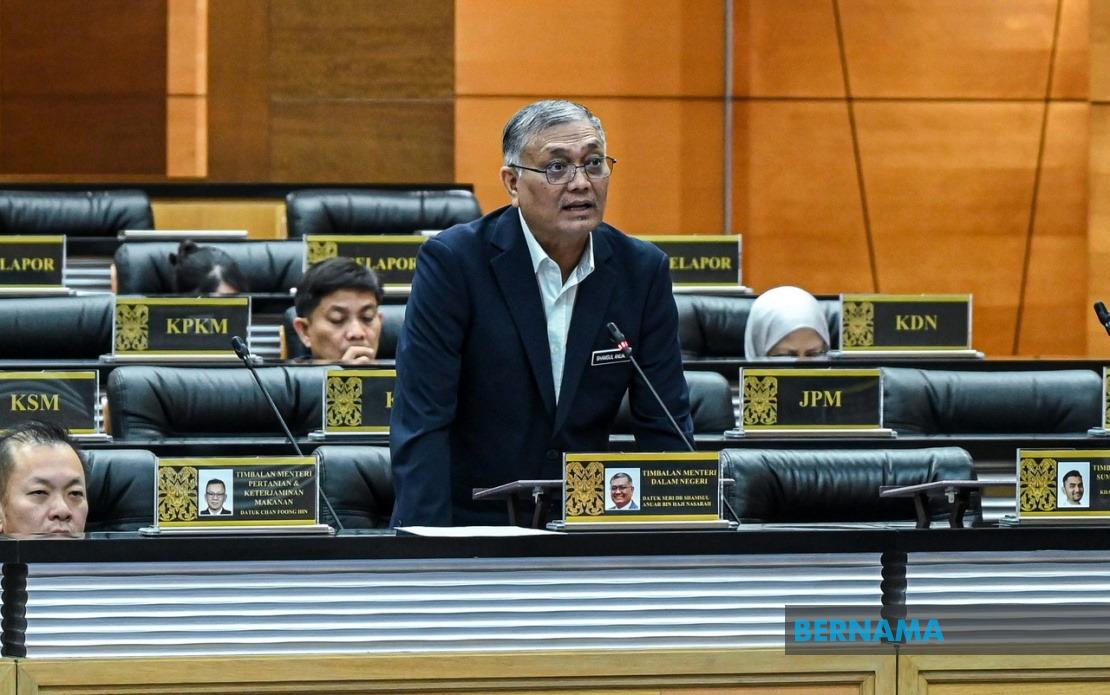
In a statement delivered during a parliamentary session, Deputy Home Minister Datuk Seri Dr Shamsul Anuar Nasarah has given explicit reassurance that the Royal Malaysia Police (PDRM) maintains unwavering neutrality when handling investigations into cases involving well-connected individuals. The assertion comes amid persistent public scrutiny regarding whether Malaysia's law enforcement can truly operate free from political or institutional pressure when investigating matters involving former cabinet members and their associates. Shamsul Anuar's declaration seeks to address longstanding concerns about selective justice and the treatment of high-profile suspects.
The deputy minister specifically referenced an ongoing investigation into an intimate video recording that circulated widely in 2019 and became linked to a former member of the Cabinet. Police have been attempting to locate the original footage as part of their enquiry, alongside identifying all electronic devices and associated equipment that may have been involved in its creation or distribution. The case represents one of Malaysia's most sensitive investigations, combining elements of privacy violation, potential criminal intent, and connections to politically prominent figures. Shamsul Anuar indicated that the probe continues methodically, suggesting no shortcuts or preferential treatment have been granted to any party.
The investigation operates under multiple legislative provisions, including Section 292, Section 377B and Section 504 of the Penal Code, as well as Section 233 of the Communications and Multimedia Act 1998. This multi-pronged legal framework reflects the complexity of the alleged offences, which span traditional criminal law and modern digital communications legislation. The breadth of applicable statutes underscores how the case straddles both conventional morality offences and contemporary concerns about unauthorised recording and dissemination of private material. For Malaysian readers familiar with recent high-profile legal proceedings, this layered approach demonstrates how authorities are treating the matter with considerable gravity.
During parliamentary questioning from Datuk Wan Saifulruddin Wan Jan (PN-Tasek Gelugor), Shamsul Anuar made an emphatic point about institutional integrity. He stressed that PDRM conducts its investigative work with professionalism, transparency and fairness, without allowing considerations of an individual's official position or political party membership to influence outcomes. This statement carries particular weight in the Malaysian context, where perceptions of politically motivated prosecution have occasionally clouded public confidence in law enforcement institutions. The deputy minister's emphasis on these principles suggests an attempt to rebuild or reinforce public trust in police impartiality during a period when such trust has been questioned in various quarters.
Parallel to the video recording investigation, another high-profile matter has involved the son-in-law of former Prime Minister Tan Sri Muhyiddin Yassin. Rather than remaining under police purview, this case has been assigned to the Malaysian Anti-Corruption Commission (MACC), which has already issued an arrest warrant against the individual in question. Shamsul Anuar declined to elaborate further, observing that the matter falls specifically within MACC's remit. The separation of this investigation into a different agency structure suggests a clear jurisdictional boundary, with the MACC handling alleged corruption-related matters while police focus on other categories of offence. This institutional division reflects Malaysia's attempt to maintain multiple independent investigative bodies, though critics have occasionally questioned whether such arrangements genuinely prevent political interference.
The involvement of the MACC rather than the police in investigating someone connected to a former prime minister carries its own symbolic weight. Many Malaysians remain mindful of how different political administrations have wielded anti-corruption mechanisms, sometimes selectively, to pursue their opponents. The fact that an arrest warrant has been issued suggests the investigation has progressed beyond preliminary stages and entered enforcement territory. Yet Shamsul Anuar's refusal to comment further indicates clear boundaries around what government figures will disclose about ongoing cases, a position that maintains operational secrecy while respecting sub judice considerations.
Beyond these domestic high-profile cases, Shamsul Anuar also addressed extradition procedures during the same parliamentary session. Malaysia currently maintains extradition treaties with 11 countries and has become a signatory to the ASEAN Extradition Treaty, establishing frameworks for pursuing and apprehending individuals who may have fled Malaysian jurisdiction. The deputy minister signalled the government's willingness to negotiate additional extradition agreements with foreign nations. For Malaysian law enforcement, such international cooperation mechanisms have become increasingly important as criminal networks grow more sophisticated and borderless. The emphasis on treaty-based cooperation underscores how modern investigations often transcend territorial boundaries.
The extradition arrangements available to Malaysia operate under the Extradition Act 1992, which establishes legal procedures and protections for individuals subject to such proceedings. These treaties represent significant diplomatic undertakings, requiring not merely agreement between governments but the passage of complementary domestic legislation in signatory nations. The ASEAN framework particularly matters for Southeast Asian cooperation, allowing countries in the region to work together more seamlessly on transnational criminal matters. For Malaysian observers concerned about organised crime, human trafficking, or terrorism, these extradition capabilities represent essential tools in law enforcement arsenals.
Shamsul Anuar's parliamentary remarks collectively paint a picture of Malaysian law enforcement attempting to operate within structured legal frameworks while maintaining impartiality across cases involving individuals of varying prominence. The statement acknowledges that some of Malaysia's most sensitive investigations—those touching on intimate privacy, corruption allegations, and political connections—will proceed according to established procedures rather than political convenience. Whether public confidence in such assurances will prove sufficient remains a separate question, particularly given historical instances where Malaysian institutions have faced credibility challenges.
The multi-layered approach to these various investigations suggests an institution conscious of international scrutiny and domestic expectations regarding the rule of law. The use of multiple agencies (PDRM and MACC), multiple legal frameworks, and emphasis on professional standards reflects an attempt to compartmentalise investigations in ways that theoretically prevent single points of political influence. For Malaysians watching these developments, particularly those invested in institutional accountability, the coming months and years will prove whether such structural safeguards translate into genuine, observable impartiality or whether perceptions of selective justice persist despite official assurances to the contrary.

