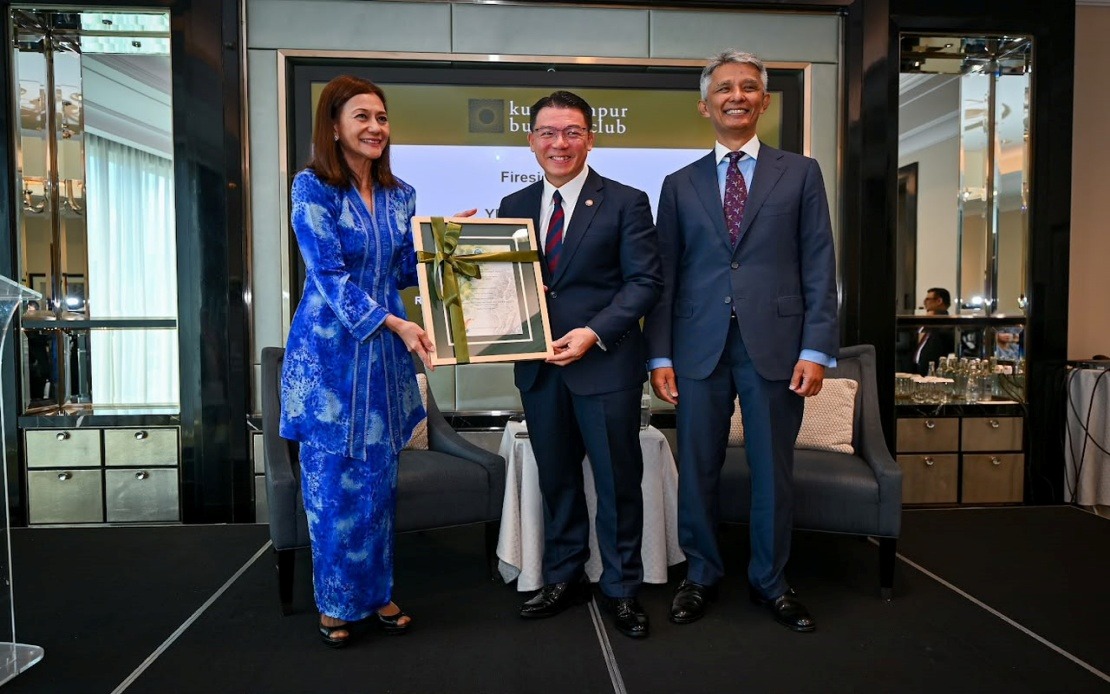
Housing and Local Government Minister Nga Kor Ming has underscored the importance of maintaining unwavering commitment to structural reforms under the MADANI framework, arguing that policy consistency represents the cornerstone for translating ongoing economic initiatives into tangible, long-term prosperity. Speaking at an event organised by the Kuala Lumpur Business Club on June 24, Nga stressed that governance stability and a clear reform agenda are indispensable for retaining business confidence and positioning Malaysia as a competitive player in an increasingly unpredictable global economic landscape.
The minister's remarks came during a fireside chat centred on urban economic development and the MADANI government's broader vision for reshaping Malaysia's cities and economic structures. Addressing business leaders and stakeholders gathered for the discussion, Nga articulated a vision where systematic, prolonged implementation of reforms yields measurable returns not only for government institutions but for the broader investment ecosystem that underpins the nation's growth trajectory.
Nga identified policy continuity as the mechanism through which Malaysia can deepen institutional capacity and sustain the momentum of structural transformation currently underway. He contended that uninterrupted governance coherence would furnish the administration with sufficient time and political capital to complete complex, multifaceted economic reform programmes that extend beyond typical election cycles. The implication is clear: fragmented or inconsistent policymaking would risk diluting the cumulative benefits of initiatives already launched and interrupt the investor confidence that such reforms have begun to generate.
Under the leadership of Prime Minister Datuk Seri Anwar Ibrahim, the MADANI government has registered demonstrable achievements across governance, fiscal management, and international relations, according to the minister. These accomplishments have collectively enhanced Malaysia's attractiveness to foreign capital and bolstered perceptions of institutional competence. Nga highlighted improvements in Malaysia's standing on the Corruption Perceptions Index, noting that enhanced transparency and ethical governance have broader implications for how multinational corporations and institutional investors assess operational risk in the country.
The government's approach to economic management has also translated into upgraded international credit assessments. Stronger ratings from global credit rating agencies reflect improved fiscal credibility and disciplined macroeconomic stewardship. For Malaysian firms and emerging entrepreneurs seeking to access international capital markets or establish cross-border partnerships, such ratings enhance credibility and reduce borrowing costs. These downstream effects illustrate how sustained policy coherence generates tangible economic benefits beyond headline announcements.
Malaysia's emergence as a competitive investment destination has been reinforced by transparent policy frameworks and political stability, factors that Nga underscored as prerequisites for attracting sustained foreign direct investment. In an era where multinational enterprises evaluate investment decisions across multiple jurisdictions, Malaysia's capacity to demonstrate stable governance and predictable regulatory frameworks becomes a critical differentiator. The minister's emphasis on continuity addresses implicit concerns that policy reversals or institutional vacillation could erode the confidence painstakingly built through recent reforms.
Trade resilience amid global economic headwinds represents another dimension of MADANI-era performance that Nga highlighted. Malaysian exporters have navigated supply chain disruptions, geopolitical tensions, and demand fluctuations whilst maintaining export competitiveness. This resilience, Nga suggested, reflects not merely favourable market conditions but the effectiveness of economic policies that have diversified Malaysia's trade partnerships and reduced dependence on any single market or sector.
Diplomatic initiatives have opened fresh avenues for strategic economic partnerships. The RM52.73 billion strategic partnership framework established with Turkmenistan and long-term energy collaboration arrangements with Russia exemplify how foreign policy alignment with economic objectives creates mutually beneficial arrangements. For Malaysia, such partnerships expand market access, secure energy supplies, and create investment opportunities for Malaysian companies operating in energy-related sectors. These geopolitically strategic arrangements underscore how policy consistency at the highest levels translates into concrete economic opportunity.
The minister argued that a renewed mandate would provide the governmental framework necessary to advance long-term economic transformation initiatives currently in their implementation phases. Many structural reforms—whether institutional restructuring, regulatory modernisation, or sectoral diversification—require sustained effort across multiple years to yield observable results. Policy disruption, by contrast, risks unravelling progress and creating uncertainty that deters investment planning. This reality is particularly acute in the construction and urban development sectors, where projects spanning years depend on predictable regulatory environments and consistent government support.
For Malaysia's regional standing, policy continuity carries particular weight. In an era of intensifying competition within Southeast Asia for foreign investment and strategic partnerships, nations perceived as unpredictable or prone to policy reversals risk losing investor interest to more stable neighbours. Singapore, for instance, has leveraged decades of consistent governance to position itself as a premier financial hub. Malaysia's capacity to demonstrate comparable reliability in policymaking remains a prerequisite for capturing the investment flows necessary to sustain middle-income growth trajectories and transition toward higher-value economic activities.
The MADANI framework itself represents an attempt to articulate coherent governance priorities around institutional strengthening, economic inclusivity, and environmental sustainability. Achieving such multifaceted objectives requires sustained focus and resource allocation. Inconsistency or wavering political commitment would inevitably undermine progress toward these goals. Nga's intervention should be understood partly as a defence of this integrated reform agenda and partly as an appeal to voters to recognise that economic transformation is a marathon rather than a sprint.
Looking ahead, Malaysia faces structural challenges including workforce reskilling, innovation capacity enhancement, and transition toward sustainable economic models. These initiatives cannot be accelerated through short-term political cycles; they demand patient capital, institutional development, and consistent policy frameworks. The minister's emphasis on continuity, therefore, extends beyond rhetorical appeals to governance stability and speaks to fundamental requirements for navigating the economic transitions that determine middle-income countries' prospects for sustained prosperity.

