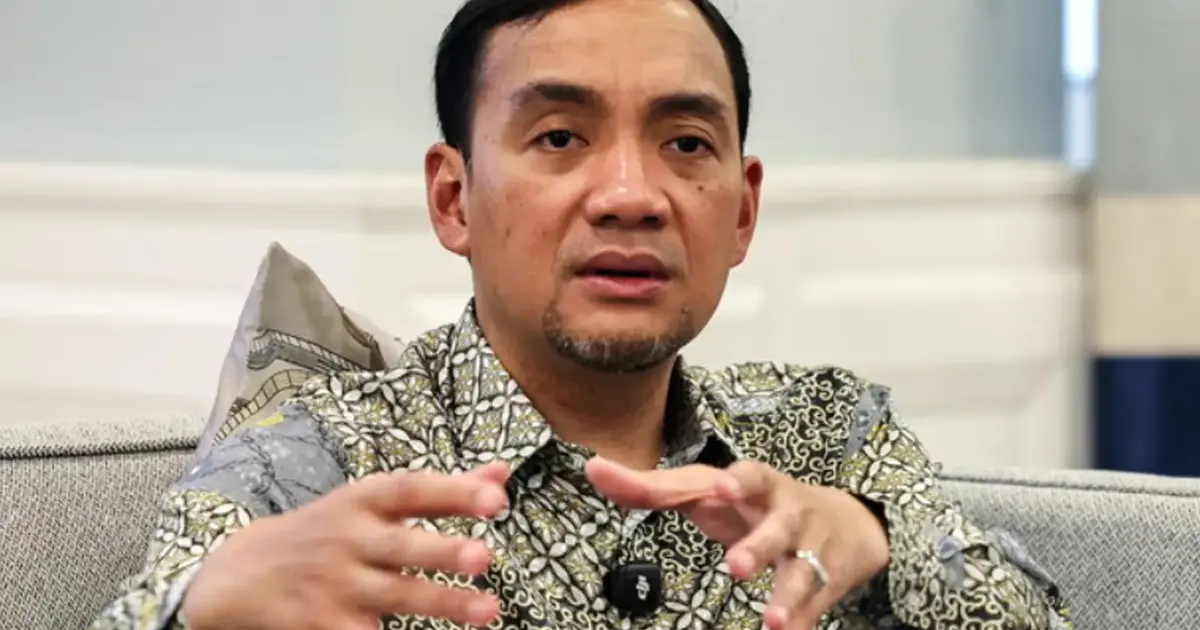
Johor Menteri Besar Onn Hafiz has delivered a pointed message to ambitious politicians within his state: prominence in the public eye does not guarantee access to the top executive position. Speaking on the critical dynamics that shape political leadership in the sultanate, Onn Hafiz underscored that the traditional gatekeeping role of the palace remains fundamentally determinative in selecting who steers the state administration.
The remarks come amid ongoing discussions about succession planning and leadership transitions within Johor's political establishment. By emphasising the indispensability of royal consent, Onn Hafiz has effectively reframed the conversation about advancement in Malaysian politics, particularly within states governed by monarchical institutions. This statement reflects a broader reality in Malaysian constitutional arrangements, where the Malay rulers exercise substantial prerogatives in government formation, despite the ceremonial appearance of democratic structures.
For Malaysian political observers, the Johor leader's clarification holds particular significance given the state's unique position as home to the Sultan who also serves as King. The interplay between electoral performance, party factionalism, and palace preference creates a complex political ecosystem where being a "poster boy"—a term denoting charismatic leadership and popular appeal—carries less weight than one might assume in more purely democratic systems. This hierarchy of influence reveals the distinctive character of Malaysian federalism, where constitutional monarchies retain genuine, exercisable authority.
The emphasis on royal prerogative also serves as a disciplinary message to party members and potential challengers within Johor. By clarifying that public recognition or media prominence cannot substitute for palace backing, Onn Hafiz signals that factional maneuvering or attempts to build grassroots support independent of institutional approval will prove futile. This implicitly cautions ambitious figures against pursuing leadership bids that lack the sultanate's sanction, regardless of their standing among party cadres or voters.
In the Southeast Asian context, Malaysia's system represents a hybrid arrangement where Westminster parliamentary conventions coexist with sultanate institutions inherited from pre-colonial polities. Unlike neighbouring democracies with purely elected executives, Malaysian chief ministers operate within this dual framework, requiring both electoral validation through their party and institutional validation through the palace. Onn Hafiz's statement serves as a reminder that the latter criterion remains non-negotiable, and arguably weightier in determining final outcomes.
The Johor political landscape has historically witnessed periodic tensions between rising party figures and palace preferences, occasionally resulting in unexpected leadership transitions or the sidelining of seemingly favoured candidates. By pronouncing definitively on this matter, the current Menteri Besar appears to be establishing guardrails against the kind of intra-party competition that could destabilise the state government or create friction with the sultanate. His message carries implicit warning: aspiring leaders must cultivate palace relationships alongside party support.
This articulation also reflects practical realities that Malaysian politicians navigate routinely. Election victories can be offset by palace reservations, while figures lacking widespread popularity but enjoying royal confidence have historically ascended to chief minister positions. The Johor framework essentially privileges institutional stability and palace preferences over purely majoritarian outcomes, a feature that distinguishes Malaysia's political system from liberal democracies where electoral mandates typically determine executive succession.
For political analysts examining Malaysian governance, Onn Hafiz's remarks illuminate the continuing relevance of traditional institutions in modern state administration. Despite decades of democratic practice and constitutional amendments, the sultanates retain genuine influence over political outcomes, particularly at the state level. This is not merely ceremonial—the palace's capacity to withhold consent represents a real constraint on political actors, shaping career trajectories and determining who ultimately exercises executive authority.
The statement also carries implications for party unity within Johor's government formation. By establishing that royal blessing supersedes party seniority or public prominence, Onn Hafiz creates a framework where ambitious figures must navigate palace expectations rather than relying on internal party support or electoral credentials alone. This potentially moderates factional competition, as contestants recognise that palace approval operates as an essential veto point beyond party control.
Looking forward, Onn Hafiz's pronouncement provides clarity for succession planning in Johor and sets precedent for how leadership transitions should be understood within the state. Rather than viewing chief minister selection as primarily a party matter subject to internal election or consensus, his framing repositions it as fundamentally an institutional process requiring palace validation. This distinction proves crucial for understanding Malaysian political dynamics, where formal democratic procedures overlay substantially different underlying realities regarding power concentration.
The broader implication for Malaysian politics involves acknowledging the persistent duality of authority within states governed by sultanates. Public perception, party machinery, and individual charisma constitute important factors in political success, but they remain secondary to institutional preferences. Onn Hafiz's clarity on this point serves both to educate aspiring politicians and to reinforce the sultanate's continuing role in state governance, ensuring that constitutional relationships remain understood and respected across the political spectrum.

