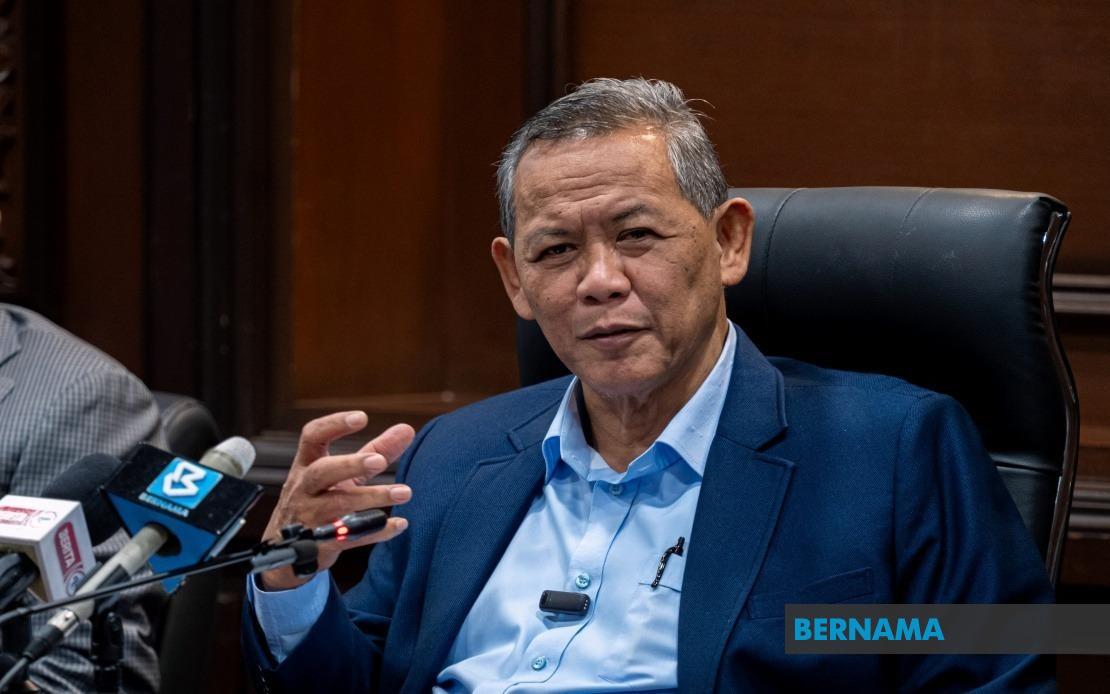
The RM3.4 billion AI-powered Smart Port project being developed in Port Dickson will proceed without requiring any land acquisition, according to Negeri Sembilan Menteri Besar Datuk Seri Aminuddin Harun. The entire development will be constructed on approximately 202 hectares owned by Tanco Holdings Berhad and its subsidiary Midports Holdings Sdn Bhd, eliminating the need to purchase additional property for the initiative.
Aminutdin moved decisively to counter mounting public concern about the project's land footprint. Claims that the undertaking would necessitate acquiring roughly 566 hectares—encompassing village settlements, forest reserves, customary land, industrial zones, farming areas, and residential property—have circulated among residents and community groups. The Menteri Besar branded these assertions as entirely without foundation and stressed his administration's commitment to protecting local interests and property rights.
The clarification carries significant weight given sensitivities surrounding land use in Malaysia, where property ownership, particularly among Bumiputera communities, remains a politically charged issue. Aminuddin specifically pledged that his government would not permit villages to be displaced for the port project and assured residents that forest reserves and customary land would remain untouched. He pointed out that customary land ownership is concentrated in the Kuala Pilah, Jelebu, Rembau, and Tampin districts, not in Port Dickson, further undermining arguments that indigenous land rights would be jeopardised.
The distinction carries practical implications for Negeri Sembilan's development trajectory. Port Dickson has historically served as a working port and industrial centre but lacks the sophisticated maritime infrastructure increasingly demanded by modern shipping operations and digital logistics networks. The smart port initiative represents an ambitious effort to position the facility as a competitive regional player in a market where Asian jurisdictions are rapidly adopting artificial intelligence and automation technologies for cargo handling and port management.
Aminutdin framed the development as transformative for Port Dickson's economic prospects. The first phase investment of RM3.4 billion would establish new commercial activity and potentially catalyse broader regional growth. The Menteri Besar described the project as a "game changer" with substantial wealth-generation potential for surrounding communities, notably those in Linggi and Pasir Panjang. By emphasising economic benefits tied to localised areas, he sought to reframe the project from a potential source of displacement anxiety into an opportunity for shared prosperity.
Community concerns about the livelihoods of fishing populations dependent on Port Dickson's coastal resources and waterways also weighed heavily on public perception. Aminuddin addressed these fears directly, clarifying that the Smart Port project would not affect Kampung Tanjung Agas, Kampung Sungai Raya, or the Linggi River itself. This distinction proved crucial because confusion existed regarding another port development, the Kuala Linggi International Port (KLIP), situated on the Negeri Sembilan-Melaka border and administered by Melaka. By separating the two projects geographically and administratively, Aminuddin sought to demonstrate that fishing communities would not experience disruption from the Smart Port initiative.
Prime Minister Datuk Seri Anwar Ibrahim had previously articulated the strategic rationale for the undertaking. On July 14, he characterised the Midport development as essential infrastructure for maintaining Malaysia's position as a consequential player in regional digital and maritime sectors. Ibrahim emphasised that the initiative transcends conventional port modernisation, instead representing a calculated response to escalating global trade requirements and Malaysia's geopolitical significance along the Strait of Malacca, one of the planet's most heavily trafficked maritime corridors through which trillions in annual commerce passes.
The port's strategic location assumes heightened relevance amid broader shifts in global supply chain management. With regional competition intensifying—particularly from Singapore's extensive automated facilities and emerging Southeast Asian ports—Malaysian stakeholders have recognised that technological advancement and operational efficiency represent prerequisites rather than luxuries for maintaining commercial relevance. The Smart Port concept leverages artificial intelligence applications for container movement optimisation, vessel scheduling, and logistics coordination, positioning Port Dickson as a participant in the technological frontier of maritime operations.
For Malaysian stakeholders monitoring infrastructure development, the project underscores how substantial regional investments increasingly integrate digital transformation components. The emphasis on artificial intelligence capabilities reflects broader economic policy directions favouring technology adoption across sectors. Port Dickson's transformation could establish benchmarks for other domestic maritime facilities considering comparable modernisation pathways.
Aminutdin's statements also addressed broader anxieties about development and land security that periodically surface within Malaysian communities. His explicit guarantee that Malay-owned property would remain protected responded to legitimate concerns about protecting assets held by indigenous communities during periods of significant infrastructure investment. The Menteri Besar cautioned against misinformation campaigns and intimidation tactics targeting residents, suggesting awareness that land-related disputes can destabilise communities if perceptions diverge dramatically from implementation realities.
The Port Dickson project now enters a critical implementation phase where stated intentions must translate into observable progress. Residents, fishing communities, and property owners will scrutinise execution details against Aminuddin's public assurances. The initiative's ultimate success will depend not merely on technological sophistication but on whether local stakeholders perceive genuine economic participation and credible protection of existing interests during the transformation process.

