President Prabowo Subianto's marquee free nutritious meals initiative has encountered fresh turbulence with the abrupt departure of National Nutrition Agency (BGN) head Nanik Sudaryati Deyang, who stepped down after little more than six weeks in the role citing severe health complications. Her resignation, announced via Facebook on Wednesday, marks the second leadership upheaval at the agency in as many months and underscores persistent structural vulnerabilities within one of Prabowo's most prominent policy commitments since taking office.
Nanik's decision to relinquish her position came shortly after medical examinations revealed a significant blockage in one of her heart arteries, a condition she attributed partly to the overwhelming psychological strain of managing the programme's enormous budget allocation. In describing her experience overseeing the agency, she employed vivid metaphors about the psychological toll of the responsibility, likening the burden of safeguarding public funds to "standing on the edge of a steep cliff" where any administrative misstep could prove catastrophic. The level of anxiety she experienced became so acute that she refused to personally authorise transactions without exhaustive scrutiny, repeatedly questioning every decision brought before her in an attempt to insulate the agency from further reputational damage.
Nanik's appointment itself had been intended as a stabilisation measure following the dramatic dismissal and subsequent arrest of her predecessor, Dadan Hindayana, who was detained alongside two deputies by authorities investigating suspected corruption and financial mismanagement within the programme. When she was elevated to lead the troubled agency, Nanik inherited the unenviable task of restoring institutional credibility following the Attorney General's Office probe into alleged irregularities in procurement and fund management across the multitrillion-rupiah operation. Her relatively swift departure suggests that the governance challenges facing the agency may run deeper than personnel changes alone can resolve.
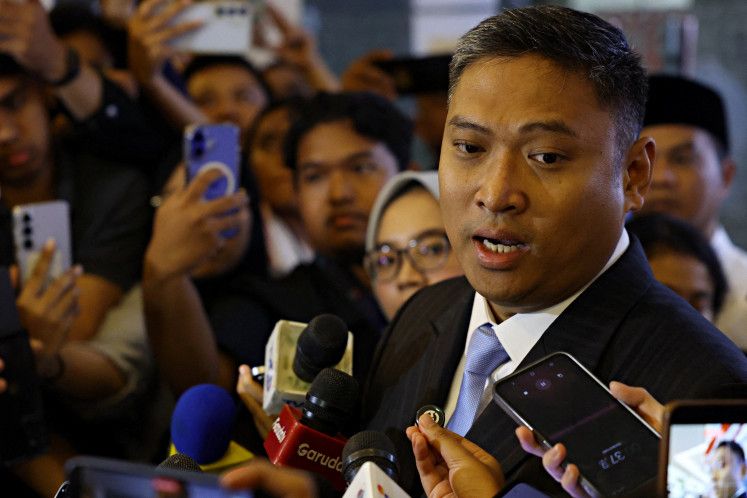
Within hours of accepting Nanik's resignation, Prabowo moved to fill the vacancy by appointing Deputy Agriculture Minister Sudaryono to helm the BGN, a decision unveiled during a formal ceremony at the State Palace in Jakarta. Sudaryono brings deep personal ties to the President, having previously served as one of Prabowo's senior political aides during the 2010s and continuing as a prominent figure within Prabowo's Gerindra Party. The selection reflects a deliberate strategy to consolidate control over the flagship programme by placing a loyalist in a position of institutional authority, though whether such political proximity will translate into improved operational effectiveness remains uncertain.
In his initial remarks following inauguration, Sudaryono acknowledged the agency's troubled track record and pledged substantial reforms centred on institutional transparency and technological modernisation. He committed to converting opaque, manually-driven processes into digitalised systems that would leave permanent documentation of all decisions and transactions, explicitly rejecting the possibility of operations conducted behind closed administrative doors. These commitments echo earlier promises from previous BGN leadership and from government statements, raising questions about whether this third leadership team possesses the technical capacity and institutional autonomy to implement such sweeping changes.
State Secretary Prasetyo Hadi reinforced the administration's determination to overhaul the agency, indicating that Prabowo had personally directed comprehensive institutional reforms following the corruption investigation. Prasetyo justified Sudaryono's appointment by noting his involvement in the free meals programme's initial design phase, suggesting that his prior technical involvement would enable him to navigate implementation challenges more effectively than previous leaders. However, this emphasis on Sudaryono's formative role in the programme's development may also carry negative implications, raising questions about whether he bears responsibility for systemic problems that were apparent from earlier stages.
The recurring crises at the BGN must be understood against the backdrop of the programme's troubled operational history since its launch in early 2025. The initiative has encountered multiple mass food poisoning incidents across different regions, raised serious concerns about meal quality standards, and generated substantial controversy regarding the adequacy of health and safety protocols. These recurring public health incidents have not only damaged the programme's reputation but have also exposed fundamental gaps in monitoring, quality assurance, and accountability mechanisms that transcend individual leadership decisions.
In an attempt to contain reputational fallout from poisoning incidents, Nanik had implemented a moratorium on establishing new meal preparation facilities while existing kitchen operations underwent systematic review. This protective measure, while potentially necessary from a public health perspective, triggered significant backlash from thousands of prospective operators who had made substantial capital investments in developing kitchen infrastructure in anticipation of formal approval. The political friction generated by this moratorium exemplifies the difficult trade-offs between safeguarding the public and maintaining support among entrepreneurial stakeholders who depend on the programme's expansion.
Financial projections for the programme have also undergone significant contraction in recent months. The BGN announced Tuesday that it would reduce the provisional 2026 budget allocation to Rp229 trillion (US$12.8 billion) from an originally planned Rp268 trillion, representing a downward revision of approximately 15 percent. More strikingly, the agency simultaneously lowered its target beneficiary population for 2026 to 62.7 million individuals, substantially below the initial projection of 82.9 million beneficiaries encompassing schoolchildren, toddlers, and pregnant women. This retreat from earlier expansion targets suggests either a realistic recalibration of institutional capacity or an acknowledgement that the programme's governance infrastructure cannot responsibly manage its previously envisioned scope.
BGN deputy chief Agustina Arumsari articulated the agency's recalibrated priorities, emphasising that improving service quality and safety standards now takes precedence over pursuing ambitious beneficiary growth targets. This explicit repositioning from quantitative expansion to qualitative improvement implicitly concedes that the original implementation strategy prioritised coverage breadth over operational depth, a strategic imbalance that contributed to quality and safety failures. Whether this philosophical shift will translate into measurably better outcomes depends substantially on whether the agency receives adequate resources, regulatory support, and technical expertise to execute such a transition.
Political analyst Wasisto Raharjo Jati offered a structural diagnosis of the programme's recurring difficulties, suggesting that its troubles stem fundamentally from misalignment between political ambition and technocratic preparation. Wasisto argued that while the free meals initiative represents one of Prabowo's central campaign commitments and retains significant political importance, the actual implementation structure has been driven more by electoral considerations and symbolic value than by careful institutional design and capacity-building. This analysis suggests that neither leadership changes nor operational adjustments can resolve problems rooted in the original conception and planning of the programme.
For Southeast Asian observers, the travails of Indonesia's free meals programme offer cautionary lessons about the institutional prerequisites for successfully implementing large-scale social assistance initiatives. The Indonesian experience demonstrates that commanding political will and substantial financial resources, while necessary, cannot substitute for rigorous technical planning, robust quality assurance systems, transparent procurement mechanisms, and institutional cultures that prioritise public health and financial stewardship over political considerations. As other countries in the region contemplate expanding social safety nets, the Indonesian case provides valuable evidence about which institutional foundations require reinforcement before programme expansion proceeds.

