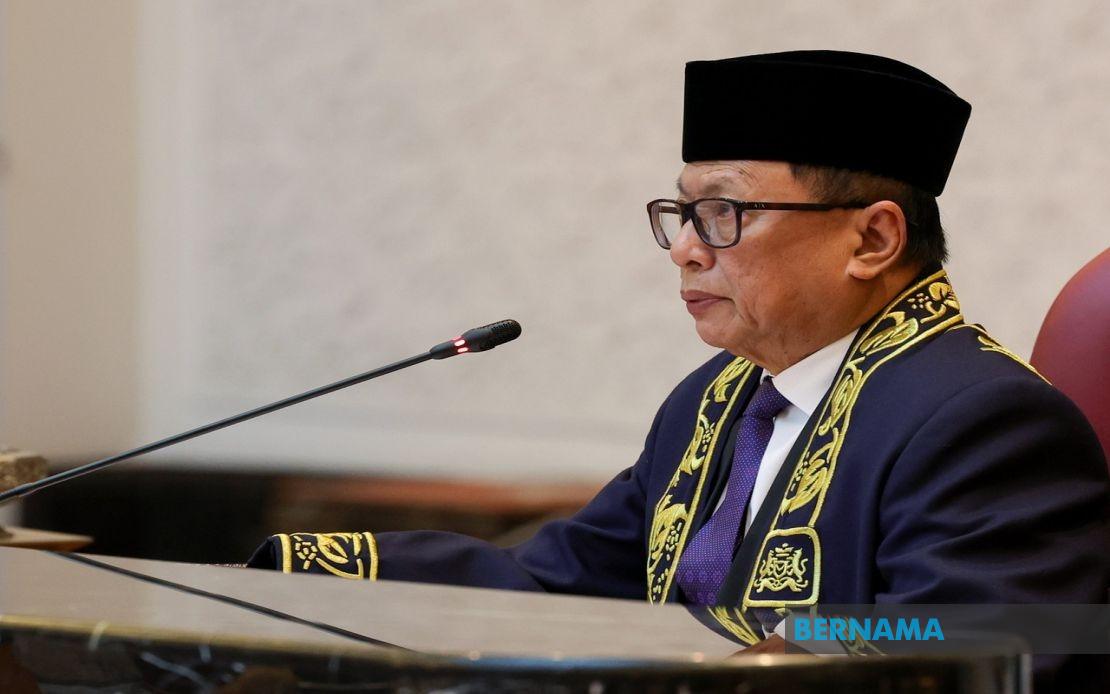
Datuk Dr Mohd Puad Zarkashi, a long-serving member of UMNO's Supreme Council, formally withdrew his membership from the party on June 25, 2026, in a move that exposes deepening fractures within the coalition's Johor chapter. In an announcement distributed through social media, the Rengit state assemblyman characterised his departure as an exercise in political independence, enabling him to voice concerns without the restraint typically imposed on party members. The decision came swiftly and without external pressure, according to his statement, allowing him to sidestep any potential disciplinary action the party might have contemplated.
Puad Zarkashi's exit represents a notable departure for a politician who has held considerable influence within UMNO's upper echelons. His resignation removes the need for formal expulsion procedures and, more significantly, grants him the latitude to articulate criticisms of party direction without facing accusations of disloyalty. In his public statement, he underscored his continued affection for UMNO's historical role as a champion of Malay and Malaysian interests, suggesting his quarrel lay not with institutional ideology but with contemporary leadership execution. This framing allows him to position himself as a reformist rather than a defector, a distinction that carries weight in Malaysian politics where party loyalty remains culturally significant.
At the heart of Puad Zarkashi's grievance lies his characterisation of Onn Hafiz, presumably Johor's chief minister, as a "pak turut" or yes-man whose authority operates under constraints imposed by external actors. According to his assessment, Johor UMNO functions as a "tethered puppet," suggesting that decision-making authority rests elsewhere and that the state leadership lacks genuine autonomy. This accusation carries particular resonance given the historical tensions between federal and state party structures in Malaysia, where questions of power distribution and genuine versus ceremonial authority periodically surface. By deploying such language, Puad Zarkashi attempts to shift the narrative from personal grievance to structural dysfunction affecting the entire state organisation.
The immediate catalyst for his departure appears linked to irregularities he identified in the candidate selection process for the forthcoming Johor state election under the Barisan Nasional banner. On June 24, Puad Zarkashi hinted that significant revelations were forthcoming, specifically referencing concerns about how candidates were chosen for the electoral contest. These accusations of procedural impropriety touch upon a sensitive area in Malaysian politics, where candidate selection often generates competing claims about fairness, merit, and internal factional balance. His departure therefore carries strategic weight, transforming him from an internal critic constrained by party discipline into an external voice capable of articulating such concerns without institutional consequence.
Puad Zarkashi's decision not to contest the Rengit state seat, which he had successfully held since the 2022 election, further complicates the internal narrative. Rather than framing his non-candidacy as a strategic repositioning or response to party direction, his earlier statements indicated a willingness to make way for younger politicians. However, his subsequent departure suggests deeper dissatisfaction than retirement might ordinarily convey. The timing of these announcements indicates a calculation whereby he first signalled withdrawal from electoral competition, then promptly extracted himself from the party entirely—a sequence that implies escalating frustration with party governance or direction.
His parliamentary history underscores both his previous prominence and recent electoral vulnerabilities. During the 12th General Election, he captured the Batu Pahat parliamentary seat with a commanding majority of 12,968 votes over his PAS opponent Muhammad Abdullah. However, this demonstrated strength proved unsustainable. In the 13th General Election, he contested the same seat but suffered defeat to PKR candidate Datuk Mohd Idris Jusi, losing by a narrower margin of 1,524 votes. This parliamentary setback, combined with his state assembly position, suggests a politician whose electoral fortunes had begun declining prior to his party exit.
Puad Zarkashi's federal career demonstrates the trajectory of a senior UMNO figure whose influence extended well beyond Johor. He served as Deputy Education Minister between 2009 and 2013, positioning him within the federal administration during a significant period of educational policy deliberation. More notably, he directed JASA, the Special Affairs Department, from March 2015 until April 2018, an institution typically associated with strategic communications and information management within the Prime Minister's office. These roles indicate someone with substantial access to executive corridors and responsibility for sensitive portfolios, lending credibility to his claims about internal party dynamics and governance shortcomings.
The allegation that Johor UMNO operates under external constraints represents a serious charge within the party structure. Malaysian politics frequently witnesses tensions between state-level autonomy and federal party direction, but explicit public accusations of puppet governance remain relatively uncommon from sitting Supreme Council members. Such statements risk triggering internal investigations or counter-accusations, yet Puad Zarkashi's departure from UMNO removes the party's immediate disciplinary mechanisms. This tactical sequencing—resignation followed by accusations—effectively neutralises institutional responses while preserving his ability to develop these themes without party constraints.
The broader implications of his departure extend beyond personalised grievance to suggest systemic concerns within Johor UMNO regarding leadership autonomy and internal democracy. His framing of his withdrawal as an act of "political courage" aimed at exposing wrongdoing before it worsens hints at apprehension about trajectory rather than isolated incidents. Whether such concerns reflect genuine governance failures or represent factional positioning within the party remains uncertain, but his senior status lends weight to the allegations. For Southeast Asian observers monitoring Malaysian intra-party dynamics, his departure signals continuing tensions within UMNO's state structures regarding power distribution and decision-making authority.
For Malaysian political observers and Johor residents, Puad Zarkashi's exit introduces uncertainty into coalition calculations ahead of the state election. The loss of a Supreme Council member capable of mobilising significant support networks potentially weakens UMNO's organisational capacity within the state. Simultaneously, his transformation into an external critic capable of articulating insider perspectives could complicate coalition messaging if he chooses to elaborate on his allegations regarding candidate selection and leadership constraints. The political landscape surrounding Malaysia's oldest ruling party continues evolving as veteran figures reassess their institutional commitments and allegiances.

