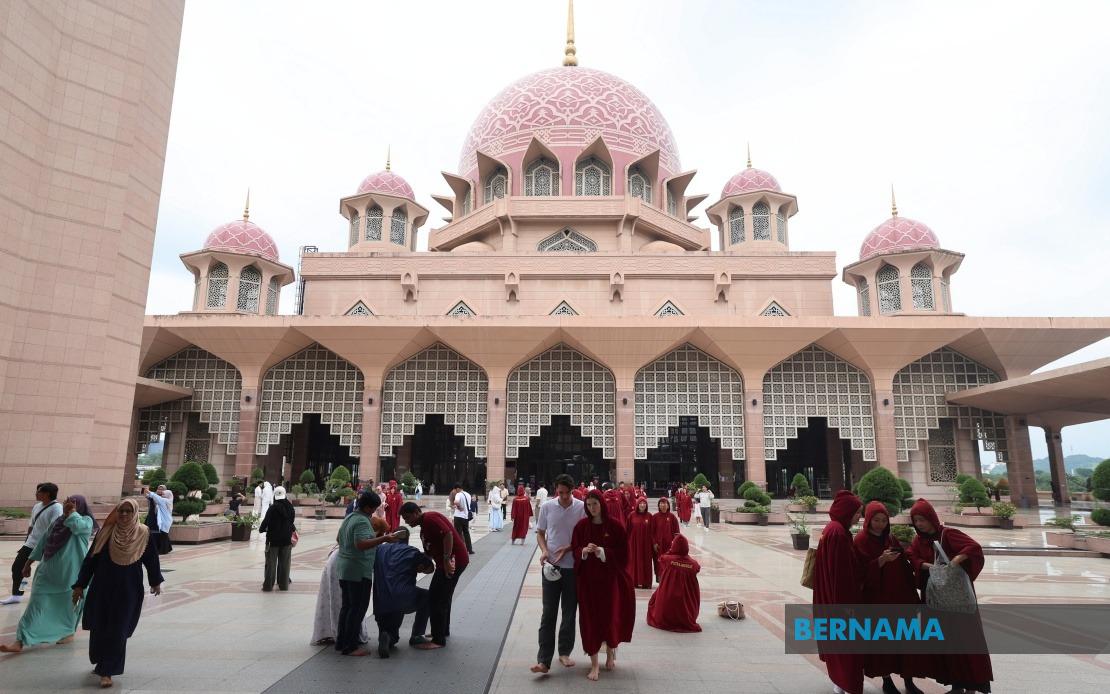
The Putra Mosque in Putrajaya is set to accommodate an impressive gathering of around 5,000 guests from Malaysia and abroad for the National Maal Hijrah 1448H/2026M celebration. This significant Islamic observance, which marks the Islamic New Year and commemorates Prophet Muhammad SAW's migration from Mecca to Medina, will be officiated by Sultan Nazrin Shah of Perak, underscoring the royal patronage and national importance accorded to the event.
Beyond the ceremonial leadership, the celebration will draw an array of senior government figures and international representatives. Both Deputy Prime Ministers Datuk Seri Ahmad Zahid Hamidi and Datuk Seri Fadillah Yusof are anticipated to be present, alongside Cabinet ministers, heads of various government departments, and diplomatic envoys from friendly nations. This convergence of political and administrative leadership reflects Malaysia's commitment to honouring Islamic heritage whilst maintaining its multicultural character through official state recognition.
The centrepiece of the gathering will centre on the Sultan's formal address to attendees, a moment that typically carries symbolic weight in Malaysia's Islamic observances. Following this address, the presentation of the prestigious National and International Tokoh Maal Hijrah Awards will take place, constituting a major highlight that acknowledges exceptional individuals within the Islamic community.
These awards serve a distinct purpose within Malaysia's Islamic institutional framework. Recipients are selected based on rigorous criteria encompassing deep scholarly knowledge within their respective domains, moral integrity and character of high standing, and significant contributions that have advanced Islam's teachings and influence at both national and global levels. The recognition extends beyond purely religious figures to include those from various professions and sectors whose work embodies Islamic values and principles.
The Department of Islamic Development Malaysia (JAKIM) has articulated the philosophical underpinning of this year's commemoration. Officials emphasise that the chosen theme deliberately encourages Malaysian Muslims to reconnect with the spiritual and historical significance of Prophet Muhammad SAW's Hijrah. Rather than treating it as a distant historical event, JAKIM frames the migration as a foundational moment that catalysed the development and advancement of Islamic civilisation, inviting contemporary reflection on what this means for modern believers.
Innovation in programming marks this year's celebration distinctly. The introduction of the Tausiyyah @ Maal Hijrah programme, held at Putra Mosque the day before the main event, represents an effort to deepen spiritual engagement among participants. This initiative concentrates specifically on tadabbur, an Islamic practice of profound meditation and reflection upon Quranic verses. Participants are not merely passive listeners but are guided through qari recitations of selected verses whilst being encouraged to contemplate their deeper meanings and practical applications.
The pedagogical approach embedded within Tausiyyah differs from conventional religious education in that it explicitly bridges the gap between scriptural knowledge and daily living. Participants encounter beautiful Quranic recitations delivered by distinguished qari, but crucially, the programme structure ensures they grasp the underlying messages, wisdom and divine guidance embedded within these passages. The ultimate objective remains transformative: enabling individuals to internalise these teachings and translate them into meaningful changes in their personal conduct and community engagement.
For Malaysian Muslims, Hijrah carries particular resonance as a concept of migration and transformation rather than mere physical relocation. In contemporary context, it speaks to personal reformation, spiritual renewal and the capacity for positive societal change. By framing the celebration around this narrative, organisers tap into a deep well of Islamic tradition whilst making it relevant to 21st-century Malaysian life, where many face questions of identity, purpose and contribution to society.
The celebration's international dimension deserves attention, particularly given Malaysia's position as a significant voice within the global Islamic community. By hosting delegations and representatives from other nations, the Maal Hijrah event becomes a platform for Malaysia to project its understanding of progressive, inclusive Islam. This contrasts with interpretations that marginalise Muslims of different backgrounds or non-Muslims, presenting instead a vision of Islamic practice compatible with pluralism and coexistence.
Following the main gathering at Putra Mosque, momentum is sustained through complementary programming. The National and International Tokoh Maal Hijrah Lecture scheduled for the following day at Putrajaya Islamic Complex Auditorium extends the celebration's reach and depth. This segment allocates platform space to award recipients themselves, enabling them to distil and share their accumulated knowledge and lived experiences with broader audiences, thereby multiplying the educational and inspirational impact of their recognition.
For Malaysian policymakers and religious authorities, such well-coordinated, multi-day celebrations serve strategic purposes beyond mere religious observance. They demonstrate state commitment to Islam whilst simultaneously orchestrating messaging around Islam's compatibility with modern governance, international engagement and inclusive values. The scale of participation and institutional support sends signals domestically about Islam's central place in Malaysia's national identity and internationally about Malaysia's brand of Islam.
The Maal Hijrah celebration ultimately encapsulates how Malaysia navigates the intersection of religious observance and contemporary governance. Through careful programming, prestigious awards, political participation and thematic coherence, the event transforms a religious calendar moment into a statement about national values, institutional Islam and Malaysia's vision for Islamic practice in an interconnected world. For Southeast Asian observers, it demonstrates one approach to maintaining religious significance whilst engaging modernity.