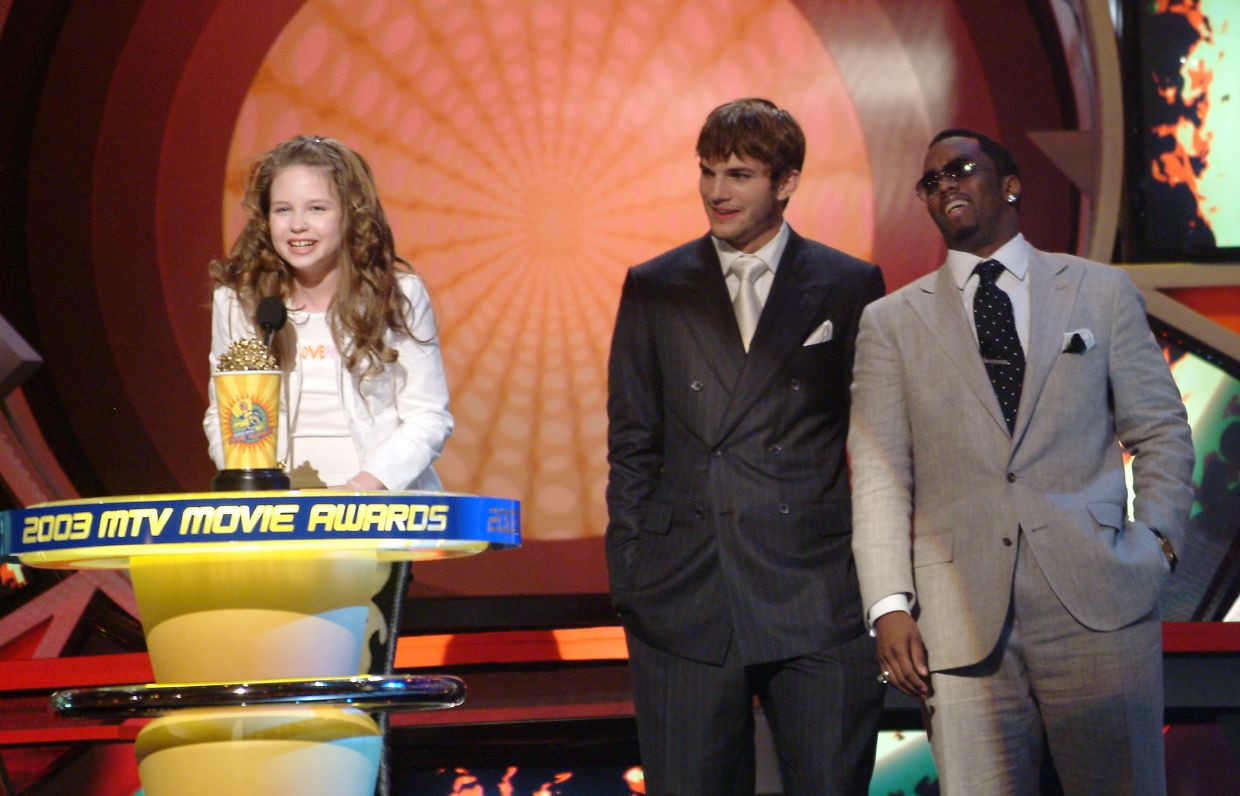
An archived footage of Sean 'Diddy' Combs engaging with a preteen Daveigh Chase at an industry event has gone viral across social media platforms in the wake of the actress's recent death, reigniting conversations about the music executive's interactions with young people in Hollywood during the early 2000s. The timing of the video's circulation underscores how public figures' past behaviour comes under renewed examination when significant life events occur, particularly in cases involving younger individuals who had access to exclusive entertainment industry spaces.
Daveigh Chase, best remembered for her spine-chilling performance as the vengeful ghost child Samara Morgan in The Ring, died on June 16 at a Los Angeles hospital aged 35. Her father, John Schwallier, disclosed that she had succumbed to complications arising from bacterial meningitis and a concurrent blood infection, compounded by severe malnutrition. The circumstances surrounding her death extended beyond medical complications—Chase had been battling substance dependency and found herself unhoused in the vicinity of the medical facility where she ultimately passed away.
The resurfaced clip originates from the 2003 MTV Awards ceremony, where the then-child performer received recognition in the Best Villain category for her iconic portrayal in the horror franchise. Following her award presentation by actor Ashton Kutcher and Combs, the music executive approached the young winner holding a beverage and posed a seemingly casual query about her attendance at the subsequent private gathering. Chase's affirmative response prompted an enthusiastic reaction from Combs, while Kutcher's amused demeanour during the interaction was captured on camera, documenting a moment that would later assume considerably greater significance.
The resurfacing of this particular video arrives as Combs faces unprecedented legal jeopardy stemming from allegations regarding his legendary private events. Throughout his career, the 55-year-old entertainment mogul cultivated a reputation for hosting extravagant celebrations, but recent revelations have transformed public perception of these gatherings entirely. Federal investigators have described his most exclusive affairs as elaborate, chemically-enhanced, extended-duration sexual encounters that frequently incorporated commercial sex workers and allegedly operated without full consent from all participants.
Combs's legal troubles intensified dramatically in September 2024 when authorities apprehended him at the Park Hyatt Hotel in Manhattan's midtown district. The arrest culminated a comprehensive federal investigation into allegations spanning years and involving numerous individuals. Prosecutors presented evidence suggesting a pattern of coordinated criminal activity designed to facilitate and conceal exploitative practices at scale within the entertainment sphere.
The criminal proceedings concluded in July 2025 with a conviction on two counts of transportation to facilitate prostitution, charges arising from a sex trafficking trial conducted in federal court in New York. The guilty verdict demonstrated that prosecutors successfully established Combs's systematic involvement in transporting individuals across state lines for sexual purposes, representing a significant legal failure for the once-dominant figure in hip-hop and entertainment production. The conviction carries substantial sentencing consequences that fundamentally alter the trajectory of his remaining life.
A federal judge subsequently imposed a 50-month prison sentence, translating to approximately four years and two months of incarceration. Combs is presently detained at FCI Fort Dix in New Jersey, a medium-security federal facility housing inmates convicted of serious offences. His current confinement represents a dramatic reversal from his previous status as one of entertainment's most influential and wealthy figures, highlighting how comprehensive criminal exposure can dismantle even the most fortified personal empires.
Beyond criminal liability, Combs confronts an expansive civil litigation landscape. More than 100 separate civil lawsuits have been filed against him by individuals alleging various forms of harm and misconduct. These civil actions operate independently from the criminal proceeding and may result in substantial financial judgments against him regardless of criminal penalties already imposed. The aggregate exposure from this litigation portfolio represents potential financial devastation extending far beyond the criminal sentence.
The circulation of the 2003 MTV Awards footage within this contemporary legal context invites uncomfortable reflection on historical power dynamics within entertainment industries. The casual nature of Combs's interaction with a child at a public, televised event contrasts sharply with subsequent revelations about his private conduct, prompting viewers to reassess moments previously considered unremarkable. For Malaysian and Southeast Asian audiences following international entertainment news, the case illustrates broader systemic vulnerabilities within celebrity-dominated industries where power imbalances enable harmful behaviour to persist unchecked for extended periods.
Daveigh Chase's tragic death and the circumstances leading to it—homelessness, addiction, severe health complications—represent outcomes that occasionally befall child actors who achieve early prominence without adequate protective structures. Her trajectory from acclaimed young performer to vulnerable individual struggling on urban streets reflects challenges endemic to childhood celebrity that entertainment industries have historically failed to adequately address. The resurfaced video, viewed through this lens, becomes documentation of an era when child protection protocols were substantially less rigorous than contemporary standards demand.
The convergence of Chase's passing with the Combs controversy generates a sobering narrative about entertainment industry culture during the period when both figures occupied their respective professional positions. Whereas Combs has faced systematic legal accountability for substantiated misconduct, Chase's challenges remained largely invisible to public view until her death prompted retrospective examination of her life trajectory. This asymmetry raises questions about the differential protective mechanisms available to children versus adults within celebrity hierarchies.
For observers in Malaysia and the broader Southeast Asian region, the Combs case demonstrates how international entertainment networks can expose vulnerable individuals to harmful environments, and how justice systems, while imperfect, can eventually hold powerful figures accountable through sustained investigation and prosecution. The multiplicity of legal proceedings—criminal, civil, and institutional—suggests that accountability mechanisms, though delayed, ultimately respond to serious allegations when substantiated evidence reaches appropriate judicial authorities.
Looking forward, the Combs conviction and sentencing may catalyse meaningful industry reforms regarding child welfare, consent verification, and event safety protocols. The visibility generated by his prosecution creates opportunities for entertainment sector stakeholders to implement structural changes preventing similar patterns of misconduct and exploitation. The tragic loss of Daveigh Chase, intersecting with Combs's legal reckoning, serves as a poignant reminder that entertainment industry cultures require continuous vigilance and reform to adequately protect vulnerable participants.

