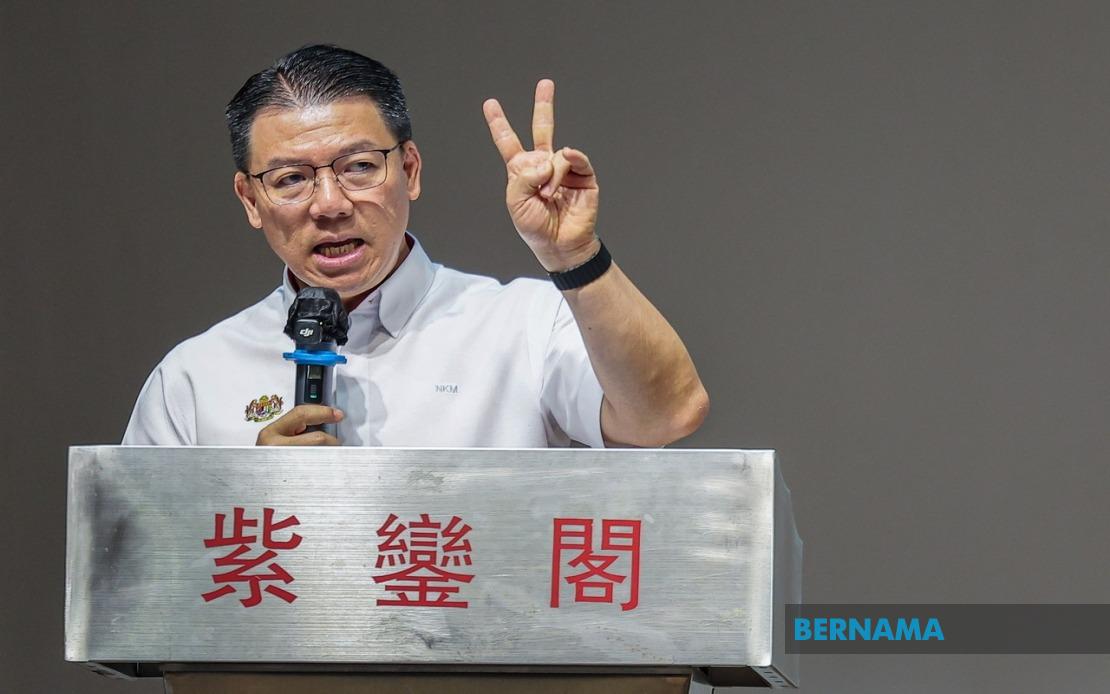
Malaysia's Housing and Local Government Ministry (KPKT) has committed RM200 million over a four-year period beginning in 2023 to fund the maintenance and repair of non-Muslim houses of worship across the country. Speaking at a handover ceremony in Kluang, Johor, Minister Nga Kor Ming framed the initiative as a tangible manifestation of the MADANI government's pledge to ensure equitable treatment of all communities regardless of religious or ethnic background. The programme, formally known as the Non-Muslim Houses of Worship (RIBI) Maintenance Initiative, represents one of the administration's more visible efforts to address grassroots infrastructure needs within minority faith communities.
The scale of demand for maintenance assistance has exceeded initial expectations, with the e-RIBI System recording 1,478 applications valued at more than RM279 million since the scheme's launch. This substantial discrepancy between the allocated budget and submitted requests underscores the accumulated maintenance backlog affecting religious institutions nationwide. Churches, gurdwaras, Hindu temples, Buddhist temples, and other faith-based associations have all benefited, though the quantum of applications suggests that even with the RM200 million commitment, many worthy projects may remain unfunded. The data itself becomes a measure of community need and the infrastructure deficit that has developed over preceding years.
In Johor specifically, the state has received RM18.75 million in allocations between 2023 and May 2026, benefiting 154 separate religious institutions. During the Kluang ceremony, Nga announced an additional RM3.14 million earmarked specifically for 27 Johor-based RIBIs in the current year. These state-level allocations will finance renovation work, structural maintenance, new construction elements, and emergency repairs deemed critical to ensuring these facilities remain functional and safe for their congregations. The announcement reflects an attempt to distribute benefits across multiple states rather than concentrating resources in major urban centres.
The initiative carries political and social significance beyond mere infrastructure management. Nga deployed language emphasizing national unity and social cohesion, contrasting the government's bridge-building approach with what he characterised as divisive tendencies elsewhere. His remarks at the ceremony stressed that development policy must transcend racial and religious categorisation, framing minority community support as integral to broader national stability and economic prosperity. The minister argued that investor confidence and job creation depend partly on maintaining the interethnic harmony that has historically underpinned Malaysia's competitive position in Southeast Asia.
The MADANI government's messaging around the RIBI initiative reflects a calculated political strategy. By channelling resources visibly into minority religious infrastructure, the administration seeks to demonstrate responsiveness to non-Muslim communities who constitute roughly 40 percent of Malaysia's population. This approach contrasts with previous periods when such allocations were less systematic or transparent. The e-RIBI System itself represents an attempt to professionalise the distribution process, replacing ad hoc grants with a digitised application and vetting mechanism intended to enhance accountability and reduce patronage-based allocation.
Implementation oversight remains a declared priority for KPKT. The ministry committed to monitoring approved projects with professional rigour and transparency to ensure funds reach genuinely deserving organisations. This undertaking addresses longstanding concerns about fund diversion and weak project management in government-sponsored initiatives. The emphasis on monitoring reflects recognition that public confidence in the programme depends on demonstrable delivery and proper stewardship of allocations. Periodic progress reports and site inspections would theoretically verify that approved budgets translate into completed maintenance work.
The maintenance gap highlighted by the applications data carries implications for communal wellbeing. Many houses of worship serve not only religious functions but operate as community hubs providing welfare services, educational programmes, and social gathering spaces. Deferred maintenance threatens these broader social roles, potentially affecting vulnerable community members reliant on faith-based support networks. By targeting religious infrastructure, the programme indirectly supports the social ecosystems that these institutions anchor.
Regionally, Malaysia's approach to minority religious infrastructure funding may carry lessons for neighbouring Southeast Asian nations navigating religious diversity. In contexts where inter-communal tensions periodically erupt, demonstrable government investment in maintaining all faith communities' physical spaces signals commitment to pluralism and can reduce communal grievance. The RIBI initiative thus operates at multiple levels: addressing immediate maintenance needs, signalling political commitment to inclusivity, and potentially contributing to longer-term social stability.
However, challenges remain in translating budgetary commitments into equitable outcomes. The gap between requested funding (RM279 million) and allocated budget (RM200 million) suggests that prioritisation criteria will determine which communities benefit most substantially. Geographic distribution matters as well; rural and smaller urban centres may struggle to navigate application processes or lack administrative capacity compared to better-resourced institutions in metropolitan areas. Monitoring RIBI allocation patterns by location and faith community will reveal whether the initiative achieves its stated inclusivity objectives.
The political durability of the RIBI initiative will depend partly on its integration into Malaysia's medium-term governance priorities. Should fiscal constraints force budget cuts, minority infrastructure programmes often face vulnerability compared to projects with broader electoral constituencies. Institutionalising the initiative through legislation or multi-year appropriations rather than annual discretionary allocations would enhance predictability for applicant organisations. The ministry's commitment to transparency and professional management will require sustained investment in administrative systems and oversight capacity.

