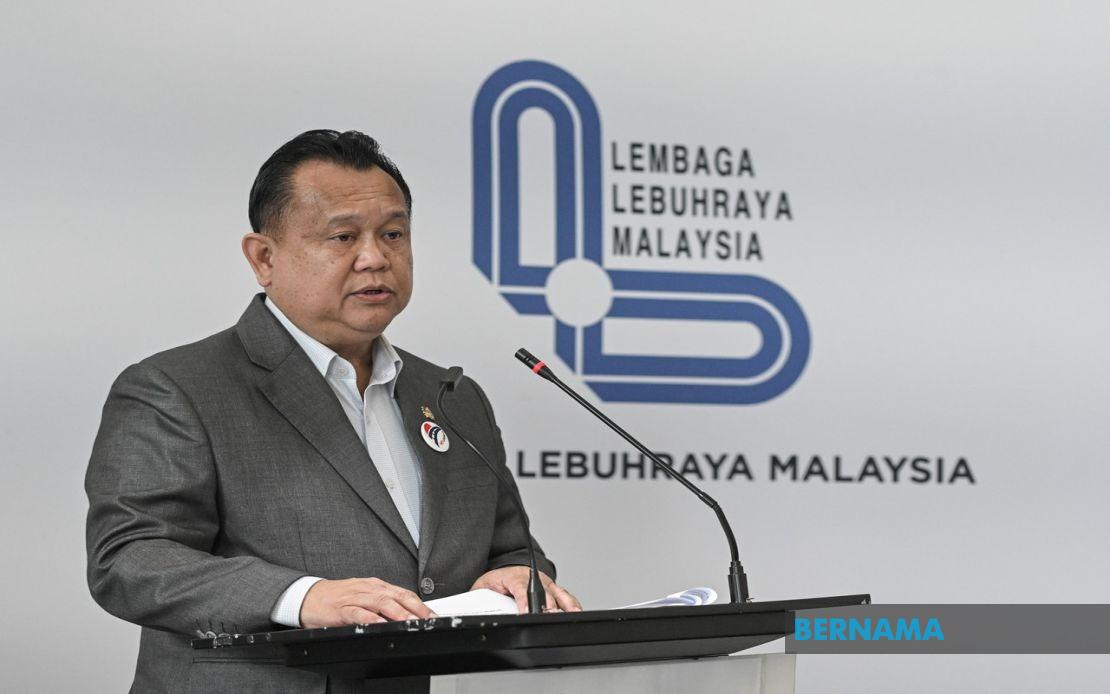
The Malaysian government has committed RM25.2 million to illuminate some of the nation's most treacherous stretches of highway through an ambitious solar-powered LED lighting initiative. Works Minister Datuk Seri Alexander Nanta Linggi announced the allocation on June 23, signalling a decisive push to reduce road fatalities at 32 identified high-risk and accident-prone locations spanning the nationwide highway network. The project represents a tangible response to Prime Minister Datuk Seri Anwar Ibrahim's October 2023 budget announcement, reflecting heightened governmental concern about the persistent toll of road accidents on Malaysian families and the economy.
The installation of 3,000 light poles forms the cornerstone of this initiative, which operates under the MADANI Monitoring programme—a framework designed to enhance surveillance and safety across critical infrastructure. By deploying renewable energy solutions, the government addresses a dual challenge: improving visibility at dangerous road segments while advancing environmental sustainability. Solar-powered systems eliminate ongoing electricity costs and reduce the carbon footprint associated with traditional grid-connected street lighting, making this approach both fiscally prudent and aligned with broader climate commitments.
A critical distinction should be noted regarding the financial commitment. While the original allocation proposed by the Prime Minister totalled RM30 million, the Works Ministry has rolled out RM25.2 million for this initial deployment phase. Officials indicated that the remaining funds would be distributed progressively as project requirements are reassessed and additional phases potentially identified. This staged approach allows authorities to evaluate the effectiveness of installations at current locations before expanding further, ensuring resources are deployed efficiently and lessons learned are incorporated into subsequent tranches.
The project's timeline is notably aggressive. The Letter of Acceptance has already been handed to the selected contractor, enabling immediate commencement of ground works. Officials are targeting full completion by the end of November 2024, compressing the installation of thousands of poles across multiple highway sections into a five-month window. This compressed schedule reflects the government's urgency in addressing safety deficiencies, though it also places substantial pressure on the executing contractor to mobilise resources and maintain quality standards across geographically dispersed locations.
For Malaysian road users, the implications are substantial. Inadequate lighting is a documented contributing factor to night-time accidents, particularly on highways where speeds are high and reaction times minimal. Poor visibility compounds driver fatigue, especially on long-distance routes, and increases the risk of collisions, loss-of-control incidents, and pile-ups. By targeting the 32 most accident-prone segments identified through crash data analysis, the government is applying evidence-based prioritisation rather than distributing resources uniformly. This surgical approach maximises the safety dividend from the available budget.
The partnership between the Works Ministry, Finance Ministry, and Malaysian Highway Authority (LLM) underscores the cross-functional coordination required for infrastructure projects of this scale. LLM's operational expertise in highway management is crucial for identifying problem locations and ensuring that lighting upgrades integrate seamlessly with existing maintenance and safety systems. The Finance Ministry's budgetary oversight ensures fiscal discipline, while the Works Ministry drives policy implementation and coordination with contractors.
Regional significance extends beyond Malaysia's borders. As Southeast Asia grapples with rapidly rising vehicle ownership and increasing highway traffic volumes, road safety remains an acute challenge. Malaysia's investment in technology-driven solutions offers a model that neighbouring countries may consider replicating. Solar LED technology is increasingly cost-competitive, and the operational efficiency gains are compelling for nations seeking to upgrade safety infrastructure while managing budgetary constraints.
The broader context of road safety in Malaysia cannot be overlooked. The country has historically ranked among the higher-risk nations for traffic accidents in the region, with factors including congested urban highways, aging vehicle fleets, and variable enforcement of traffic regulations all contributing to accident rates. While improved lighting addresses one risk factor, holistic road safety requires complementary interventions including driver behaviour campaigns, vehicle safety standards, and enforcement mechanisms. The MADANI Monitoring programme's emphasis on surveillance and monitoring suggests the government recognises this need for integrated approaches.
Implementation challenges remain. Installing and maintaining 3,000 poles across geographically dispersed locations requires robust supply chain management, skilled labour deployment, and quality assurance protocols. Weather conditions, particularly during Malaysia's monsoon seasons, could impact construction schedules. Additionally, ensuring that solar panels remain clean and functional in Malaysia's tropical climate—where dust and humidity can degrade performance—demands ongoing maintenance protocols and contractor accountability mechanisms.
For stakeholders in the construction and renewable energy sectors, this project represents a vote of confidence in solar technology's viability for Malaysian infrastructure. Successful delivery could catalyse further government investments in solar-powered public infrastructure, from traffic signals to toll plaza facilities. The project also demonstrates potential for public-private partnerships in safety-critical applications where technology can deliver cost savings over project lifecycles.
Looking ahead, the completion deadline of November 2024 will serve as a crucial benchmark. If the project delivers both on schedule and budget, it could establish a template for addressing other infrastructure deficiencies identified through data-driven analysis. Conversely, delays or quality issues would trigger scrutiny regarding contractor capability and project management efficacy. The government's credibility in delivering results-driven infrastructure depends substantially on execution fidelity in initiatives like this.