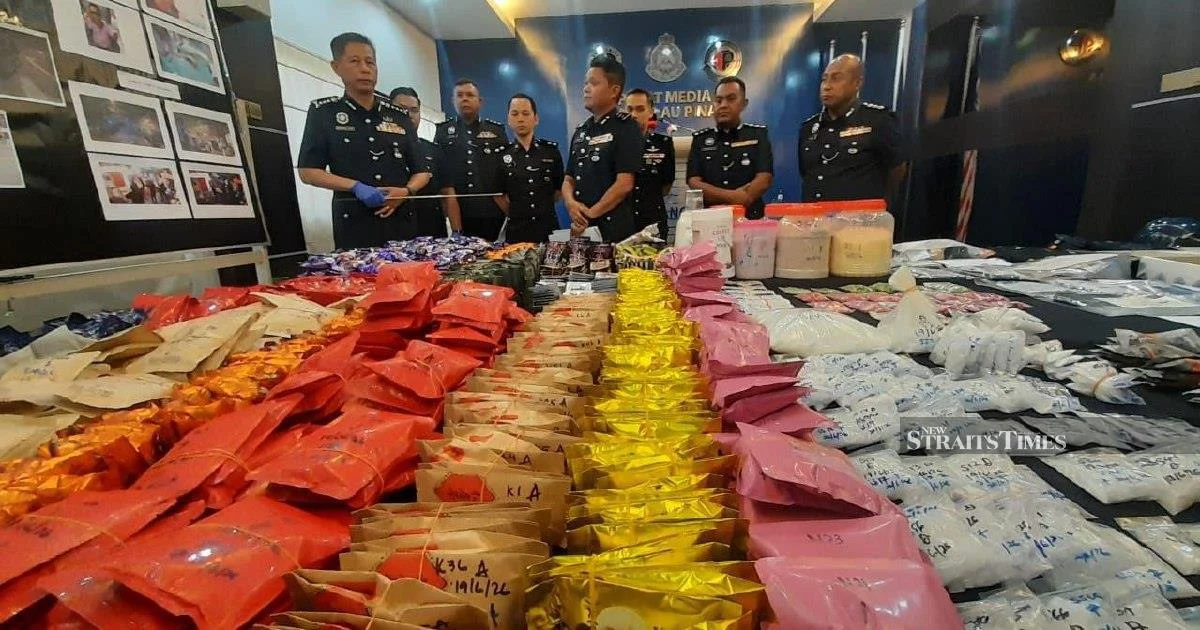
A major drug enforcement operation in Penang has dealt a substantial blow to regional trafficking networks, with police successfully shutting down a clandestine processing and distribution hub operating from a residential condominium in Butterworth. The operation culminated in the arrest of a couple and the seizure of narcotics with an estimated street value of RM9.7 million, marking one of the more significant drug busts in the northern corridor in recent months.
The discovery of this sophisticated operation highlights the evolving tactics employed by organised drug syndicates, who increasingly exploit residential properties as fronts for large-scale manufacturing and supply activities. By establishing their base within an ordinary condominium complex, the suspects were attempting to evade detection through the guise of normal residential life. Such concealment strategies reflect the growing sophistication of drug networks across Southeast Asia, where criminal organisations are becoming more adept at blending illicit operations into urban environments.
The seizure of RM9.7 million worth of substances represents not merely the loss of a single shipment but the disruption of a functioning supply chain that likely served multiple distribution points across Penang and potentially beyond. Law enforcement agencies in Malaysia have increasingly recognised that dismantling these mid-level operations can have cascading effects on the broader trafficking ecosystem, limiting the availability of narcotics and disrupting the financial flows that sustain larger criminal enterprises.
The arrest of both individuals involved suggests that the couple may have occupied complementary roles within the operation, a common organisational structure among drug manufacturing networks. Such partnerships, whether based on romantic relationships or purely commercial arrangements, often provide operational advantages through divided responsibilities and built-in security measures based on mutual trust and shared criminal liability. The investigators' ability to apprehend both suspects simultaneously indicates careful surveillance and coordination that prevents either party from fleeing or destroying evidence.
Penang has long served as a critical juncture in regional drug trafficking patterns due to its strategic geography and port infrastructure. The state's proximity to international waters and established routes through the Strait of Malacca make it an attractive location for organised crime groups seeking to consolidate shipments for onward distribution throughout Malaysia and the broader region. Residential areas within major urban zones like Butterworth provide ideal locations for these operations due to their anonymity and the normalcy of regular human activity that might otherwise raise suspicion among law enforcement.
The confiscation of such substantial quantities of narcotics underscores the continued capability of Malaysian police forces in detecting and disrupting trafficking operations. This bust demonstrates the effectiveness of targeted intelligence gathering and coordinated enforcement action, methodologies that have become increasingly important as drug syndicates adapt their operational security. The successful raid required not only identifying the location but also timing the intervention to secure maximum quantities of contraband and personnel.
For residents and businesses across Penang, this operation serves as a reminder of the ongoing presence of organised drug trafficking within seemingly ordinary residential settings. The use of condominium properties, which provide legitimate cover through normal resident activity and varying occupancy patterns, represents an evolving challenge for law enforcement tasked with balancing privacy rights with public safety imperatives. Community awareness programs that educate residents about suspicious activities in residential complexes have become an increasingly important component of drug enforcement strategy.
The RM9.7 million valuation reflects the wholesale cost of the seized substances, indicating the substantial profit margins that motivate continued criminal activity despite enforcement risks. These margins ensure that even when significant quantities are intercepted, the economics of trafficking remain sufficiently attractive to sustain ongoing criminal operations. The persistently high profitability of drug manufacturing and distribution at every level of the supply chain explains the continued sophistication and resources dedicated to these activities by organised groups.
This arrest and seizure contributes to the broader enforcement narrative in Penang and across the northern region, where sustained police operations have yielded multiple notable busts over recent years. However, law enforcement analysts recognise that while individual operations can be disrupted, the underlying demand for narcotics and the substantial financial incentives for supply ensure that replacement networks emerge to fill market gaps. The Penang case therefore represents both a genuine success in limiting drug availability and a snapshot of the persistent challenge that regional authorities continue to face in combating organised trafficking networks.

