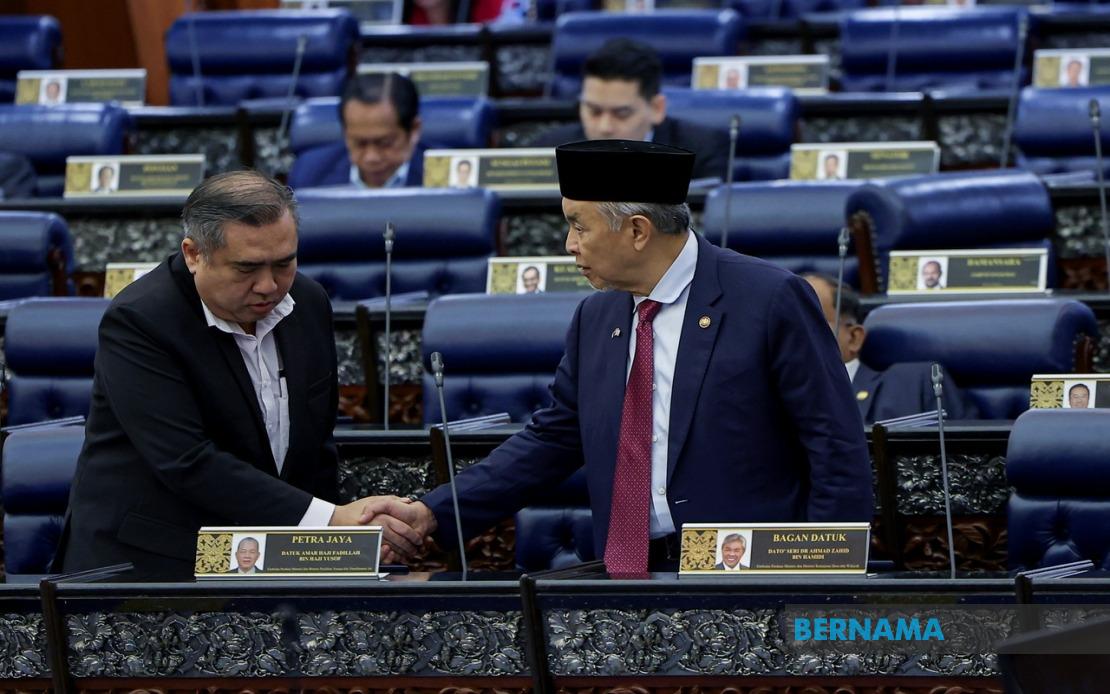
Transport Minister Anthony Loke tabled the Road Transport (Amendment) Bill 2026 for its first reading in the Dewan Rakyat on June 22, signalling the government's intention to overhaul Malaysia's approach to road safety enforcement. The Bill represents a comprehensive legislative effort to strengthen the regulatory framework governing vehicle operations and driver conduct across the country. With the second reading scheduled during the current parliamentary session, the proposed amendments are poised to reshape how traffic violations are penalised and enforced throughout Malaysia's increasingly congested roadways.
At the heart of the Bill lies a substantial escalation in financial penalties across numerous traffic offences. The baseline fine for a range of infractions—from failing to display registration numbers to driving without a valid licence—will climb from a minimum of RM300 to RM500. This represents a significant jump that will affect motorists caught speeding, violating vehicle construction and equipment standards, ignoring traffic signals, or engaging in dangerous driving practices. The move reflects growing frustration among policymakers with persistent non-compliance and suggests that monetary deterrence has been deemed insufficient under existing penalties.
The legislation introduces particularly severe consequences for drivers operating vehicles while their licences are suspended or revoked, a scenario that presents acute risks to public safety. Under Clause 13, such offenders now face imprisonment stretching to three years or fines between RM3,000 and RM10,000, substantially harsher than the previous maximum of one year's jail or RM5,000 in fines. This tripling of potential custodial sentences underscores the government's determination to remove persistently dangerous drivers from Malaysian roads. For repeat offenders and those with suspended licences, the prospect of significant incarceration may prove more deterrent than financial penalties alone.
The Bill takes particular aim at illegal street racing and speed-testing on public roads, phenomena that have plagued major urban centres and generated significant public concern. A new Section 42A establishes racing on public roads as a standalone offence with a graduated penalty structure. First-time offenders face fines up to RM10,000, imprisonment up to two years, or both. Second convictions trigger far steeper consequences: fines between RM5,000 and RM20,000 combined with mandatory imprisonment of at least five years. This two-tiered approach essentially transforms repeat street racing from a traffic misdemeanour into a serious criminal matter, placing it on par with other crimes that threaten community safety.
False statements and documentation fraud represent another focal point of the amendments. Clauses 28 and its sub-clauses propose penalties reaching RM200,000 in fines or ten years' imprisonment for individuals who submit false information to road transport authorities. This provision targets the fraudulent acquisition of driving licences, vehicle registration papers, and related documentation—a persistent problem that undermines the integrity of the licensing system and enables unqualified drivers to operate vehicles. By instituting criminal-grade penalties, the legislation aims to erect formidable barriers against organised document fraud operations that have occasionally surfaced in Malaysian investigations.
The Bill simultaneously broadens the operational latitude granted to enforcement personnel. Police officers and road transport officers receive expanded powers to manage traffic flow, redirect vehicles, and implement control measures that they were previously unable to deploy. These enhanced authorities enable faster response to congestion, accident scenes, and traffic emergencies. Equally significant is the introduction of protections for enforcement officers themselves: the Bill establishes obstruction of or assault against road transport and police personnel as an arrestable offence, criminalising behaviour that has occasionally endangered enforcement staff during field operations.
Micromobility vehicles—a growing feature of Malaysian urban landscapes encompassing e-scooters, e-bikes, and similar devices—will face new regulatory frameworks. The amendments establish formal procedures for the detention and disposal of such devices, providing authorities with concrete mechanisms to manage vehicles that obstruct pathways, violate parking regulations, or operate in prohibited zones. This reflects the challenges that cities like Kuala Lumpur and Penang have faced as micromobility services have expanded without corresponding legal clarity regarding parking, operation zones, and enforcement procedures.
Administrative provisions within the Bill grant the Transport Minister authority to establish fees for entry permits covering foreign motor vehicles operating within Malaysia. Previously embedded within the broader Act, this specific function now receives explicit legislative recognition and enhanced flexibility. This change enables more responsive management of cross-border vehicle movements, particularly relevant given Malaysia's land borders with Thailand and Singapore and the significant volume of international commercial and private transport traversing these frontiers.
Compound fine thresholds, which allow enforcement officers to settle violations without formal prosecution, will increase from RM300 to RM500 under Clause 37. This adjustment, while seemingly modest, carries practical implications for enforcement efficiency. Higher compound limits enable officers to resolve minor infractions on-site, reducing administrative burden while still generating sufficient financial consequences to deter future violations. The expansion also reflects inflation and the evolving cost structures underlying road safety programmes.
From a regional perspective, Malaysia's legislative tightening aligns with patterns visible across Southeast Asia, where governments increasingly recognise that escalating road fatality rates demand more stringent measures. Thailand's similarly aggressive approach to traffic enforcement, including jail sentences for serious violations, demonstrates regional consensus that elevated penalties can complement public education campaigns. For Malaysian drivers and vehicle operators, the 2026 amendments signal a decisive shift toward stricter accountability and higher compliance expectations.
The Bill's comprehensive scope—spanning financial penalties, custodial sentences, enforcement powers, and administrative procedures—indicates that policymakers view road safety as requiring multifaceted intervention rather than single-lever solutions. The fact that street racing receives particular legislative attention reflects documented increases in related incidents and fatalities among younger demographics. Similarly, the enhanced penalties for suspended-licence driving target a population whose continued operation of vehicles despite suspension represents deliberate legal violation rather than inadvertent transgression.
Implementation of these provisions will require substantial coordination across the Transport Ministry, the Royal Malaysian Police, local enforcement authorities, and the courts system. Judiciary awareness of the new penalty ranges and mandatory minimum sentences will prove essential, as inconsistent application could undermine legislative intent. Training programmes for enforcement personnel must emphasise the expanded powers and their appropriate application within constitutional boundaries.
As Parliament progresses through subsequent readings, potential amendments may emerge from cross-party discussion or stakeholder feedback. Commercial transport operators and vehicle hire companies have expressed concerns regarding administrative compliance burdens, whilst civil liberties advocates monitor the expanded detention powers granted to authorities. Nevertheless, the Bill's tabling represents a definitive governmental commitment to recalibrating Malaysia's approach to road discipline, placing harsher sanctions and broader enforcement capabilities at the centre of the updated regulatory landscape.

