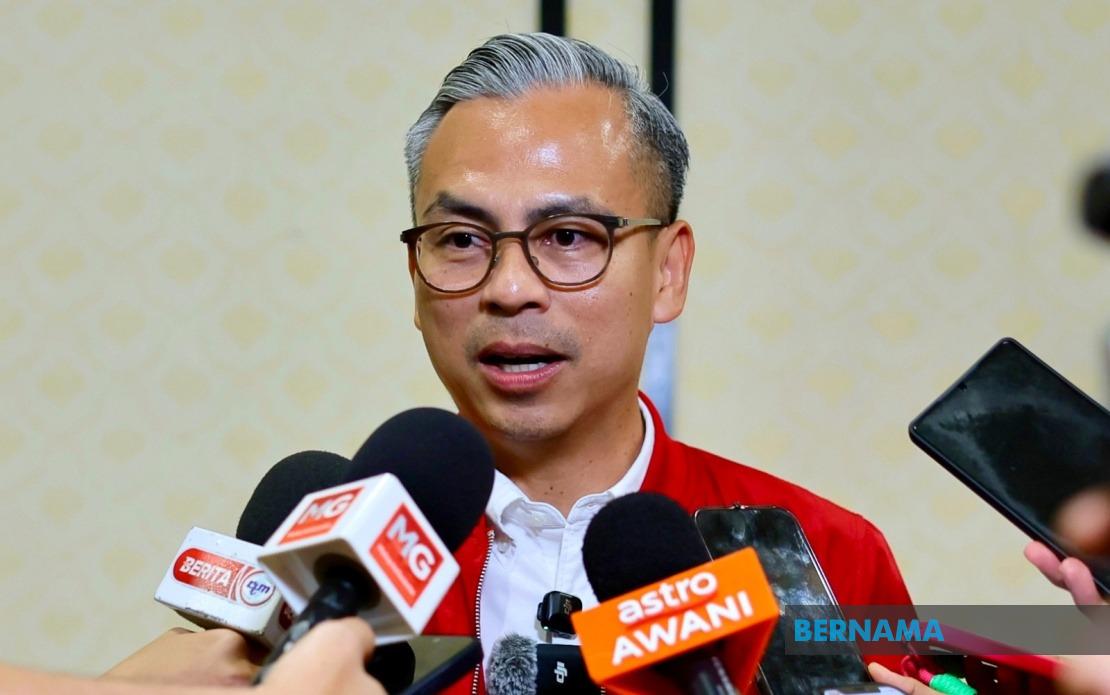
Communications Minister Datuk Fahmi Fadzil has formally extended an invitation for Radio Televisyen Malaysia (RTM) to host a live interactive debate between Johor Menteri Besar Datuk Onn Hafiz Ghazi and Pakatan Harapan's Dr Maszlee Malik, who is contesting the Puteri Wangsa state seat. The offer comes as campaigns intensify ahead of the 16th Johor state election scheduled for July 11, with early voting set for July 7.
Fahmi indicated that the proposed dialogue could take place at any mutually convenient location and time, with Johor Bahru being a possible venue. The Communications Minister and Pakatan Harapan's national communications director emphasised that such an engagement would serve a constructive purpose, focusing discussion on the state's development priorities and long-term vision rather than devolving into partisan attacks or hostile confrontation. This framing reflects a broader political emphasis on elevating campaign discourse beyond traditional electoral posturing.
The minister's proposal directly responds to suggestions from various quarters that Pakatan Harapan should first declare its Menteri Besar candidate before participating in any high-level debate. By offering to facilitate dialogue through a state broadcaster, Fahmi has attempted to bypass this procedural concern while simultaneously demonstrating openness to public engagement. His explicit readiness to provide RTM's resources signals confidence in the party's ability to articulate its vision compellingly on a major platform.
Fahmi highlighted that the capacity to engage respectfully with opposing viewpoints represents a crucial leadership competency. He argued that a Menteri Besar must demonstrate willingness to confront criticism and differing perspectives professionally, qualities essential for steering Johor through its next five-year governance cycle. This argument positions leadership capability not merely as administrative or economic management skill, but as interpersonal and intellectual flexibility—a positioning relevant as Malaysian politics increasingly emphasizes personal qualities of candidates.
The minister commended Dr Maszlee's recent engagement with 41 young voters to discuss Johor's aspirational future directions. This endorsement underscores Pakatan Harapan's emphasis on intergenerational dialogue and youth consultation in policy formulation. The parallel reference to Maszlee's grassroots interaction and the proposed televised debate suggests a two-tier campaign strategy: direct engagement with specific constituencies alongside high-visibility public forums.
For the Puteri Wangsa constituency, Dr Maszlee will compete against a multi-cornered field comprising Barisan Nasional's Teow Chia Ling, Parti Bersama Malaysia's Nicholas Paul Vincent, MUDA's Rashifa Aljunied, and independent candidate Wang Wee Seong. The fragmented opposition field contrasts with the Machap contest, where Menteri Besar Onn Hafiz faces a straight fight against Pakatan Harapan's Nor Hafiz Roslan. This structural difference reflects varying electoral dynamics across Johor's constituencies and creates distinct strategic considerations for each campaign.
Fahmi appealed to younger voters to prioritize participation in the election despite potential logistical inconveniences presented by the mid-month polling date. His emphasis on youth electoral engagement aligns with broader Malaysian political trends recognizing the growing electoral significance of voters aged eighteen to forty. By framing vote casting as a civic responsibility directly shaping Johor's development trajectory, the Communications Minister attempted to mobilize this demographic beyond abstract appeals to patriotism.
The RTM initiative carries symbolic importance within Malaysia's media ecosystem. As the national broadcaster, RTM carries particular weight in facilitating national political discourse, and Fahmi's invocation of the platform suggests confidence that a televised debate would serve Pakatan Harapan's electoral interests. The offer to broadcast through TV1, RTM's primary terrestrial channel with broad reach across Peninsular Malaysia, ensures potential visibility far beyond Johor's boundaries, extending campaign messaging across the region.
The timing of this offer, with polling set for July 11, affords limited window for debate organization and broadcast preparation. Typically, such high-level electoral debates require several weeks' coordination involving the candidates' teams, broadcasting technicians, debate moderators, and security arrangements. The compressed timeline suggests both the urgency of campaign acceleration and potential complications in finalizing such an engagement should Onn Hafiz's camp accept the invitation.
Fahmi's characterization of the proposed platform as non-partisan and development-focused reflects evolving norms around electoral broadcasts in Malaysian politics. Rather than emphasizing traditional attack strategies or personality-based competition, the framing privileged substantive policy discussion. This rhetorical positioning, whether or not reflected in actual debate conduct, indicates changing expectations among political leadership regarding the tone and substance of electoral engagement.
The Johor state election assumes heightened significance within Malaysia's broader political landscape, occurring amid ongoing negotiations and power-sharing arrangements at federal level. Electoral outcomes in Johor, Malaysia's second-largest state by population, carry implications for Kuala Lumpur's political balance and influence regional governance patterns. Whether the proposed debate proceeds and how it unfolds could therefore reverberate across Malaysian politics beyond Johor's immediate boundaries.
Onn Hafiz's response to the debate invitation remains pending. As incumbent Menteri Besar with established administrative record, he may calculate that accepting or declining the challenge carries distinct electoral consequences. Acceptance risks intensive scrutiny of his government's performance; refusal invites accusations of unwillingness to engage, though his position as frontrunner in most electoral assessments may afford him greater freedom in declining without substantial political cost.
The broader campaign dynamics in Johor will likely hinge on how extensively economic performance, infrastructure development, and social policies dominate discussion. Both Pakatan Harapan and Barisan Nasional will emphasize distinct governance visions and track records, with the RTM dialogue potentially serving as a crucial moment for crystallizing these competing narratives before Malaysian voters and, through broadcast media, a nationwide audience.

