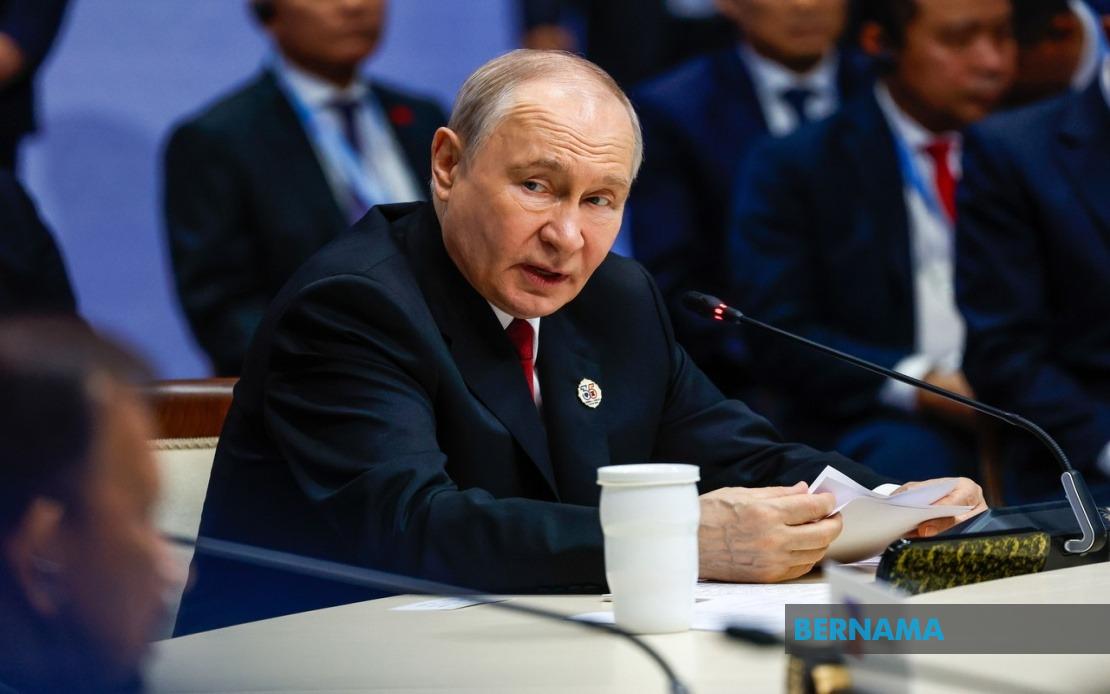
Russia and the Association of Southeast Asian Nations marked three and a half decades of formal diplomatic engagement at a commemorative summit in Kazan, with President Vladimir Putin highlighting the deepening strategic partnership between Moscow and the 10-member bloc. The two-day gathering brought together senior regional leaders, including Philippine President Ferdinand Marcos Jr, who holds the current ASEAN chairmanship, alongside Malaysian Prime Minister Datuk Seri Anwar Ibrahim and other ASEAN counterparts, underscoring the significance both sides place on strengthening ties during a period of considerable geopolitical volatility across the Indo-Pacific.
The relationship between Russia and ASEAN traces back formally to 1991, when Moscow established its initial engagement with the regional bloc in Kuala Lumpur. The partnership has subsequently deepened through successive institutional arrangements, advancing from a general dialogue partnership established in 1996 to the elevated status of Strategic Partnership declared in 2018. This progression reflects a deliberate effort by both Moscow and Southeast Asian capitals to build enduring frameworks for cooperation that extend beyond transactional interests into areas of fundamental strategic importance.
Putin characterised the existing bilateral architecture as robust and multifaceted, pointing to an intricate web of legal agreements and operational mechanisms that facilitate collaboration across numerous domains. These cooperative frameworks encompass security and defence matters, trade and investment flows, energy security arrangements, agricultural trade, digitalisation initiatives, scientific and technological exchange, tourism promotion, and cultural and educational programmes. The comprehensiveness of this engagement demonstrates that Russia-ASEAN relations have evolved considerably beyond Cold War-era geopolitical positioning into a modern partnership addressing contemporary challenges and opportunities.
In his address, Putin framed the Russia-ASEAN partnership as a stabilising force within the Asia-Pacific region at a time when the international environment remains turbulent and characterised by competing strategic interests. This characterisation reflects Moscow's broader strategic objective of positioning itself as a consequential actor in Asian affairs, particularly as major powers compete for influence and as traditional security architectures face pressure. For Southeast Asian nations navigating between competing great powers, Russia's emphasis on partnership built on international law and mutual benefit rather than hegemonic designs carries particular resonance, even as some ASEAN members maintain security partnerships with other major powers.
The timing of this summit underscores the strategic calculus on both sides regarding regional positioning. For ASEAN, engaging Russia at the highest levels signals commitment to maintaining balanced relationships with multiple powers rather than tilting decisively toward any single bloc. This approach aligns with ASEAN's historical preference for strategic autonomy and non-alignment, principles that guide the bloc's engagement with all major powers including the United States, China, India, and Japan. Russia's presence in ASEAN's diplomatic ecosystem, therefore, serves a balancing function that several Southeast Asian governments view as valuable for maintaining regional equilibrium.
From Russia's perspective, ASEAN represents a crucial gateway to deeper engagement with Asia-Pacific affairs at a time when Moscow faces strategic constraints in other regions. The bloc collectively encompasses over 600 million people, constitutes the world's fifth-largest economy, and controls critical sea lanes through which vast volumes of international trade flow annually. Beyond economic dimensions, ASEAN commands significant geopolitical weight given its central role in regional multilateral forums including the East Asia Summit and the ASEAN Regional Forum, platforms where Russia seeks to maintain an active voice in shaping regional security discussions.
The summit agenda reflected practical concerns confronting both Moscow and Southeast Asia in the contemporary international environment. Trade and investment expansion, food security, energy security arrangements, digital transformation initiatives, educational exchange, scientific collaboration, and people-to-people connections all feature prominently in the partnership's working agenda. These substantive areas of cooperation demonstrate that despite broader geopolitical tensions, Russia and ASEAN have identified concrete domains where mutual benefit and shared interests create space for productive engagement.
Energy cooperation represents a particularly significant dimension of the Russia-ASEAN relationship. Russia possesses vast hydrocarbon reserves and advanced energy technologies, while multiple Southeast Asian nations require reliable energy supplies to sustain economic growth. This complementarity has generated substantial commercial opportunities, from liquefied natural gas contracts to pipeline infrastructure development and nuclear energy cooperation in select countries. Similarly, Russian agricultural expertise and vast productive capacity address food security concerns across Southeast Asia, an increasingly critical consideration as climate change and geopolitical disruptions threaten traditional supply chains.
Technology and digital transformation constitute emerging frontiers in the partnership. Russia possesses notable capabilities in information technology, software development, and telecommunications infrastructure. Southeast Asian nations, increasingly focused on digital economy development and smart city initiatives, view Russian technological partnership as a valuable supplement to existing technology relationships. Educational exchanges, particularly in science, engineering, and mathematics disciplines, generate long-term benefits through enhanced human capital and institutional knowledge transfer.
The summit's emphasis on a rules-based international order and mutual respect for sovereignty reflects ASEAN's consistent diplomatic positioning. By anchoring the partnership explicitly in international law and mutual interest rather than ideological alignment or power politics, both Moscow and the ASEAN states signal commitment to a pragmatic relationship insulated from Cold War mentalities or zero-sum competition frameworks. This principled approach provides resilience to the partnership despite broader international tensions.
For Malaysia specifically, Russia's engagement with ASEAN carries particular implications given Malaysia's historical non-aligned orientation and its growing assertiveness in regional affairs. As an ASEAN member playing an increasingly prominent role in regional discussions, Malaysia benefits from Moscow's participation in ASEAN-centred forums, which reinforces the principle of inclusive regional architecture. Malaysian business communities also see opportunities in expanded trade and investment cooperation with Russia across sectors from energy to manufacturing.
The broader regional context surrounding this summit reflects anxieties about strategic competition intensifying across Asia-Pacific. Great power rivalry, tensions in the South China Sea, concerns about supply chain resilience, and debates over regional security architecture create an environment where ASEAN's partnerships with multiple powers assume heightened importance. Russia's continued engagement with the bloc, coupled with its emphasis on stabilising regional dynamics, aligns with ASEAN's fundamental interests in preserving a balanced and rules-based regional order.
Looking forward, the Russia-ASEAN partnership appears positioned to deepen further across the identified cooperation domains. The commemorative summit's focus on reviewing achievements while mapping future directions suggests both sides view the relationship as dynamic and forward-looking rather than static. Sustained engagement at senior political levels, continued development of institutional mechanisms, and expansion of practical cooperation in energy, technology, and education will likely characterise the partnership trajectory, positioning Russia as a consistent participant in Southeast Asia's evolving geopolitical and economic landscape.

