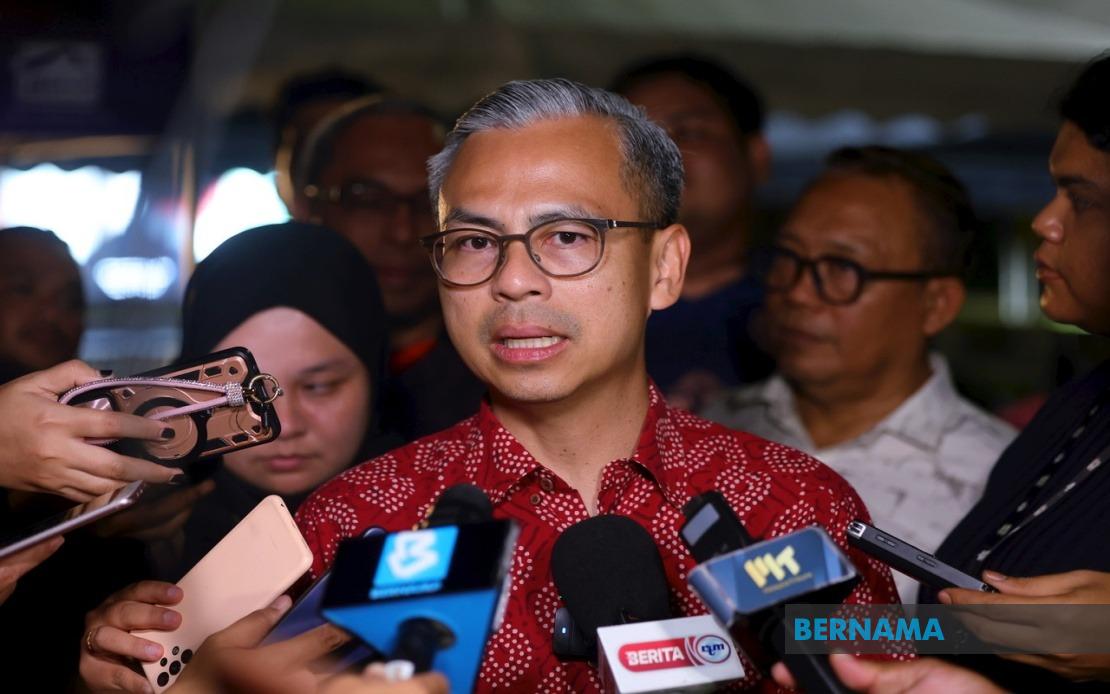
Communications Minister and Pakatan Harapan political strategist Datuk Seri Fahmi Fadzil has launched a sharp rebuke of Kedah Menteri Besar Datuk Seri Muhammad Sanusi Md Nor, asserting that recent inflammatory comments on racial issues lay bare a calculated approach within PAS leadership to weaponise identity politics for electoral advantage. Speaking during a community engagement event in Negeri Sembilan, Fahmi contended that Sanusi's statement—in which the Kedah leader claimed Malaysia represents exclusively Malay territory while other communities belong to their ancestral homelands—exemplifies a broader pattern of divisive rhetoric emanating from the Islamic opposition party.
The immediate trigger for Fahmi's criticism came after Sanusi delivered remarks at a Barisan Nasional and Perikatan Nasional campaign forum in Jempol on July 24, where he articulated a zero-sum conception of national belonging tied strictly to ethnicity and religion. Fahmi characterised such messaging as fundamentally incompatible with the needs of a pluralistic society that has functioned as an independent nation for more than seven decades. The minister emphasised that with Malaysia's National Month recently concluded, political actors bear a responsibility to reinforce narratives of cohesion rather than fracture along communal lines.
According to Fahmi, Sanusi's latest intervention fits a troubling trajectory within PAS leadership circles. He pointed to previous controversial statements from PAS president Ibrahim Ali on immigration issues, suggesting that inflammatory commentary regarding national identity and belonging has become a recurring feature of the party's messaging strategy. Rather than viewing such remarks as isolated gaffes, Fahmi framed them as symptomatic of institutional attitudes within PAS that prioritise stoking communal anxieties over fostering genuine inter-ethnic understanding and cooperation.
The Pakatan Harapan communications director articulated a contrasting vision of responsible governance, one that acknowledges Malaysia's deep diversity and leverages that pluralism as a strength rather than a liability. Fahmi argued that authentic political leadership demands the capacity to bridge differences, celebrate variety, and channel collective energy toward shared national objectives. He expressed scepticism about the likelihood of Sanusi undergoing a philosophical reorientation on these matters, suggesting that the Kedah leader's worldview may be too entrenched to shift significantly.
Beyond his critique of Sanusi specifically, Fahmi also trained critical attention on MARA chairman Datuk Dr Asyraf Wajdi Dusuki over a separate controversy. Asyraf Wajdi had suggested that DAP secretary-general Anthony Loke might be positioned to assume the Menteri Besar role in Negeri Sembilan should incumbent Datuk Seri Aminuddin Harun suffer electoral defeat. Fahmi seized on this remark as factually baseless and historically ignorant, noting that the Negeri Sembilan state constitution has long reserved the Menteri Besar position exclusively for Malays since the constitution's original enactment. He called for Asyraf Wajdi to issue a public apology to Negeri Sembilan's residents for propagating misinformation.
This dual-pronged attack reflects the heightened tensions surrounding the Negeri Sembilan state election campaign, where Pakatan Harapan is competing to retain control against Barisan Nasional and Perikatan Nasional challengers. The state contest has become a proxy battle for messaging about national identity and constitutional settlement, with opposition figures testing whether provocative statements on race and Islam can mobilise their core constituencies. Fahmi's intervention signals that the ruling coalition intends to contest such narratives directly rather than ceding the terrain of identity politics to competitors.
Fahmi also addressed recent comments from former Rembau Member of Parliament Khairy Jamaluddin, who claimed that Pakatan Harapan garnered minimal support—roughly 10 per cent—from Malay voters in Johor during recent electoral contests. The communications minister rejected these characterisations as inapplicable to Negeri Sembilan's distinct political ecology and voter preferences. He expressed confidence in Aminuddin Harun's administrative record, arguing that the sitting Menteri Besar has demonstrated capacity to govern inclusively and attend equitably to the welfare and aspirations of all communities irrespective of ethnicity.
The timing of Fahmi's remarks coincided with speculation about the possibility of early national elections. Umno deputy president Datuk Seri Mohamad Hasan had suggested that the sixteenth general election might materialise by year's end, but Fahmi characterised such speculation as mere conjecture disconnected from cabinet-level discussions or planning. He underscored that Prime Minister Datuk Seri Anwar Ibrahim and the current cabinet remain fixated on stabilising Malaysia's economic trajectory and navigating the reverberations of geopolitical turbulence in West Asia, rendering electoral preoccupations decidedly secondary to these overriding priorities.
The broader arc of Fahmi's intervention reflects an intensifying campaign by Pakatan Harapan to frame opponents—particularly Perikatan Nasional and PAS—as purveyors of outdated, sectarian politics that threaten national cohesion. By repeatedly highlighting inflammatory statements from opposition figures, the ruling coalition aims to establish a contrast between its own agenda of inclusive governance and what it characterises as divisive alternatives. This rhetorical positioning has become central to the government's electoral strategy heading into state contests and potential national polling.
For Southeast Asian watchers of Malaysian politics, the escalation of identity-focused rhetoric across the political spectrum signals a deeper anxiety about the foundations of the nation's plural compact. The willingness of major political actors to stake electoral fortunes on communal grievance narratives, rather than programmatic vision or policy competence, suggests that Malaysia's political marketplace continues to reward emotionally resonant messaging over pragmatic governance discourse. The Negeri Sembilan contest will provide early indicators of whether Malaysian voters genuinely prioritise unity rhetoric or whether traditional identity-based mobilisation retains electoral potency despite sustained counter-messaging from the government.

