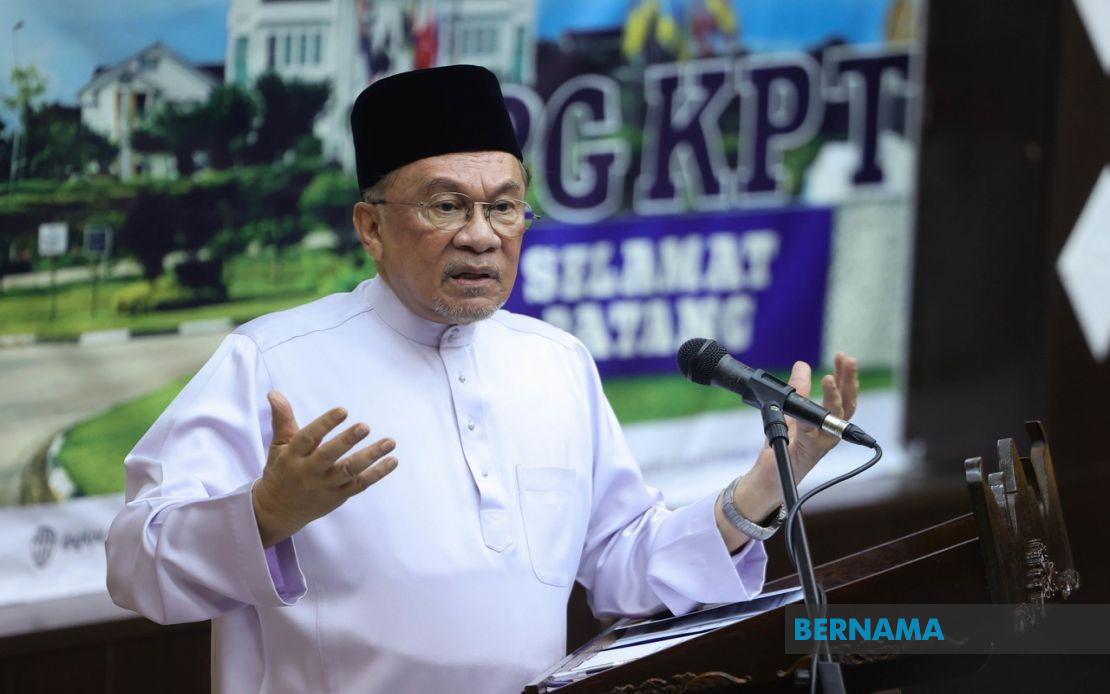
Prime Minister Datuk Seri Anwar Ibrahim has delivered a sharp rebuke to schools that attempt to obscure bullying incidents, warning that prioritising institutional reputation over student safety undermines the fundamental purpose of education. Speaking in Nilai on July 17, Anwar made clear that transparency in reporting misconduct is not a mark of institutional failure but rather a sign of responsible leadership and commitment to student welfare.
The Prime Minister challenged the prevalent mindset that views bullying as a trivial matter, arguing that those who minimise such incidents fundamentally misunderstand the severe psychological and emotional toll inflicted on affected students. He illustrated this principle through a concrete example, suggesting that a school reporting two bullying cases among its 1,000-student population should not face censure for doing so. Rather, leadership should be evaluated on whether concrete corrective measures have been implemented in response to documented problems.
Anwar drew a critical distinction between accountability and culpability in institutional responses. A principal who promptly investigates and addresses reported cases demonstrates proper stewardship, whereas one who learns of misconduct and chooses silence bears genuine responsibility for failing vulnerable students. This framing represents a significant shift in how educational leadership competence should be assessed, moving away from metrics centred on maintaining a polished public image toward outcomes that genuinely protect the school community.
The Prime Minister's intervention reflects growing concern about bullying's prevalence in Malaysian schools and the tendency of some institutions to prioritise reputation management over intervention. By addressing this issue at the highest political level, Anwar signals that the government views transparency in reporting bullying cases not as institutional weakness but as evidence of proper governance and ethical responsibility. Education Minister Fadhlina Sidek's presence at the remarks underscores the administration's commitment to translating these principles into concrete policy and enforcement mechanisms.
Beyond immediate case management, Anwar situated bullying within a broader educational and moral framework. He contended that the persistence of such behaviour reflects deeper inadequacies in character formation and values-based education, despite unprecedented access to religious instruction in schools. This observation points to a critical gap between curriculum content and actual behavioural outcomes, suggesting that simply expanding religious education provision without addressing implementation quality and teacher capacity may yield limited results in fostering genuine respect and empathy among students.
The Prime Minister articulated a comprehensive vision of educational purpose that extends far beyond technical or academic achievement. He criticised an overly narrow focus on producing high-performing graduates or skilled professionals, arguing that such measures fail to capture education's essential role in developing morally grounded individuals capable of genuine human connection and mutual respect. His pointed question—questioning the value of advanced credentials uncoupled from ethical development—challenges the instrumentalist approach that has long dominated Malaysian education policy discourse.
Anwar's remarks implicitly acknowledge that schools operate within a society-wide culture that sometimes treats bullying as an inevitable or acceptable aspect of adolescence rather than as a serious breach of community norms. By positioning bullying as fundamentally at odds with the values that educational institutions should cultivate, he attempts to shift the cultural baseline regarding what constitutes acceptable school environment standards. This reframing matters significantly for younger students who internalise institutional responses as signals about societal priorities.
The emphasis on teacher responsibility reflects recognition that classroom instructors occupy the frontline of both bullying prevention and intervention. Teachers must model the respect and compassion that the Prime Minister advocates while simultaneously creating classroom cultures where such values are reinforced rather than undermined. Anwar's acknowledgment of the Malaysian teaching profession's generally high standards provides encouragement while implicitly challenging educators to leverage their expertise in service of character development alongside academic instruction.
For Malaysian stakeholders, these remarks carry practical implications for school governance and oversight mechanisms. Educational authorities at federal and state levels will likely face pressure to develop clearer protocols distinguishing between legitimate confidentiality protections and inappropriate concealment, establish transparent reporting requirements, and ensure that institutional evaluation frameworks reward rather than penalise schools that openly address bullying. Parents will have stronger grounds to demand accountability when schools attempt to minimise or downplay misconduct affecting their children.
Regionally, Malaysia's top leadership explicitly addressing bullying reflects broader Southeast Asian concerns about school safety and student wellbeing. Several nations across the region have grappled with high-profile cases where institutional cover-ups exacerbated harm to affected students, lending urgency to Anwar's message. The Prime Minister's insistence that reporting cases should not damage a school's reputation provides a model for other governments seeking to shift institutional cultures toward greater transparency and victim protection.
The remarks also touch on tensions between globalised educational aspirations and localised value formation. Malaysia's emphasis on producing globally competitive graduates must be reconciled with equally compelling goals around moral development and social cohesion. Anwar's intervention suggests that these objectives need not compete but rather should be pursued in integrated fashion, with character formation treated as fundamental rather than supplementary to educational achievement.

