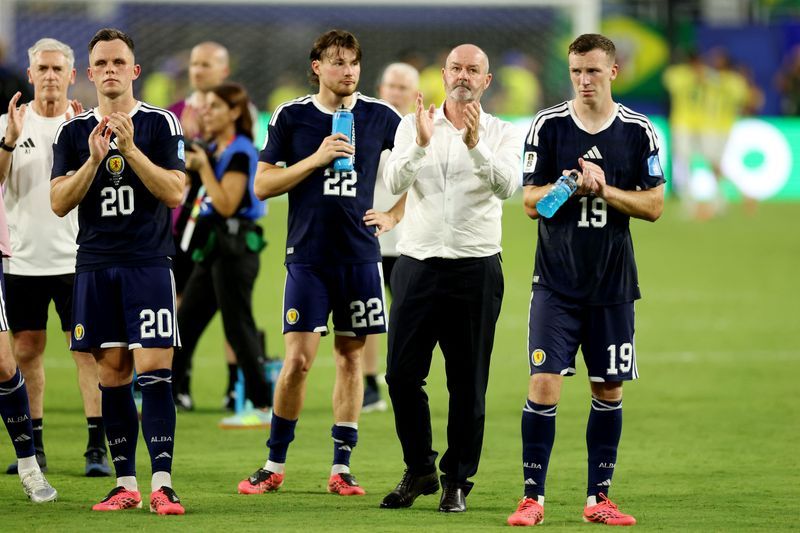
Scotland's journey to their first World Cup in nearly three decades looks set to conclude prematurely in the group stage, with coach Steve Clarke openly acknowledging that his side's defensive vulnerabilities proved fatal against Brazil in Miami on Wednesday. The Tartan Army travelled across the Atlantic with genuine hopes of progressing beyond the opening round, but a comprehensive 3-0 defeat in their final Group C fixture has effectively ended those ambitions, leaving Clarke to contemplate what went wrong and what it means for Scottish football moving forward.
Despite accumulating three points from their campaign, Scotland technically retain a mathematical chance of advancing as one of eight third-placed teams across the 12 groups. However, Clarke's assessment of their position is notably pessimistic. With 20 group matches still to be completed across the tournament, the Scottish boss believes that at least two other teams will surpass their current record, pushing Scotland out of the reckoning. Clarke's frank admission reflects not just the reality of the scoreline but a deeper frustration with how his team surrendered against an opponent they knew would punish carelessness in attack.
The Scotland manager's post-match analysis cut straight to the heart of the problem: his team's own mistakes created the platform for Brazil's victory. Clarke acknowledged that Scotland gifted Brazil the opening two goals, and likely contributed to the third as well through poor defending and tactical indiscipline. The irony was not lost on him that despite these errors, Brazil also spurned clear opportunities, with goalkeeper Angus Gunn forced into several important saves that prevented an even more humiliating scoreline. Yet Clarke's team barely mounted a meaningful offensive threat, managing to fashion only one or two half-chances without ever truly troubling the Brazilian defence with sustained pressure.
Clarke's frustration was evident as he spoke to reporters, but his criticism remained measured and strategic. He was careful not to castigate the players who had secured qualification for this tournament in the first place, recognising that Scotland's passage to Qatar represented a genuine achievement for a nation that had endured 28 years of World Cup absence. Instead, his disappointment focused on the gap between what his squad is capable of and what they delivered against Brazil. Clarke made clear that Scotland's players possess greater capability than they demonstrated on the pitch, a point he said would be obvious to anyone who had tracked the national team's development over recent years.
Beyond the immediate disappointment of elimination, Clarke used the post-match forum to highlight structural deficiencies within Scottish football that extend far beyond the current squad's limitations. Having observed the physicality, power, and technical excellence of both Morocco and Brazil during the tournament, Clarke recognised that Scotland faces a development challenge at grassroots and academy level. The pathway for producing young players capable of competing on the world stage requires fundamental improvement, he suggested, if Scotland is to avoid becoming a regular victim of more physically and technically gifted opponents at future tournaments.
The Scotland supporters, known as the Tartan Army, have been widely praised for their conduct and enthusiasm throughout the tournament, bringing colour and energy to matches across the United States. Clarke was careful to acknowledge their contribution while also redirecting some attention back to the players themselves. In Clarke's view, the fans would not have had the opportunity to travel to America and represent their country if the current group of players had not secured qualification. He positioned the squad's qualification achievement as inseparable from the supporter experience, emphasising that their presence at the World Cup was a direct result of the players' efforts in qualifying matches over the preceding 18 months.
This framing served another purpose: it offered perspective on Scotland's tournament campaign while gently reminding the support base that without this generation of players, the country would continue the familiar pattern of watching the World Cup from home. Clarke's comments reflected an understanding that Scottish football culture can sometimes focus on negative narratives and historical disappointments, and he sought to ensure that the genuine accomplishment of reaching the tournament was not entirely overshadowed by an underwhelming group stage performance.
For Malaysian and Southeast Asian readers following world football, Scotland's experience offers instructive lessons about the gap between qualification achievement and tournament performance. Many emerging footballing nations understand the immense effort required to qualify for the World Cup, yet Scotland's struggles highlight how reaching the tournament and competing effectively within it represent fundamentally different challenges. The standard of global football has risen significantly, with teams like Brazil and Morocco combining the kind of athleticism, technical skill, and tactical sophistication that demands extraordinary consistency from smaller footballing nations.
Clark's comments about production of young talent at the elite level also resonate across the region, where several Southeast Asian nations aspire to competitive World Cup qualification. The coach's acknowledgement that Scotland must improve its player development infrastructure suggests that qualification alone is an insufficient achievement without accompanying structural reforms and investment in youth pathways. Scotland's relative affluence and established football infrastructure mean they can theoretically address these issues more readily than developing nations, yet Clarke's candid assessment suggests the work required is substantial.
As Scotland faces an early exit, the manager must now consider what adjustments might be necessary for future campaigns and qualifying cycles. The experience of reaching the World Cup, while ultimately disappointing in results, provides valuable data about where the national team stands relative to elite opponents. Brazil's dominance was never in doubt, but Clarke will recognise that tighter defending and more disciplined tactical execution could have changed the margin of defeat and potentially altered Scotland's knockout stage prospects.
Looking ahead, Clarke's tenure will be judged partly on how Scotland responds to this disappointment and whether the structural improvements he has identified are implemented across the national football system. The coach's pragmatism in accepting a fair result, combined with his strategic identification of development areas, suggests he remains committed to building a more competitive Scotland team for future tournaments. However, the window for such improvements is limited, and the pressure on Clarke and Scottish Football Association officials to demonstrate tangible progress will intensify as the next qualification cycle approaches.

