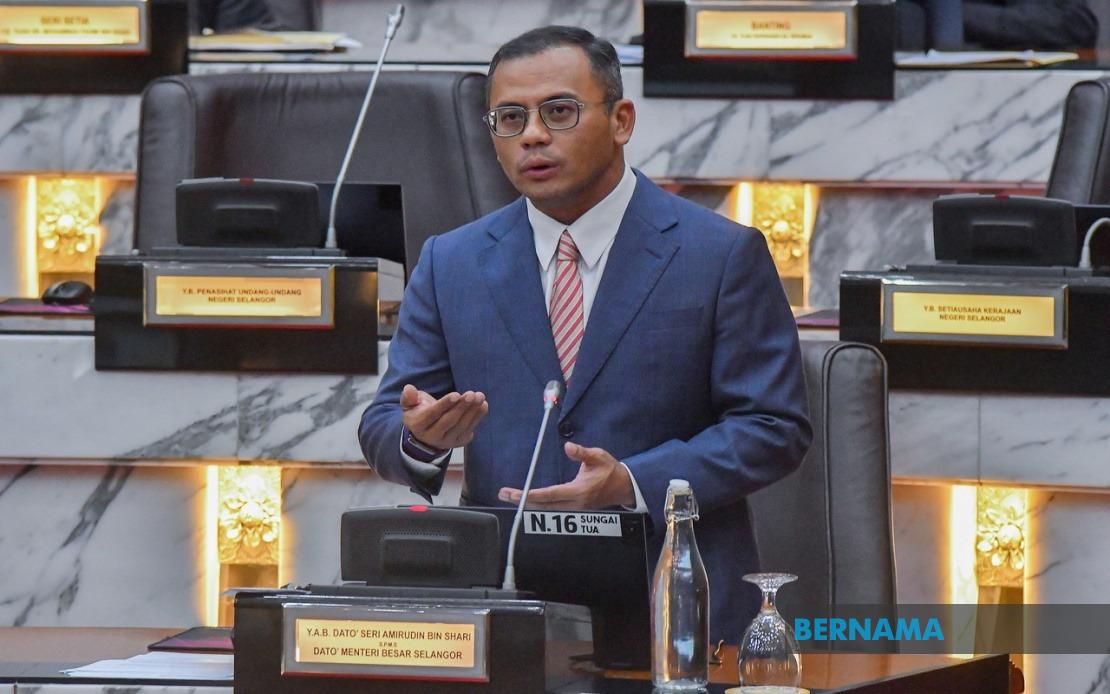
Menteri Besar Datuk Seri Amirudin Shari has directed Selangor's local authorities to conduct a thorough examination of how public transportation networks connect with surrounding neighbourhoods, addressing mounting complaints that have surfaced across social media platforms. The directive represents a significant acknowledgment of systemic gaps in the state's mobility infrastructure, particularly concerning access to rapid transit systems like the LRT3 line, which have sparked public frustration over inadequate pedestrian pathways and poor integration with bus services.
The state government has signalled its willingness to invest additional financial resources to enhance accessibility features throughout Selangor's transport ecosystem. Rather than approaching this as a cost-cutting exercise, officials framed the initiative as essential to achieving broader policy objectives around sustainable urban mobility. The focus extends beyond merely constructing new infrastructure; it encompasses creating safer, more comfortable walking routes that enable commuters to access transit stations without encountering hazards or unreasonable distances.
Amirudin's comments reveal a notable shift in governance approach, emphasizing proactive rather than reactive problem-solving. He criticised local authorities for waiting until connectivity issues achieve viral status on platforms like X and Threads before taking action, suggesting a need for greater responsiveness to community feedback channelled through conventional governance structures. Council members and stakeholder groups should serve as early-warning mechanisms for infrastructure deficiencies, he indicated, enabling authorities to address problems before they escalate into public relations crises.
The Menteri Besar framed enhanced connectivity as instrumental to shifting transport behaviour among Selangor residents. Currently, poor first-mile and last-mile connections—the critical journey segments from homes to transit stations and from final destinations to residential areas—discourage public transport usage. When these links prove inconvenient or unsafe, commuters rationally default to private vehicles, undermining state objectives to reduce traffic congestion and environmental pollution.
State Investment, Trade and Mobility Committee chairman Ng Sze Han has been tasked with convening all public transport operators serving Selangor to develop comprehensive service maps identifying specific connectivity deficiencies. This mapping exercise represents a data-driven approach to understanding where the transportation network fails to serve populations effectively. Rather than implementing changes based on assumption or political pressure, the state intends to identify discrete gaps requiring intervention.
The role of subsidies in addressing connectivity challenges emerged as a central theme in Amirudin's remarks. While state funding can reduce operators' costs, financial support alone proves insufficient if service patterns remain poorly designed. Operating hours, route frequency, and station accessibility must align with actual commuter patterns and destinations. Subsidising inefficient operations merely redistributes public money without producing the desired modal shift toward public transport.
This initiative reflects broader challenges facing Southeast Asian metropolitan areas struggling to balance rapid urbanization with sustainable transportation development. Malaysian cities, including those across Selangor, have invested heavily in rail infrastructure yet discovered that physical assets alone cannot drive ridership if users encounter barriers accessing them. The disconnect between transit hubs and surrounding land use patterns has plagued numerous transport-oriented development projects throughout the region.
The connectivity issue also intersects with equity considerations that have gained prominence in urban policy discussions. Residents in under-served areas face disproportionate transportation burdens, spending more time and money on mobility while enjoying fewer livelihood opportunities and services. Enhanced first-mile and last-mile connectivity would particularly benefit lower-income communities, improving access to employment, education, and healthcare facilities.
Operators themselves face competing pressures in addressing these gaps. While state subsidies can offset expenses, the financial viability of serving peripheral or sparsely populated areas remains inherently challenging. Mapping exercises should clarify whether certain connectivity deficiencies reflect genuine market failures requiring public intervention or simply represent economically unviable routes that subsidies cannot sustainably support. This distinction shapes appropriate policy responses.
The Danial Al-Rashid's interjection regarding LRT3 connectivity, which prompted this high-level governmental response, demonstrates how social media amplification of local grievances increasingly influences political agendas in Malaysia. Issues that might previously have languished in bureaucratic review processes now command urgent attention when they gain online visibility, reflecting shifting power dynamics between constituent voices and institutional decision-makers.
Implementing these connectivity improvements will require coordination across multiple stakeholders with sometimes divergent interests. Local authorities must prioritize pedestrian infrastructure within constrained budgets. Transit operators must balance service expansion with financial sustainability. State government must calibrate subsidy levels to incentivize desired outcomes without creating dependency or operational inefficiency. The success of Amirudin's directive ultimately depends on whether these actors can align their actions around shared mobility objectives.
For Selangor residents and those throughout Malaysia's urban centres, this initiative signals growing recognition that comprehensive transport solutions require attention to journey segments often overlooked in infrastructure planning. The pathway to work encompasses more than the train ride itself; it includes safe, convenient access to stations and reasonable walking distances to final destinations. As Malaysian cities continue expanding and densifying, such connectivity thinking will prove increasingly essential to creating genuinely functional transit networks.

