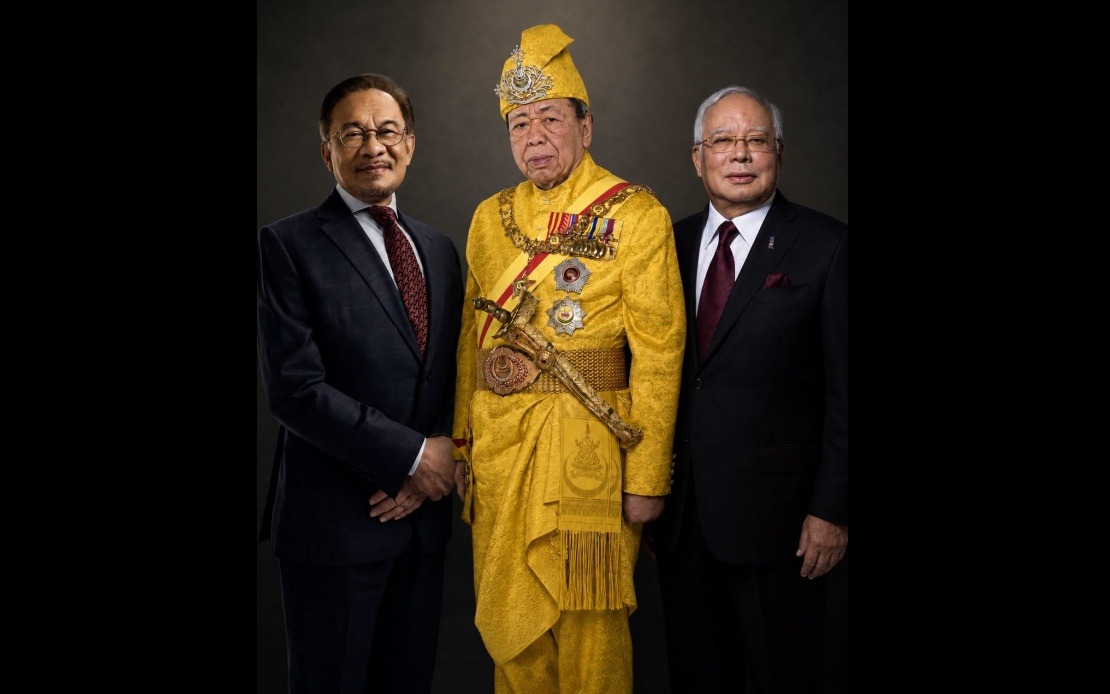
Selangor's reigning Sultan, Sultan Sharafuddin Idris Shah, has publicly commended Prime Minister Datuk Seri Anwar Ibrahim for ensuring the completion and launch of the Shah Alam Line LRT3, which began commercial operations on Monday. The sovereign's statement, released through official channels in Shah Alam, underscores the political and practical significance of the infrastructure project for the state's development agenda.
The Sultan specifically acknowledged Anwar's decision to reinstate five stations that had been axed from the original alignment after the government changed in 2018, and his administration's subsequent push to create affordable housing near key LRT3 stops. These additions reflect a shift in priorities toward public accessibility rather than cost-cutting measures alone. The Premier also received praise for directing that future delays from any quarter be prevented, signalling his personal investment in removing bureaucratic obstacles.
Origins of the LRT3 concept trace back to grassroots concerns that Sultan Sharafuddin had received from residents, particularly housewives frustrated by their husbands' inability to return home at reasonable hours due to severe Klang Valley congestion. This people-centric framing distinguishes the project from typical infrastructure developments driven primarily by economic growth targets. The Sultan's emphasis on listening to ordinary citizens—rather than grand development narratives—has become a recurring theme in his public statements on governance.
Former Prime Minister Datuk Seri Najib Tun Razak also earned the Sultan's gratitude for heeding the royal call to construct a rapid transit link binding Klang, Shah Alam, and Kuala Lumpur. At that time, only two bridges crossed the Klang River, creating chronic bottlenecks during peak hours. The Najib administration subsequently abolished the Batu Tiga and Sungai Rasau toll plazas in 2018 as a stopgap measure, though these actions preceded the project's implementation.
The LRT3's timeline reflects multiple shocks to Malaysia's governance and public health landscape. Following the 2018 change of government, the project stalled for more than eighteen months. The COVID-19 pandemic then imposed a further nineteen-month delay extending into 2021. During these disruptions, the original scope contracted: station facilities shrank, train coach numbers decreased, and five planned stops were eliminated entirely. These reductions represented difficult trade-offs between cost control and service coverage.
Notably, Sultan Sharafuddin distanced the LRT3 from any notion of prestige-driven megaproject development, reframing it instead as a pragmatic utility designed to serve ordinary Malaysians' daily transport needs. This distinction carries weight in a region where infrastructure projects sometimes become political footballs or monuments to individual leaders' legacies. The Sultan's framing emphasizes benefit to the travelling public rather than symbolic achievement.
The monarch expressed confidence that the new line would alleviate traffic congestion while offering commuters a faster, safer, and more comfortable alternative to cars. The connectivity improvements between Klang, Shah Alam, and Kuala Lumpur potentially reshape travel patterns across one of Malaysia's most economically productive regions. For workers and families, reliable rail access could reduce commute times by substantial margins, particularly during rush hours when roads become gridlocked.
Management of the line's long-term success depends critically on Prasarana Malaysia Bhd's operational capacity. The Sultan explicitly urged the statutory body to maintain rigorous maintenance protocols, recognizing that infrastructure quality deteriorates rapidly without sustained investment. Southeast Asian cities have learned this lesson repeatedly: new transit systems lose public confidence when service reliability falters. The Sultan's public reminder signals that accountability expectations remain high.
Perhaps most remarkably, Sultan Sharafuddin rejected the notion that any single individual or political party deserves exclusive credit for the LRT3's realization. This deliberate distancing from partisan triumphalism reflects a broader stance on governance continuity. The Sultan framed the project as emerging from years of consistent planning, commitment, and inter-administration cooperation spanning multiple political cycles. This message carries particular resonance in Malaysia, where infrastructure hand-offs between governments sometimes breed recrimination and abandonment.
The Sultan articulated hopes that the LRT3 would catalyze broader economic development and quality-of-life improvements for Selangor residents. Beyond immediate transport benefits, functional transit systems typically generate secondary effects: property values near stations appreciate, local businesses thrive with improved foot traffic, and regional economies integrate more efficiently. The Klang Valley's evolution into a polycentric metropolitan region increasingly depends on transit connectivity rather than road-based mobility alone.
For Malaysian policymakers and Southeast Asian observers, the LRT3's trajectory offers instructive lessons. Large infrastructure projects require sustained political will across electoral cycles, consistent funding streams, pragmatic scope management during crises, and public-spirited framing that prioritizes citizen welfare over symbolic monuments. The Sultan's carefully calibrated endorsement—acknowledging multiple administrations' contributions while praising current leadership—models how regional leadership might encourage constructive long-term governance rather than perpetual blame-shifting.

