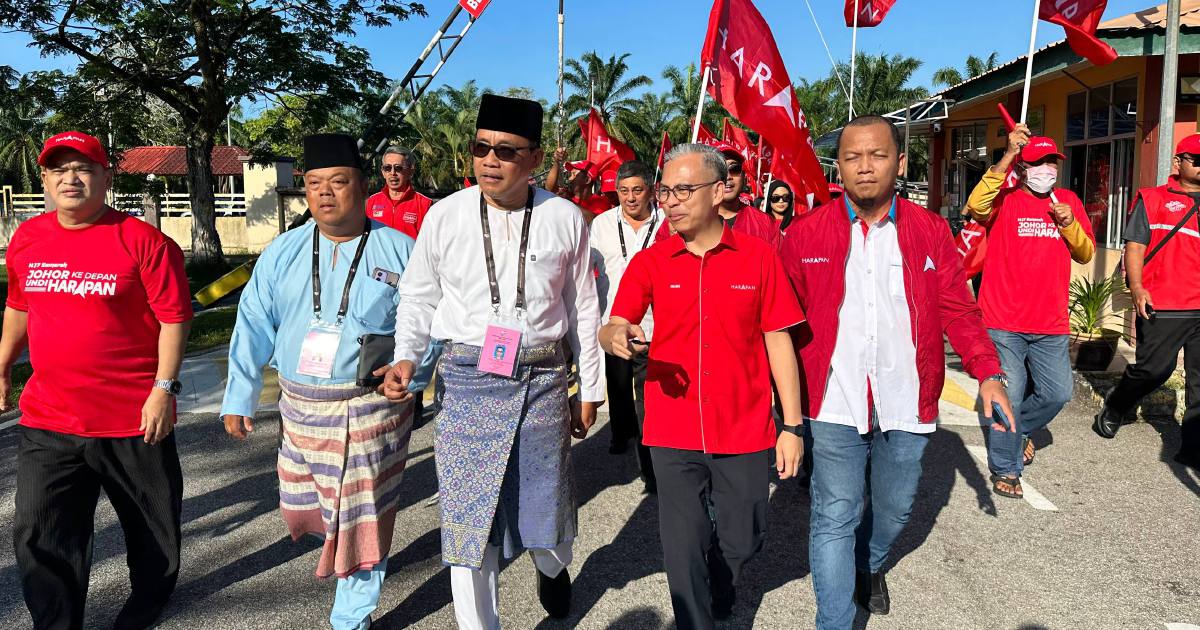
Nomination day proceedings at the Dewan Mahkota venue within Maktab Rendah Sains Mara in Batu Pahat witnessed considerable enthusiasm as contenders for the Semerah seat submitted their candidatures this morning. The gathering showcased the vigorous electoral climate characterising the Johor state election, with supporters assembling to back their preferred candidates and organisational representatives overseeing the formal registration process.
The Semerah constituency has emerged as one of the focal points in the broader Johor electoral contest, with expectations suggesting that both major political coalitions will deploy candidates with previous experience in the constituency. This anticipated rematch scenario reflects the competitive nature of the seat, which has proven strategically significant for both Barisan Nasional and Pakatan Harapan in recent electoral cycles. The decision by either coalition to field returning candidates underscores how certain constituencies remain heavily contested battlegrounds within Malaysia's peninsular state politics.
The reverberations of "Reformasi" chants and religious well-wishes reverberating through the nomination venue indicated the passionate engagement of supporters and the intersection of political messaging with broader social and spiritual dimensions that characterise Malaysian electoral campaigns. Such scenes are emblematic of how state elections in Johor attract substantial grassroots participation, reflecting the state's significance within the nation's broader political architecture and its historical role as a traditional stronghold of Umno-led governance.
For Malaysian voters and political observers, the Semerah contest carries implications extending beyond the individual constituency. Johor remains a crucial electoral prize, and the results from competitive seats like Semerah will substantially influence the overall composition of the state assembly and the direction of state governance. The anticipated head-to-head confrontation between BN and PH provides a microcosm of the ideological and administrative philosophies that differentiate the two coalitions, offering constituents a direct choice between competing visions for state development and policy direction.
The presence of repeat candidates suggests continuity in political representation strategies, though both coalitions will undoubtedly refine their messaging and campaign approaches based on electoral performance since the previous contest. For Barisan Nasional, maintaining traditional support bases whilst appealing to younger and more diverse voter demographics remains a persistent challenge. Pakatan Harapan, conversely, must consolidate gains from urban and educated populations whilst expanding its footprint in rural and traditional constituencies.
The nomination day atmosphere, characterised by organised turnout and demonstrated commitment from party supporters, provides early indicators of electoral mobilisation capacity. Such indicators often translate into campaign intensity and ultimately affect voter participation rates, which themselves influence electoral outcomes in closely contested constituencies. The energy displayed in Batu Pahat suggests both coalitions are investing considerable organisational resources into the Johor campaign.
Froman regional Southeast Asian perspective, Malaysia's state elections warrant attention as indicators of democratic health and coalition dynamics within a major economy. The Johor election, scheduled at a time when Malaysian politics continues navigating complex post-pandemic dynamics and economic pressures, will provide insights into voter sentiment regarding governance performance, economic management, and political accountability. These elections also serve as testing grounds for campaign strategies and messaging that may subsequently influence federal-level political calculations.
The Semerah constituency's electoral profile encompasses both urban and semi-rural areas, creating a heterogeneous voter base with diverse concerns ranging from infrastructure development and economic opportunities to education and public services provision. Candidates and coalitions must therefore craft messages that resonate across demographic and geographic divides, a challenge that becomes particularly acute in constituencies exhibiting such mixed characteristics.
The scheduled rematch arrangement, should both coalitions indeed field previously deployed candidates, offers voters an opportunity to assess incumbency records and campaign promises against actual policy implementation. This accountability dimension becomes especially pertinent when candidates seek re-election, as voters can evaluate tangible achievements and identify areas of unfulfilled commitments. Such retrospective evaluation, combined with prospective considerations regarding future governance, shapes electoral decision-making in ways that straightforward policy platforms alone cannot fully capture.
As the Johor election campaign unfolds across the state's various constituencies, the Semerah contest will undoubtedly attract disproportionate attention from political analysts and media outlets given its competitive nature and the prominence of the candidates involved. The outcome in this seat may well serve as an indicator of broader electoral trends within Johor, potentially influencing overall coalition performance and the subsequent composition of state government. For Malaysian observers monitoring political developments and electoral dynamics, the Semerah race represents one of several crucial contests deserving close attention throughout the campaign period.

