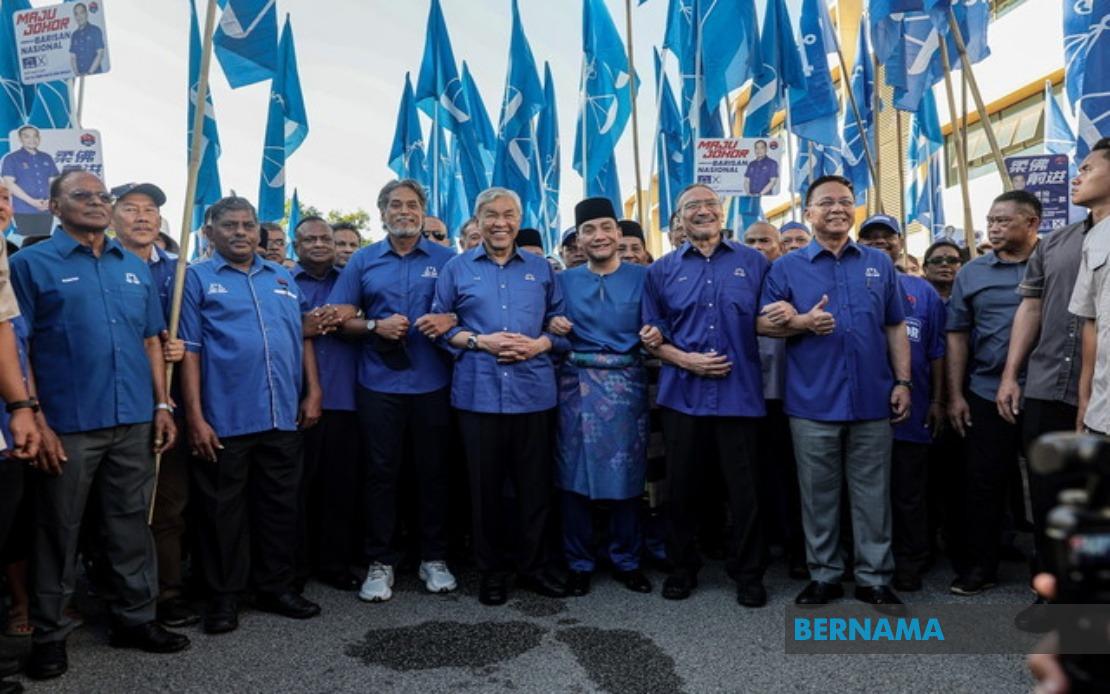
Johor Barisan Nasional chairman Datuk Onn Hafiz Ghazi formally entered the contest for the state election by lodging his nomination documents at the Muafakat Hall nomination centre in Simpang Renggam District Council on June 27, completing the filing process at 9.10 am. The incumbent Machap state assemblyman's decision to seek re-election was marked by a notably high-profile show of support from the coalition's heavyweights, signalling the party's determination to retain its grip on the state's political landscape.
The prominence of the delegation accompanying Onn Hafiz reflects the strategic importance placed on Johor by UMNO's national leadership. UMNO president Datuk Seri Dr Ahmad Zahid Hamidi made the trip to Simpang Renggam, alongside Sembrong Member of Parliament Datuk Seri Hishammuddin Tun Hussein and former minister Khairy Jamaluddin. Their collective presence underscored the party's confidence in both the candidate and the broader campaign strategy heading into what is shaping as a critical electoral contest for Barisan Nasional's regional fortunes.
Adding further weight to the occasion was the attendance of former Johor Menteri Besar Datuk Seri Hasni Mohammad, whose presence linked the current campaign to the state's recent political history. The inclusion of such veteran figures alongside serving ministers and the party president created a visual narrative of institutional continuity and collective commitment, messages that party strategists clearly intended to project to both the grassroots and the broader electorate.
The nomination filing itself represents the formal commencement of electoral procedures in what observers have identified as a pivotal state election. Johor, as Malaysia's second-largest state and traditionally a Barisan Nasional stronghold, carries outsized significance in the national political calculus. The depth of senior leadership mobilisation around a single candidate's filing suggests internal party assessments that the contest will be substantially contested and therefore demands maximum resource commitment from the centre.
Scenes at the Simpang Renggam District Council hall reflected the intensity of electioneering already underway across the state. Supporters affiliated with competing parties and coalitions had gathered in the vicinity of the nomination centre, displaying the visual markers of political campaigns—party colours, banners, and flags. These demonstrations underscored that despite the formal nature of the nomination process, the atmosphere on the ground carried the energy and tensions characteristic of active electoral competition.
Onn Hafiz's tenure representing Machap had established him as a political figure warranting such elevated backing from the national party machinery. His designation as Johor Barisan Nasional chairman placed him at the intersection of state-level administration and federal party strategy, a position from which his nomination and candidacy assume compounded importance. Retaining his seat and demonstrating strong voter endorsement would send powerful messages about both his personal political viability and the state coalition's general electoral health.
The timing of this nomination and the accompanying media spectacle occurred within the broader context of Malaysia's intensifying political dynamics. States hosting elections function as crucial testing grounds for national coalitions, and results in Johor would inevitably influence calculations about federal political alignment and the relative strength of competing blocs. For Barisan Nasional specifically, which has experienced mixed fortunes in recent state-level contests, strong performance in Johor would provide both material and psychological reinforcement.
The choice to stage this nomination filing with such high-level attendance also served practical political functions beyond symbolic messaging. It provided a platform for party leaders to address supporters and media, articulating the Barisan Nasional platform and narrative for the broader campaign period. The presence of Dr Ahmad Zahid Hamidi, as party president, lent added credibility and authority to party messaging around governance, economic policy, and party cohesion—themes likely to feature prominently in subsequent campaign communications.
For Malaysian political observers and Southeast Asian analysts tracking regional developments, the Johor election carries implications extending beyond state boundaries. Barisan Nasional's performance in state contests influences perceptions about the coalition's national electoral prospects and shapes the political environment within which coalition partners negotiate their respective roles and resources. Strong results would buttress arguments for continued federal leadership continuity, while disappointing outcomes could intensify internal coalition pressures and calculations about political realignment.
The road ahead for Onn Hafiz and the broader Barisan Nasional campaign in Johor would now unfold across the official nomination period and subsequent polling campaign. The mobilisation of senior leadership figures at his filing suggested the party would sustain high-intensity engagement throughout the campaign period, deploying its institutional apparatus and political resources to maximize voter turnout and secure victories across the state's constituencies. How Johor's electorate responds to these efforts will register as one of the most significant political verdicts in Malaysia's electoral calendar this year.

