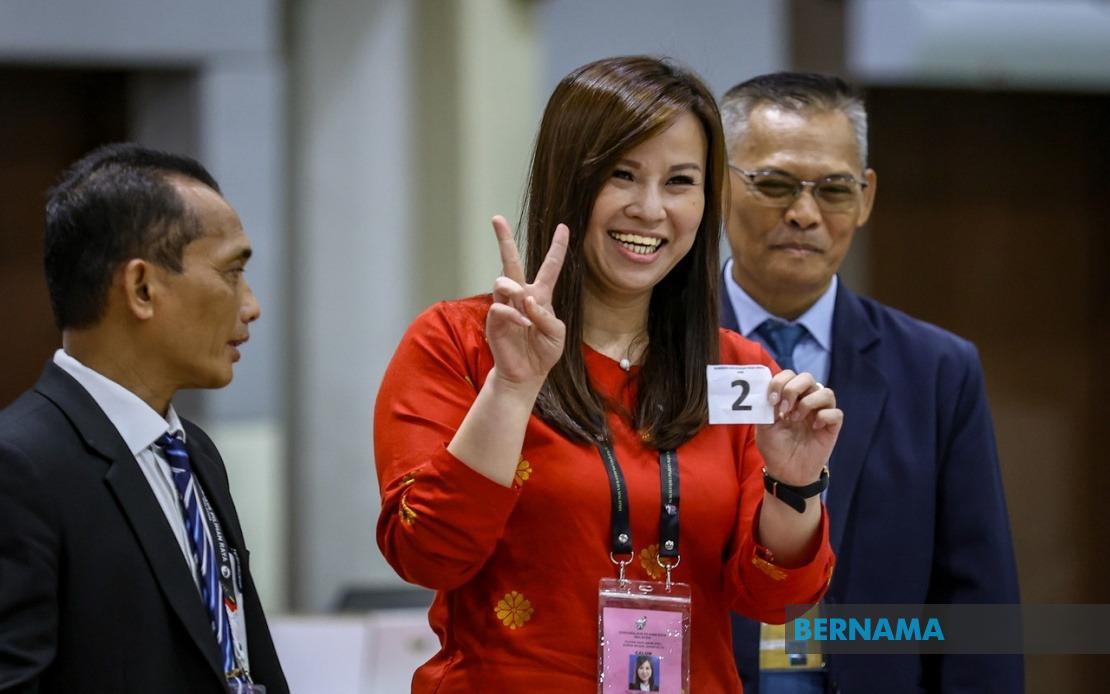
In what shapes as a critical battleground for the 16th Johor state election, Pakatan Harapan's Sharon Teo has set her sights on the Permas state constituency with an agenda centred on physical infrastructure improvements and enhanced public welfare provisions. The Johor Amanah Women's Youth chief confirmed her priorities immediately following the nomination process at Dewan Muafakat in Taman Mawar, signalling that her campaign will directly address concerns repeatedly raised by residents during ground-level community engagement.
Road infrastructure stands as the cornerstone of Teo's electoral platform, a focus driven by both safety considerations and the practical needs of constituents navigating daily commutes across the Permas district. Speaking to media after the nomination deadline, she emphasised that deteriorating road conditions represent more than a mere convenience issue—they constitute a genuine public safety threat that demands immediate executive attention. This granular focus on tangible local problems reflects a strategic pivot among opposition candidates toward addressing bread-and-butter issues that directly impact household quality of life, departing from broader ideological messaging that has historically characterised electoral campaigns in the state.
Teo brings substantive political experience to her candidacy, having previously worked as a parliamentary aide within the Pulai constituency under the late Amanah deputy president Salahuddin Ayub. Her background in constituency-level operations suggests familiarity with the machinery required to translate campaign commitments into legislative action, though she remains a relatively new electoral contestant herself. The candidate has committed to unveiling a comprehensive manifesto outlining her specific vision and mission proposals for Permas voters, though the document remained under wraps at the time of her nomination remarks.
Defending the seat is incumbent Baharudin Mohamed Taib from Barisan Nasional, who secured victory in this constituency during the 2022 Johor election. Rather than underestimating the competitive challenge ahead, Baharudin has adopted a cautious posture, acknowledging that each opposing candidate brings distinct strengths to the contest and that complacency could prove costly to his re-election prospects. His cautious assessment reflects the increasingly fragmented nature of Malaysian electoral competition, where votes are now distributed across four separate candidates rather than concentrated between two major contenders as in previous cycles.
BarisanNasional's approach to this campaign differs markedly from Teo's platform strategy. Rather than developing a personalised manifesto, Baharudin has indicated he will operate within the broader BN electoral framework and policy agenda set at the coalition level. This approach suggests reliance on institutional party machinery and established voter loyalty networks rather than differentiated local messaging, a strategy that carries both advantages in terms of resources and cohesion but potential vulnerabilities if voters seek distinctly tailored solutions to constituency-specific problems.
The Permas contest has evolved into a four-cornered struggle unprecedented in recent Johor electoral history. Beyond the BN and PH principals, Perikatan Nasional fields T. Vela as its standard-bearer, while the newly registered Parti Bersama Malaysia competes through Dr Zamil Najwah. This multiplication of candidates reflects the fragmentation of Malaysia's political landscape and the emergence of new political vehicles attempting to capture voter dissatisfaction with traditional coalitions. The presence of four competitive candidates substantially alters electoral mathematics, making it theoretically possible for a winning candidate to secure the seat with significantly less than 50 percent of total votes cast.
Permas is situated within the Pasir Gudang parliamentary constituency and encompasses 113,963 eligible voters who will participate in the state-level election. The constituency's voter base remains substantial enough to influence overall state legislative composition, making individual seat outcomes critical to determining whether PH can achieve legislative dominance or whether BN will retain control of the Johor state assembly. The scale of the electorate also suggests that mobilising specific demographic blocs—whether younger voters concerned about employment, parents focused on education and healthcare, or retirees dependent on welfare provisions—could prove decisive.
The Johor state election itself carries significant implications extending far beyond the state's borders. As Malaysia's second-largest state by population and a crucial economic hub, Johor's electoral direction influences investor confidence, determines policy trajectories on critical issues such as land development and water management, and shapes the broader national political momentum heading toward the next general election. A strong PH performance in Johor could signal national momentum, while a comfortable BN victory would reinforce the coalition's claims to demographic resilience.
Voting will occur on July 11, with early voting scheduled for July 7, providing a compressed timeline for all candidates to mobilise supporters and persuade undecided voters. The rapid campaign schedule means that candidates cannot rely on extended grassroots engagement periods but must instead concentrate resources on the constituencies where competitive races are anticipated. For Sharon Teo in Permas specifically, this timeline necessitates rapid scaling of campaign operations while simultaneously developing the organisational infrastructure required to translate electoral victory into effective constituency representation.
The outcome in Permas will depend significantly on whether voters prioritise the immediate local concerns that Teo emphasises or whether they view state-level elections through the lens of broader coalition performance and national political preferences. Infrastructure and welfare messaging tend to resonate most effectively when coupled with credible implementation records, putting candidates with prior administrative experience at an advantage. Conversely, anti-incumbent sentiment or desire for political change can override evaluation of specific policy platforms, potentially benefiting opposition challengers regardless of their detailed proposals.

