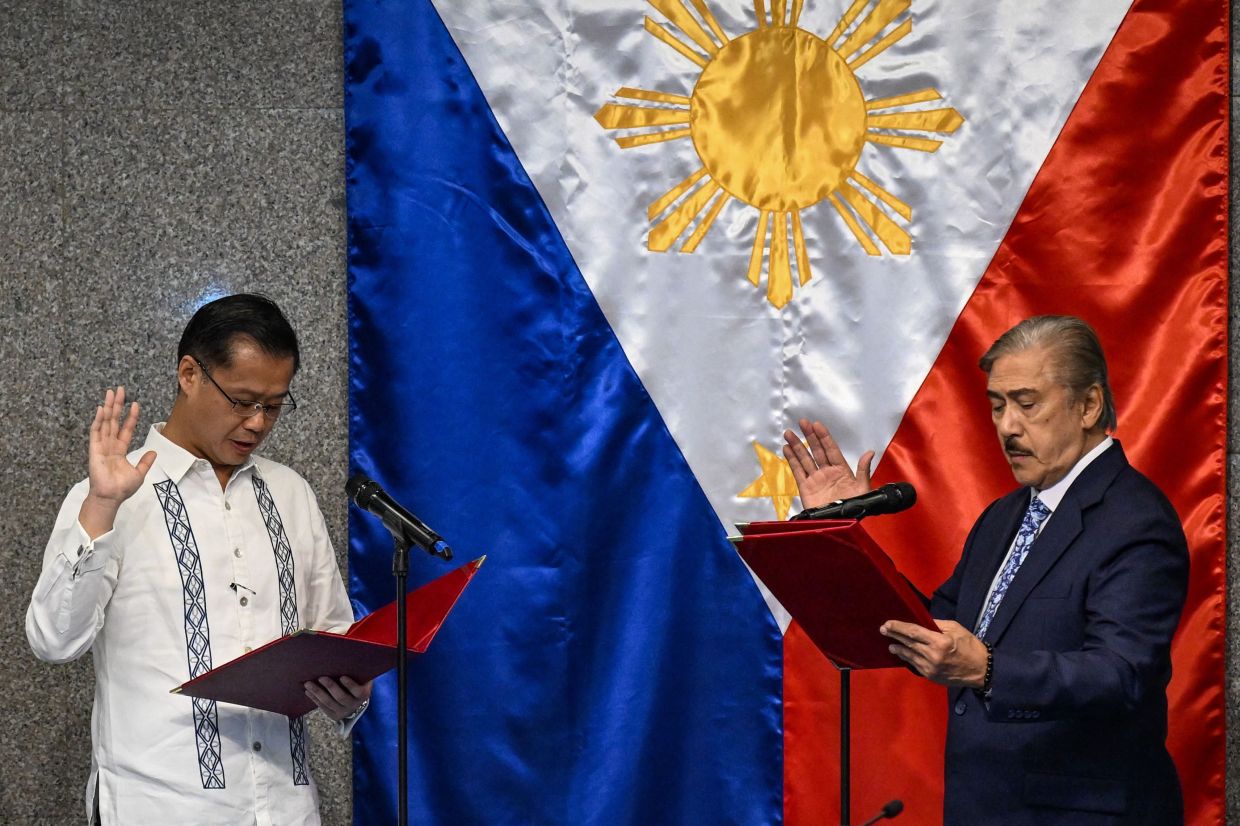
Senator Sherwin Gatchalian has been elected president of the Philippine Senate following a special session on Wednesday (June 17) that highlighted the fluid and often unpredictable nature of Philippine legislative politics. The 13-senator vote marked a decisive moment in what had been an increasingly contentious battle for control of the 24-member chamber, with the minimum threshold for such a vote being exactly met.
Gatchalian's path to the top legislative seat reflects a career spanning multiple levels of Philippine governance. He previously served as Mayor of Valenzuela City, a major municipality in the greater Manila area, and represented his constituency in the House of Representatives before advancing to the Senate. His election signals a potential realignment in the upper chamber, though the tightness of the vote suggests no faction enjoys overwhelming dominance.
The entire affair unfolded against a backdrop of shifting political calculations that came to a head this month. On June 3, twelve senators had already moved to elect Gatchalian as Senate president pro tempore, effectively declaring that Alan Peter Cayetano—who had assumed the presidency on May 11—had vacated the position. Cayetano contested this interpretation, asserting that he remained the legitimate Senate president and arguing that thirteen votes were needed to effect any change in Senate leadership.
The arithmetic of Philippine Senate politics proved decisive. Senator Joel Villanueva, who had previously aligned with Cayetano's faction, made a crucial decision to switch his support to Gatchalian's bloc. This shift proved fatal to Cayetano's position. Cayetano, recognising the changed calculus after discussions with Villanueva on Tuesday, acknowledged that his position had become untenable and indicated he would step aside from the presidency.
For Malaysian and Southeast Asian observers, the Senate presidency struggle offers insights into how legislative bodies in the region operate when political coalitions remain fluid and individual senators wield considerable leverage. Unlike systems with more rigid party discipline, the Philippine Senate appears to function more like a negotiating council where personal relationships and shifting interests can rapidly alter the balance of power. A senator's defection or change of heart can instantly transform the political landscape.
The current Senate operates with considerable constraints that add urgency to leadership questions. The chamber officially comprises 24 members, but only 22 are currently sitting. This reduced headcount amplifies the weight of each individual legislator. Senator Jinggoy Estrada surrendered to police earlier this month and subsequently faced a 90-day suspension from office ordered by the Sandiganbayan, the Philippines' anti-graft court, over his involvement in a graft case. Additionally, Senator Ronald Dela Rosa has become a fugitive wanted by the International Criminal Court, with his whereabouts remaining unknown, further depleting the working membership.
Gatchalian's assumption of the presidency carries implications for how the Senate will operate during the remainder of the legislative term. As the chamber's chief executive and presiding officer, the Senate president wields substantial control over the legislative agenda, the scheduling of debates, and the assignment of bills to committees. These procedural powers can significantly influence which legislation advances and which languishes.
The drama surrounding the presidency also exposes deeper questions about institutional stability and legislative governance in the Philippines. The rapidity with which senators can shift positions and the minimal margins required to effect leadership changes suggest that Senate operations may be subject to considerable volatility. For a body responsible for crafting national laws and conducting oversight of the executive branch, such instability could potentially affect legislative productivity and the quality of deliberation on matters of national importance.
For regional observers, the Philippine Senate's machinations demonstrate the broader challenges facing legislative institutions across Southeast Asia. Many countries in the region struggle to balance strong executive power with effective legislative oversight, and the Philippine Senate's internal dynamics suggest that even when legislatures possess formal authority, fragmentation and individual ambition can limit their collective effectiveness.
Gatchalian's election also reflects the importance of local political bases in Philippine national politics. His background in municipal governance positions him within a network of local officials who often exercise considerable influence over their Senate representatives. Understanding Philippine Senate dynamics requires attention not only to individual senators but also to the provincial and municipal power structures that sustain their political careers.
The Gatchalian presidency will be tested almost immediately on substantive legislative matters, from budget allocations to critical infrastructure projects to economic policies affecting the broader Southeast Asian region. How effectively he can build working majorities for administration priorities while managing a fractious chamber will shape his tenure's success and influence the Senate's role in Philippine governance during this period.